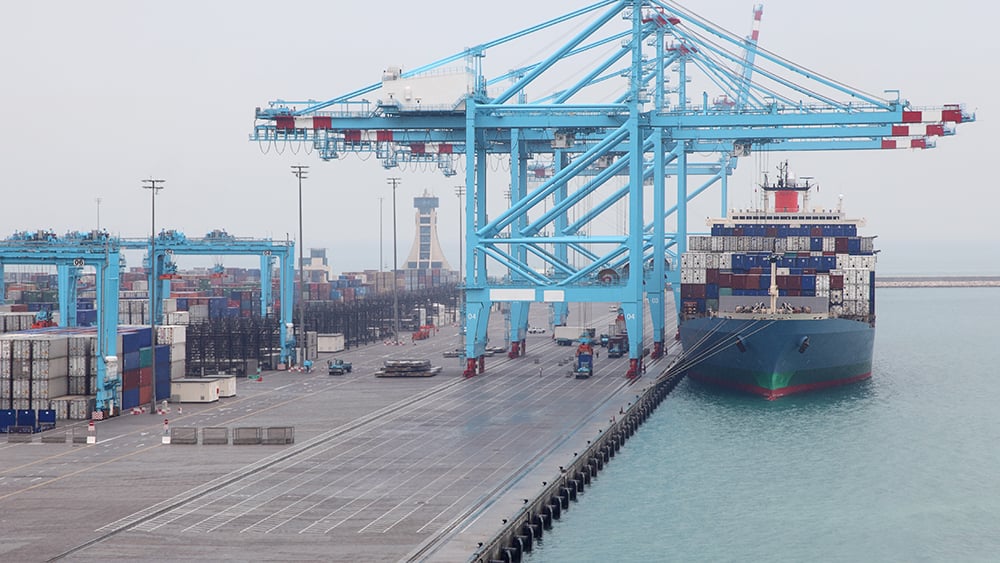
View of harbor cranes with cargo ship at UAE port

Supertitle

The challenge: Heavy loads on the water's edge

UAE ports are high-intensity environments. The combination of massive static loads (container stacks), dynamic loads(reach stackers/AGVs), and marine erosion puts immense stress on the ground.

Shutting down a berth or a stacking block for repair is costly. Geobear solves these problems in-situ, often while operations continue nearby.

Quay wall washout: Tidal action sucks fine material from behind the sheet piles or blockwork, causing voids and settlement on the apron.

Crane rail settlement: Even minor differential settlement on STS (Ship-to-Shore) crane rails can cause wheel wear, slow down gantry speeds, and pose safety risks.

Pavement rutting: Heavy axle loads from reach stackers on asphalt or paver blocks cause rutting, slowing down terminal operations.
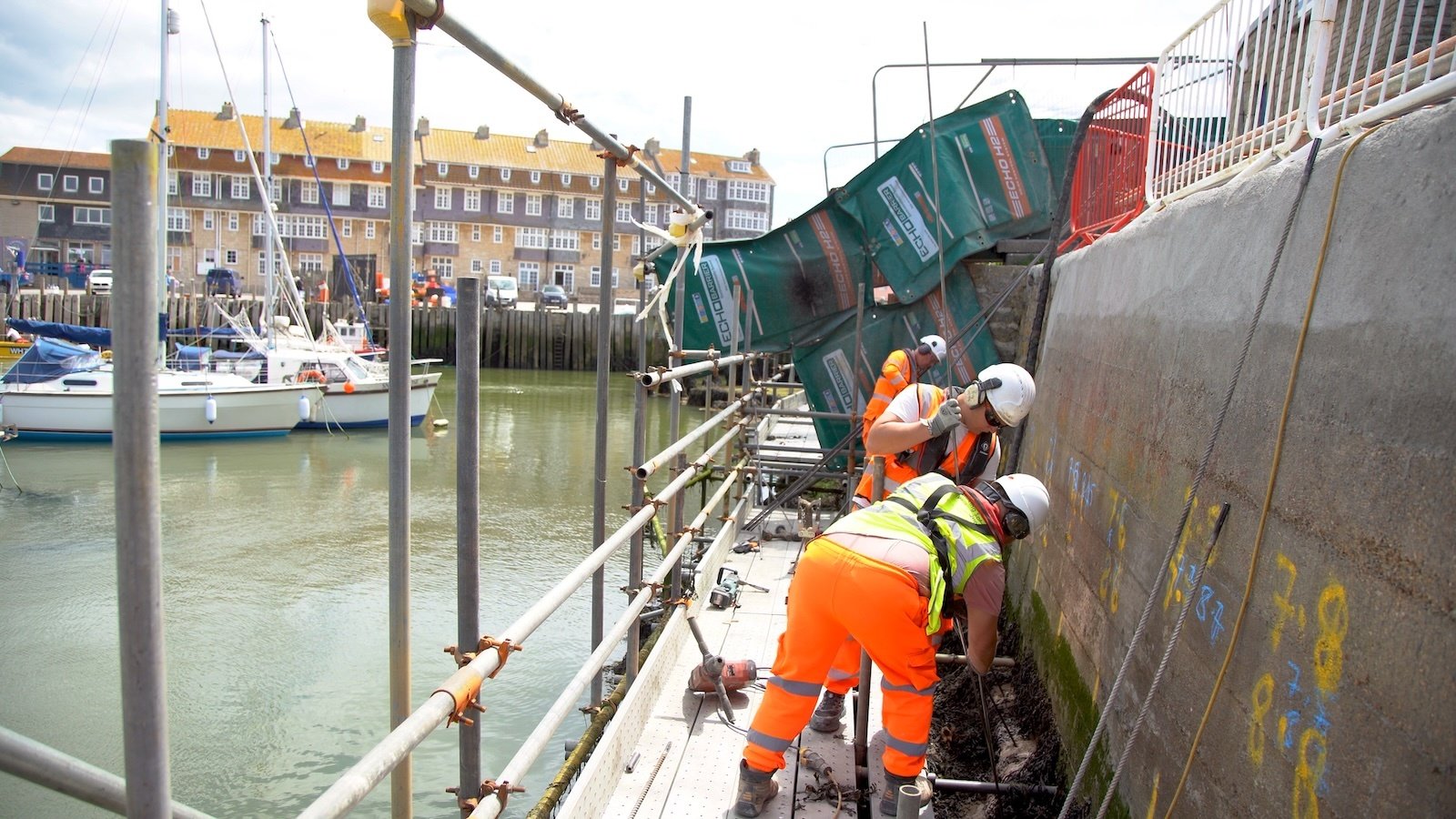
Bridport harbour works

Overview

The ground beneath port infrastructure is constantly at risk from heavy container stacks, cranes, vehicle traffic, and water ingress. This can lead to soil settlement, voiding, and quay wall movement, which threatens operational continuity, safety, and asset integrity. Traditional repair methods often require lengthy closures and significant excavation.Geobear's geopolymer solutions offer a different approach. We inject a self-expanding,a specially engineered resin directly into the ground through small holes. This process fills voids, compacts the soil, and helps to lift and re-level structures. Our methods are up to 70% faster and have a 90% lower carbon impact than traditional alternatives, allowing you to maintain operations while we work.
Traditional repair methods often require lengthy closures and significant excavation. Geobear's geopolymer solutions offer a different approach. We inject a self-expanding, a specially engineered resin directly into the ground through small holes.

This process fills voids, compacts the soil, and helps to lift and re-level structures. Our methods are up to 70% faster and have up to 75% lower carbon impact than traditional alternatives, allowing you to maintain operations while we work.

Challenges Geobear can solve

Harbor and quay wall stabilization

We fill voids and strengthen the ground behind quay walls to prevent movement and extend the asset’s life.

Hardstanding re-levelling

We lift and re-level subsided hardstandings and crane rail tracks to ensure safe and efficient operations.

Concrete slab asset life extension

Our solutions are designed to strengthen the ground beneath slabs, extending their operational life.

Void filling treatment

We fill washouts and voids in the subgrade to restore bearing capacity and provide a stable foundation.

Permeability reduction treatment

Our solutions help to reduce water ingress in the ground, preventing soil erosion and improving stability

Case studies

Bridport harbour

Stabilization of sea walls and promenades against tidal washout

A historic stone sea wall protecting a busy tourist promenade was suffering from severe internal erosion.
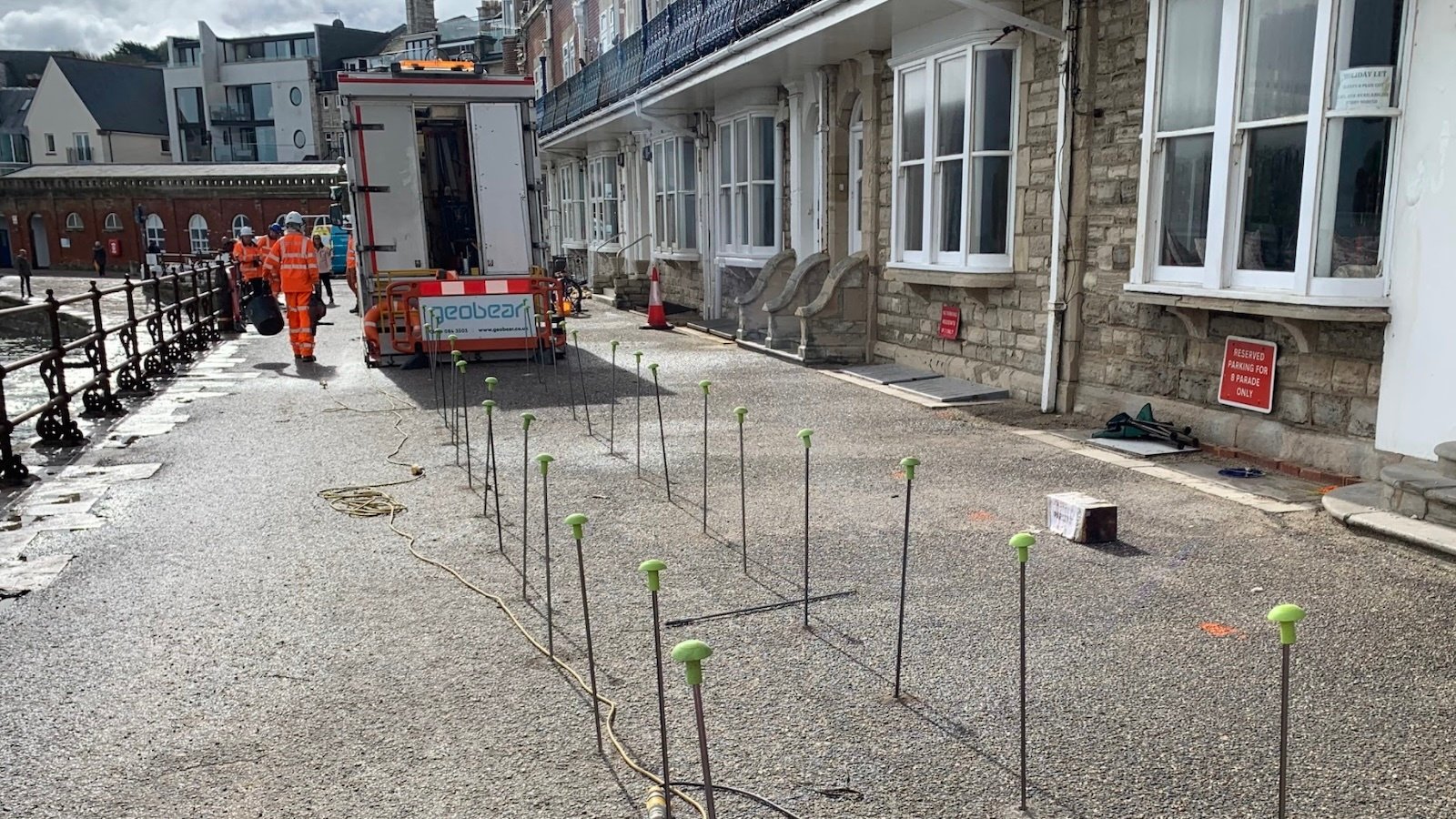
Infra case study swanage

Stabilization of sea walls and promenades against tidal washout

A historic stone sea wall protecting a busy tourist promenade was suffering from severe internal erosion.
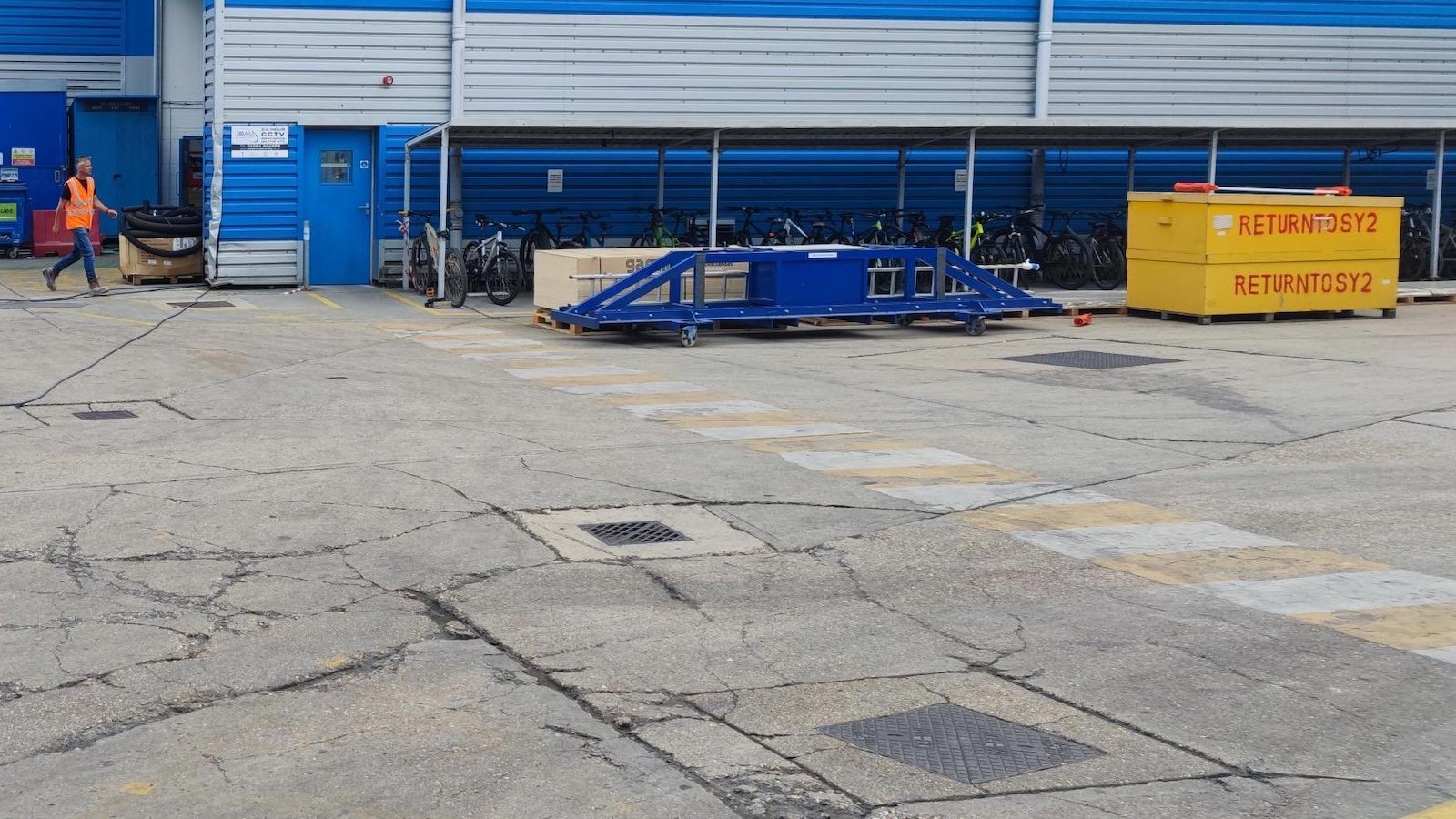
Infra case study shipyard

Ground improvement for heavy marine hoists at a superyacht shipyard

A luxury yacht manufacturer needed to increase the load-bearing capacity of their shipyard apron to support a new 320-tonne boat hoist.

The Geobear solution vs. alternative methods

Feature

The Geobear solution

Traditional underpinning/piling

Disruption

Minimal. No excavation needed. Operations can continue.

High. Requires major excavation and site closure.

Speed

Up to 70% faster. Work is completed in days, not weeks or months.

Slow. Can take weeks or months to complete.

Carbon impact

Low. Up to 70% lower carbon impact than concrete-based methods.

High. Uses heavy machinery and concrete.

Access

Small, truck-based rig. Can access difficult or confined spaces.

Requires large, heavy machinery.

Method

Resin is injected through small, 12-16mm holes.

Requires deep digging and extensive civil works.

Key benefits to working with Geobear

Minimize business disruption

Our non-invasive process means you can often continue operations while we work, avoiding costly downtime.

Get a specific, engineered plan

Our in-house engineers design a unique solution for every project, using decades of expertise to create the best outcome.

Sustainability

Our low-carbon solution helps you meet your environmental targets without compromising on quality or performance.

Trusted and proven

With over 200,000 projects using our technology, our methods have been tested and refined for more than 40 years.

Speed and responsiveness

We can mobilize our teams quickly to address urgent ground problems, keeping your assets operational and safe.

FAQs

In most cases, yes. Our non-intrusive method allows us to work on specific sections while other operations continue, significantly reducing disruption.

A Geobear solution involves injecting an expanding geopolymer resin into the ground. It is used to fill voids, compact soil, and lift subsided structures.

Most projects are completed in a matter of days, compared to the weeks or months required for traditional methods like piling or mass concrete. The area is typically ready for use just 15 minutes after treatment.

Yes. Our solutions have up to a 75% lower carbon impact than traditional methods. They do not involve excavation or the use of large, energy-intensive machinery.

Contact Geobear

Restore your port or harbor efficiency and safety. Contact our marine engineering team for a site assessment.
Bear pointing Bear pointing