What is Sabkha and why is it a problem?

"Sabkha" is a localized term for salt-flat soils found along the coasts of Abu Dhabi (Mussafah, Ruwais) and the Northern Emirates. It is a complex mixture of sand, silt, and clay, cemented together by soluble salts (gypsum, anhydrite, halite).

While it can appear hard and stable when dry, Sabkha is a "collapsible soil" that presents three major engineering risks:

1
Dissolution & collapse

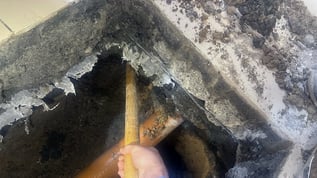
When groundwater levels rise (or freshwater leaks from a pipe), the salt cement dissolves. The soil structure instantly collapses, creating large underground voids and sinkholes beneath infrastructure.

2
Salt heave (crystal growth)

In hot conditions, saline groundwater evaporates, causing salt crystals to grow within the soil matrix. This exerts tremendous upward pressure, heaving pavements and cracking rigid floor slabs.

3
Corrosive attack

The hyper-saline environment attacks standard concrete and steel, weakening foundations from the outside in.

Business & community impact

Building on untreated Sabkha is a ticking time bomb for infrastructure owners.

Road failure: Differential settlement and "rollercoaster" profiles on coastal highways.

Utility breaks: Pipelines bridging over dissolution voids often rupture, causing secondary flooding.

Industrial downtime: Warehouses in Sabkha zones (like ICAD or JAFZA) suffer from sinking floor slabs that disrupt forklift operations.

View into void where soil has collapsed in public utility opening

How Geobear treats Sabkha soils

Traditional compaction methods (vibro-replacement) are often ineffective on existing sites or can actually worsen the problem by crushing the cemented crust.

Geobear uses geopolymer to stabilize Sabkha without disturbing the ground.

1

Void filling

We inject expanding geopolymer to fill dissolution cavities and restore continuous support to the structure above.
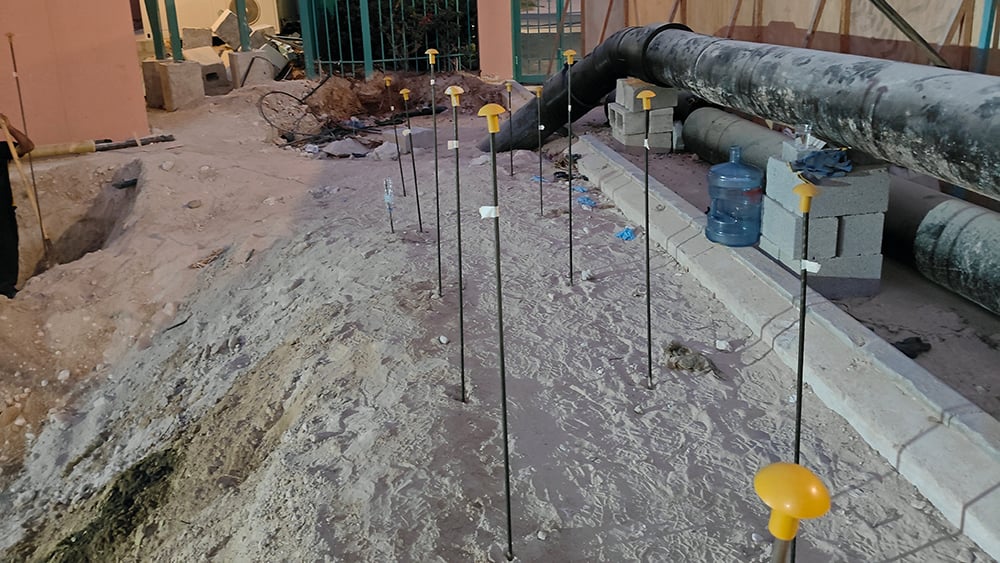
Geobear injection tubes installed in sandy soil in built environment
2

Permeation grouting

Our low-viscosity resins permeate the Sabkha matrix. They encapsulate the salt crystals and bind the loose sand/silt particles together, effectively "waterproofing" the soil particle against future dissolution.
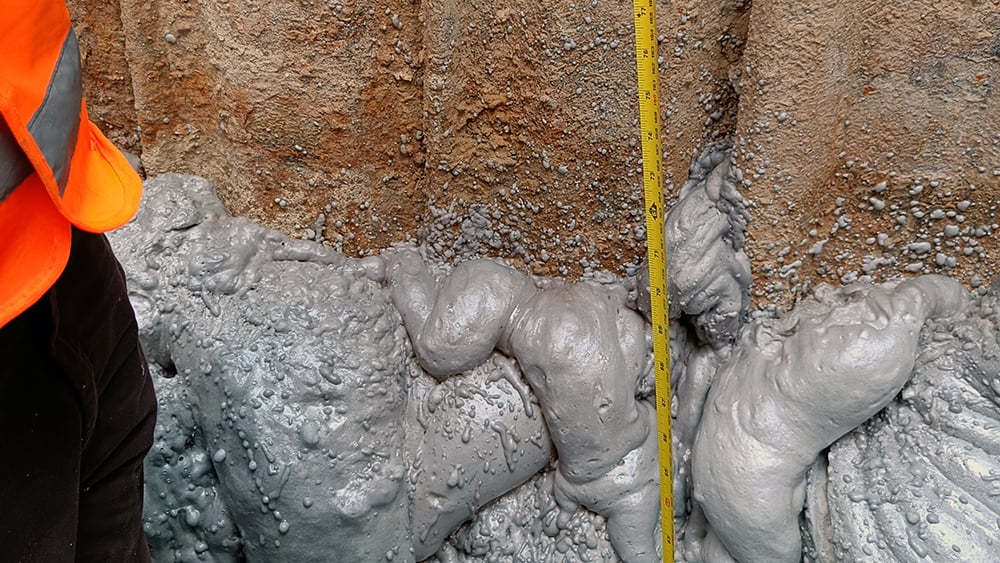
Geopolymer filled leaks in construction site piling
3

Hydro-insensitive

Our materials are chemically inert and unaffected by the aggressive sulfates and chlorides in Sabkha. They cure permanently, even in brine-saturated conditions.
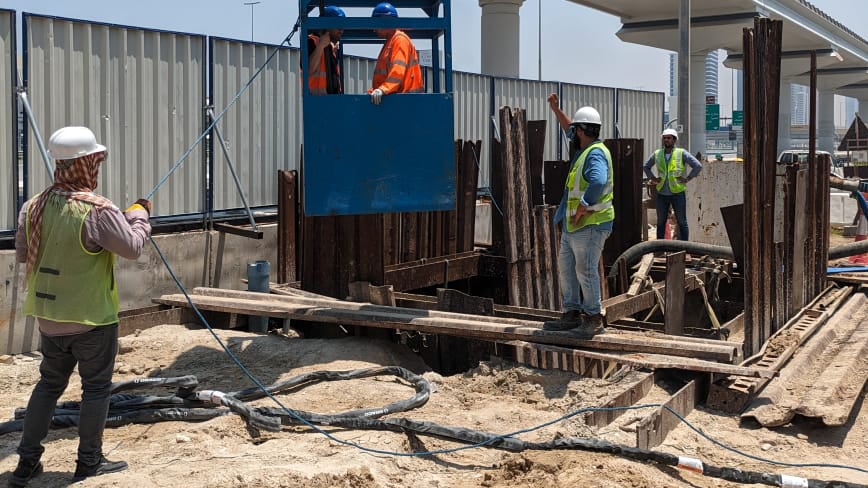
Geobear crew at open construction site with sabhka soil
4

Offers a wide portfolio of expertise

We have a proven track record as a contracting partner, with our teams and engineering expertise available to support you on projects of any scale. For issues requiring significant load transfer, we also offer a structural support treatment.

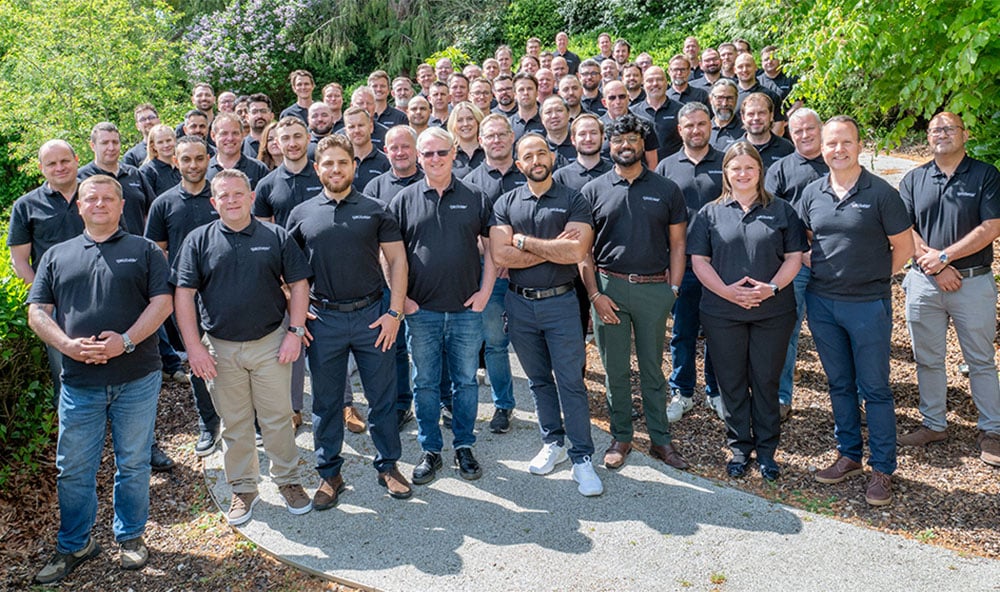
Geobear employees standing for a group photo on a sunny day
Geobear personal 2025

We offer a wide portfolio of expertise

We have a proven track record as a contracting partner, with our teams and engineering expertise available to support you on projects of any scale. For issues requiring significant load transfer, we also offer a structural support treatment.

Comparison: Geobear vs. traditional methods

Method Impact on Sabkha Disruption
Excavate & replace Effective but requires massive earthworks High (Road closures, downtime)
Vibro-compaction Can crush the cemented crust, causing further collapse High (Heavy machinery required)
Geobear injection Stabilizes in-situ without breaking the crust Low (Done through small drill holes)

Building on Sabkha?

Don't let salt take control of your asset. Contact our geotechnical team for a specialized Sabkha stabilization proposal.


Bear pointing Bear pointing