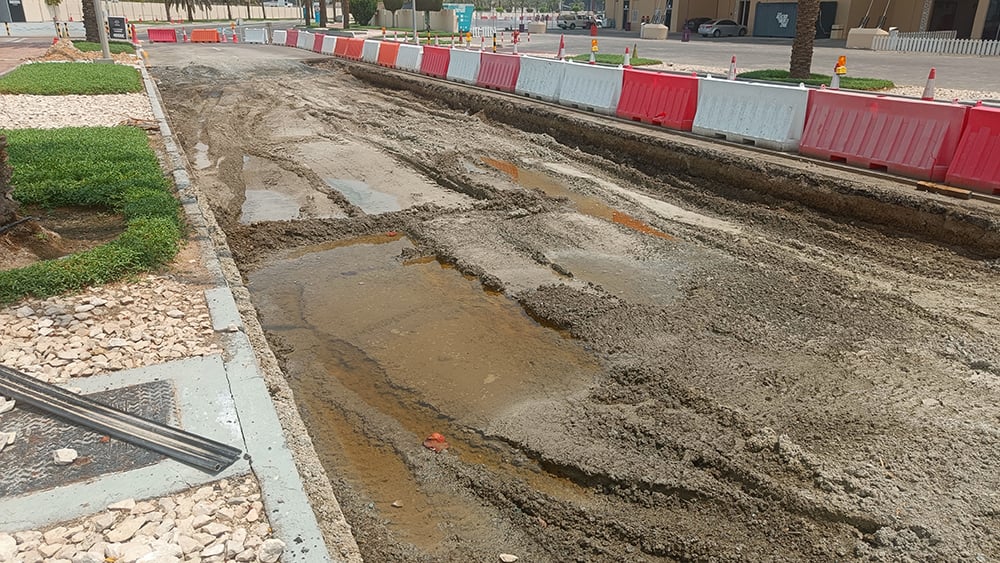
UAE road work with puddle water

The challenge in the UAE: Loss of ground support

Infrastructure assets in the UAE are designed to last decades, but the ground beneath them often changes.

Scour & washout: Flash floods in Wadis or tidal action at bridge piers can remove the soil providing passive resistance to pile caps.

Excavation loss: Adjacent construction works (deep basements, tunneling) can relax the horizontal stress in the soil, reducing the bearing capacity of nearby footings.

Soil fatigue: Decades of heavy axle loading on highways and rail lines can degrade the subgrade stiffness, leading to a loss of support for transition slabs and box culverts.
When the ground support is inadequate, the structure is forced to span a void or settle differentially. This leads to structural cracking, joint failure, and reduced load ratings.

Load bearing capacity challenges impacting site

Structural support is not just about the frame of a building; it's also about the ground beneath it. When ground becomes weak due to poor compaction, water erosion, or soil movement, it can lead to subsidence.

This means the foundation of the asset is no longer properly supported, and the structure can begin to crack, shift, or sink. This can be a serious problem for our heaviest and most critical public assets.

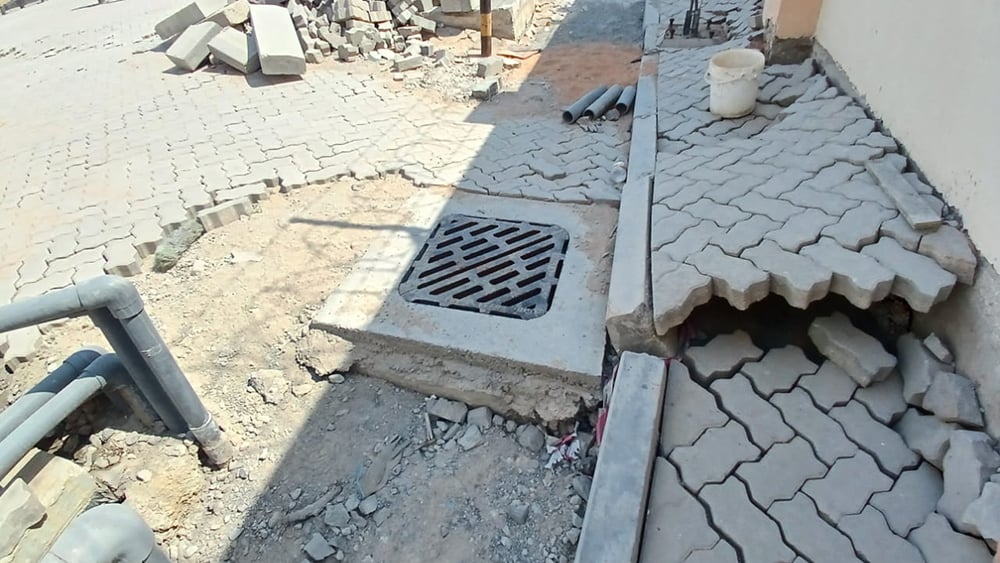
View of road and walkway which are cracked/sinking due to ground settlement

This issue impacts all types of infrastructure

Bridges

The foundations of a bridge, including its abutments and pillars, can lose support, leading to dangerous structural weakness.

Large buildings

Heavy, multi-story buildings, critical facilities, and warehouses can be compromised, leading to floor collapse or dangerous sinking.

Retaining Walls

The ground supporting a retaining wall can fail, causing dangerous movement and instability.

Other Infrastructure

Heavy machinery foundations, large industrial slabs, and airport runways are all susceptible to ground failure, leading to expensive and unbudgeted repairs.
Structural support is not just about the frame of a building; it's also about the ground beneath it. When ground becomes weak due to poor compaction, water erosion, or soil movement, it can lead to subsidence. This means the foundation of the asset is no longer properly supported, and the structure can begin to crack, shift, or sink. This can be a serious problem for our heaviest and most critical public assets.

This issue impacts all types of infrastructure:

  • Bridges: The foundations of a bridge, including its abutments and pillars, can lose support, leading to dangerous structural weakness.
  • Large buildings: Heavy, multi-story buildings, critical facilities, and warehouses can be compromised, leading to floor collapse or dangerous sinking.
  • Retaining Walls: The ground supporting a retaining wall can fail, causing dangerous movement and instability.
  • Other Infrastructure: Heavy machinery foundations, large industrial slabs, and airport runways are all susceptible to ground failure, leading to expensive and unbudgeted repairs.

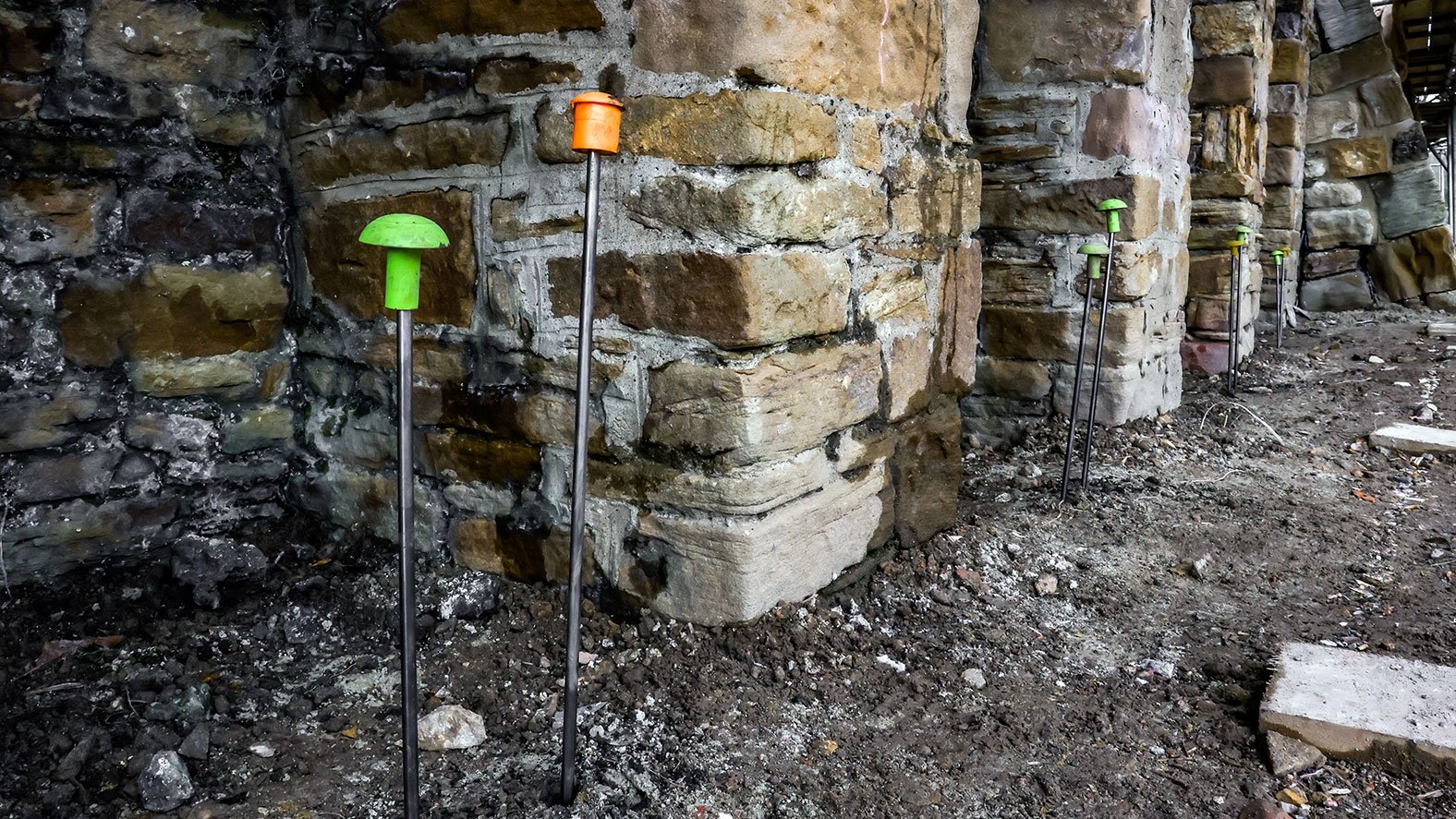
Shildon-coal-drops-improvement


Business & community impact

For infrastructure managers, the consequences of inadequate structural support are severe.

Asset failure due to a compromised foundation can be catastrophic, leading to immediate closures, extensive repair work, and significant project delays. This results in major financial costs and can cause huge disruption to the community, including widespread traffic rerouting and service interruptions.

Uncontrolled structural movement also poses a significant safety risk to workers and the public. 

At Geobear, we act as a responsible contracting partner, helping solve these problems without the need for disruptive, time-consuming excavation. Our solutions are up to 70% faster than traditional methods, helping you maintain operations and get infrastructure back in service quickly and safely.

How can Geobear help?

Geobear's Structural support treatment is a highly effective, non-disruptive alternative to traditional underpinning and ground replacement. Instead of digging out and replacing the weak soil, we use geopolymer injection to strengthen the ground in place. This solution:
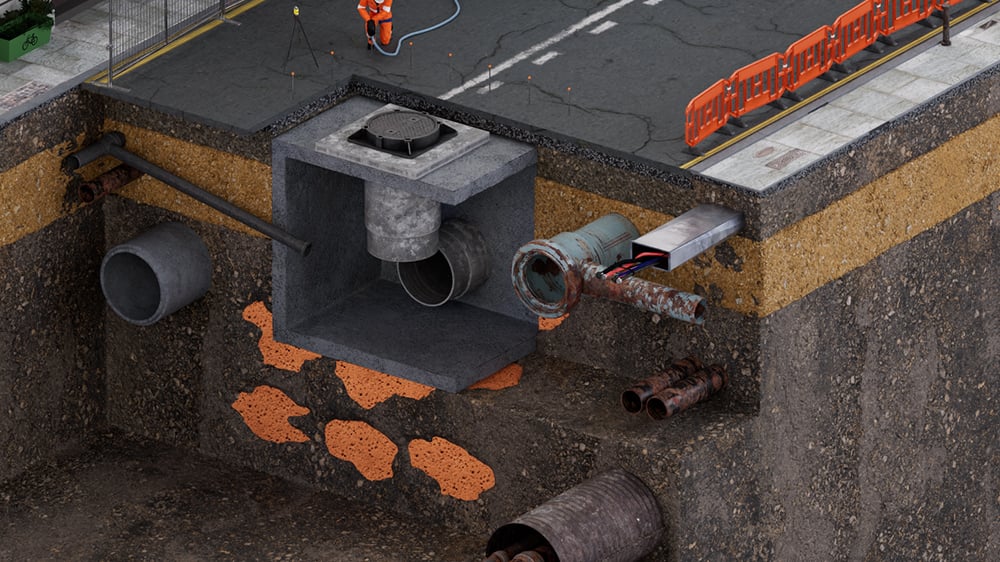
Illustration of geopolymer installation under public utilities

1
Provides immediate support

Our geopolymer expands to densify the ground, filling voids and creating a strong, stable foundation.

2
Lifts and relevels

The material's controlled expansion can be used to lift and relevel subsided structures, returning them to their intended position.

3
Is up to 70% faster

The entire process can be completed in hours or days, not weeks or months. This dramatically reduces downtime.

4
Has a 75% lower carbon impact

Our approach is significantly more sustainable than traditional methods, helping you meet your environmental commitments.

Is your asset losing support?

Don't wait for structural failure. Contact our engineers to design a non-disruptive ground support solution.

Bear pointing Bear pointing