The challenge: Building on weak ground
Infrastructure in the UAE is frequently built on challenging geology.
Loose sands: Wind-blown desert sands often lack the density to support heavy dynamic loads, leading to settlement.
Sabkha: These salt-rich coastal soils are notoriously unpredictable, prone to collapse when wet (hydro-collapse) or dissolution.
Reclaimed land: Dredged fill material in man-made islands and ports can suffer from long-term consolidation and "creep," causing surface deformation.
When these soils fail, assets sink. Traditional solutions like piling or "rip and replace" are disruptive and expensive. Geobear offers a proven alternative: geopolymer ground improvement.

Key applications
Geobear’s ground improvement solutions are trusted across a wide range of assets:
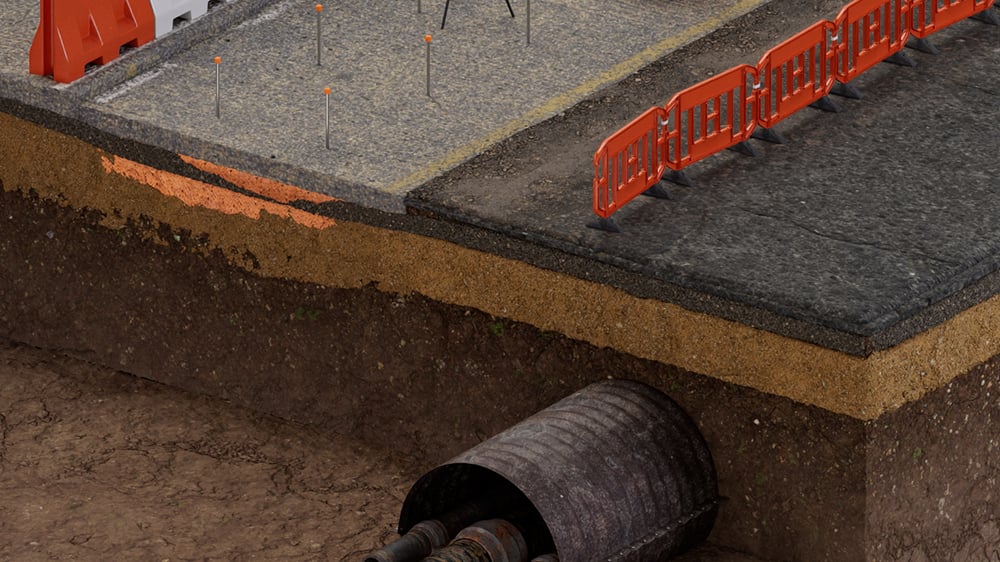
Highways & embankments
Improving the ground beneath rigid and flexible pavements to extend asset life.
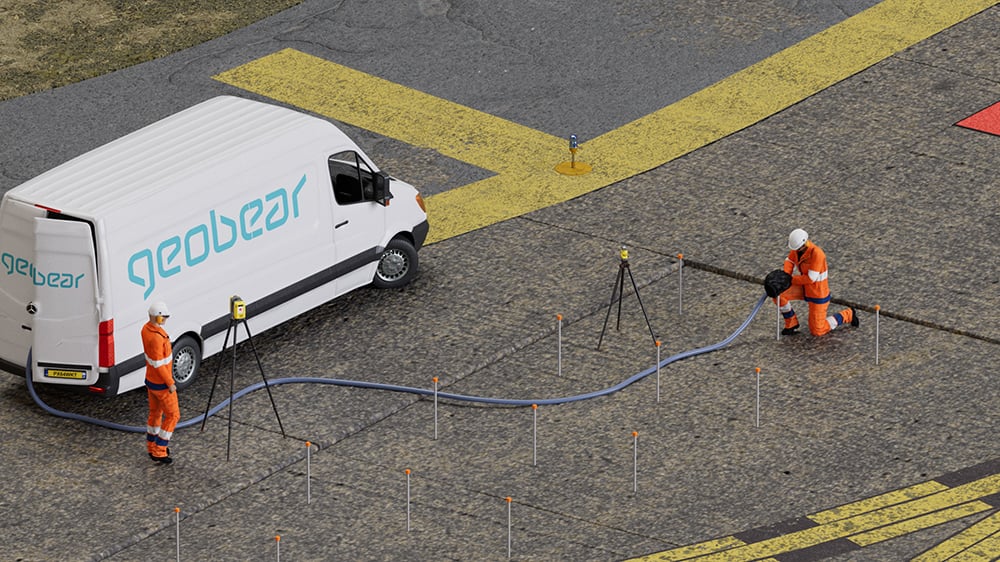
Airport pavements
Strengthening the subgrade beneath concrete runways and taxiways
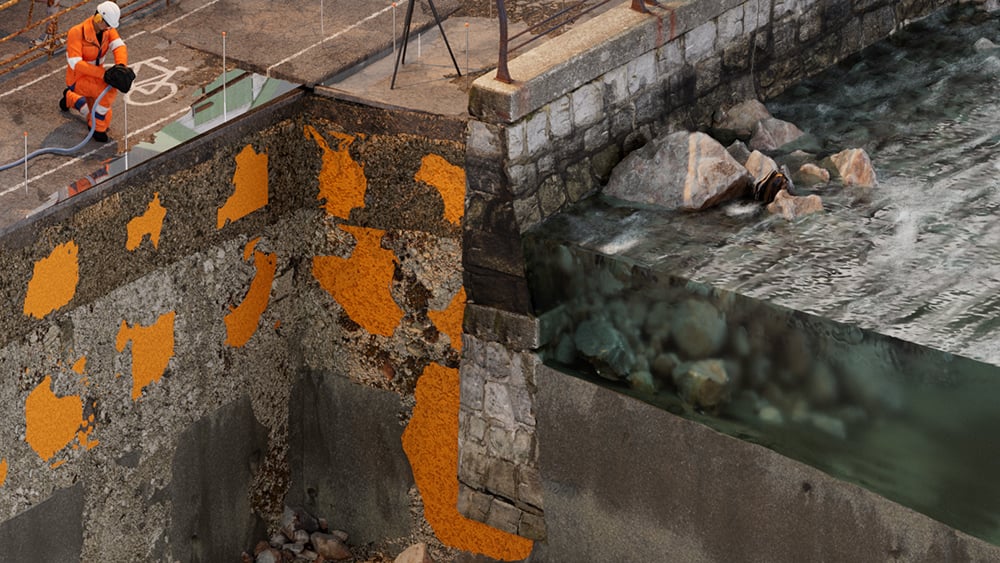
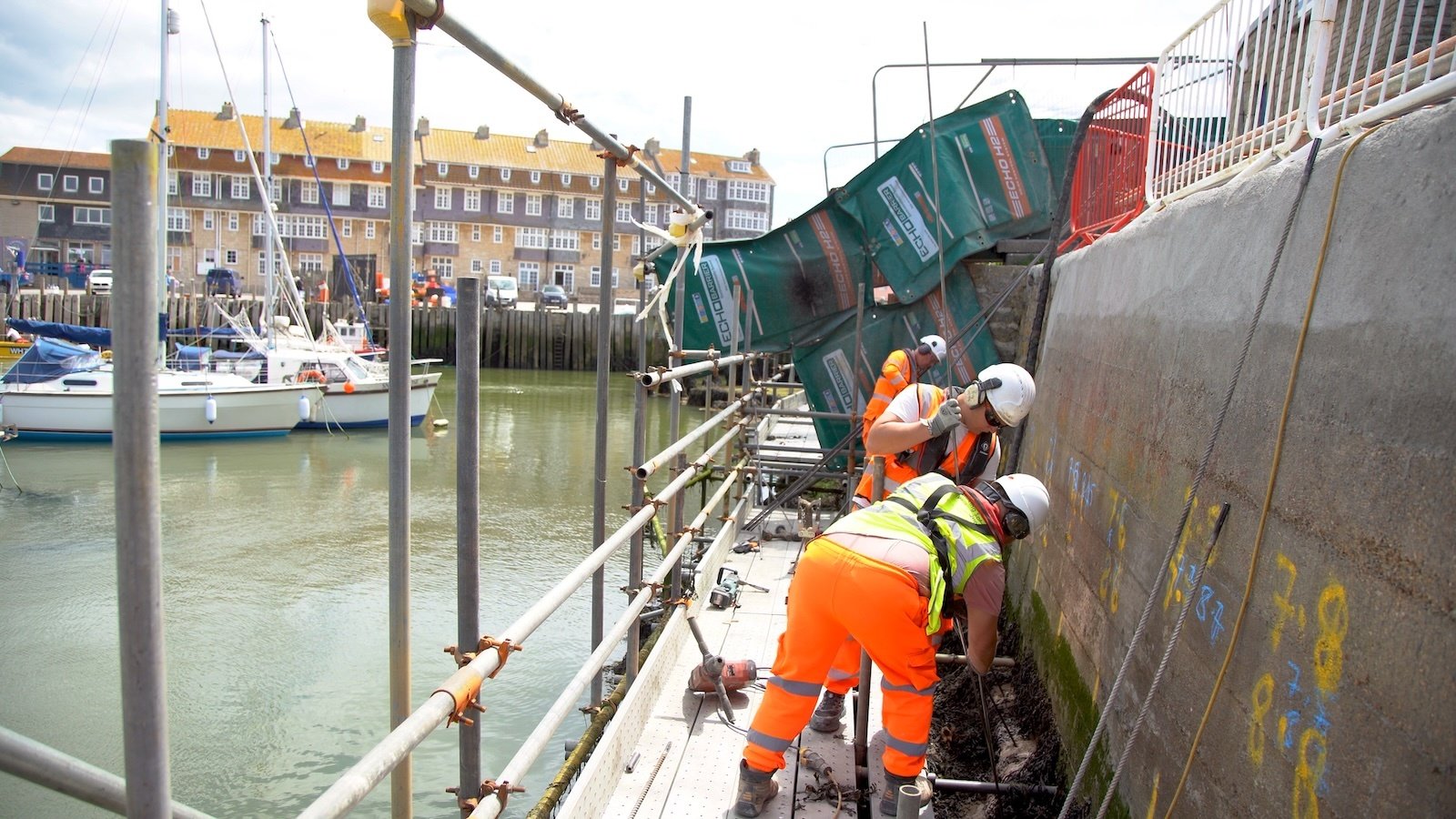
Ports and harbors
Strengthen ground and preventing subsidence by water ingress
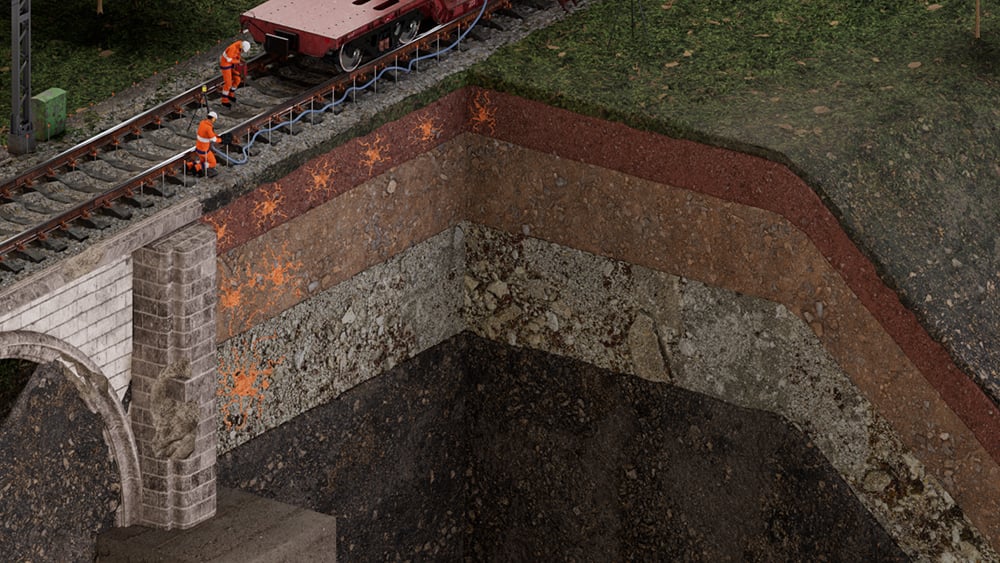
Rail and Metro infrastructure
Improving and strengthening the subgrade underneath railway ballast layers.
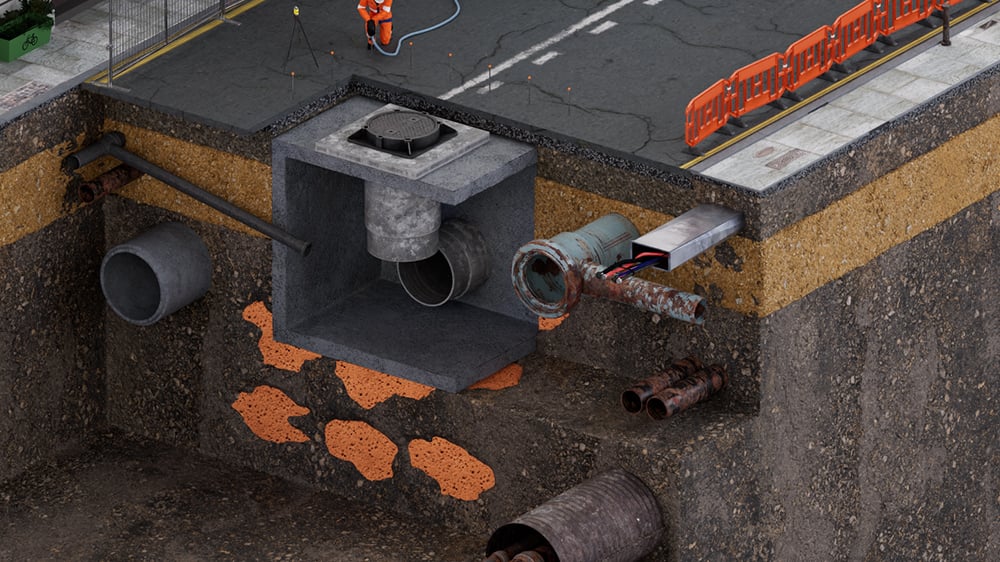
Structural loading
Bearing capacity improvement and settlement reduction below infrastructure.
Benefits of Geobear
Minimal disruption
Our no-dig process means you can stay operational while we work.
Faster completion
Projects take days, not weeks, with resins curing in as little as 15 minutes.
Cost-effective
Less labour, less downtime, and no costly rebuilds.
Lower carbon footprint
Around 75% lower carbon impact compared with cement-based methods.
Our process
Every site is unique, so our engineers start with a detailed survey and design a detailed treatment plan tailored to your project. This will specify exactly where the geopolymer is to be injected and at what level and in what quantities.

Geobear has a range of geopolymers which have differing performance characteristics, the engineers will choose the one which is best suited for your project.
We use a process known as compaction grouting (using polymer) or permeation grouting, depending on the soil type.
1. Deep injection grid
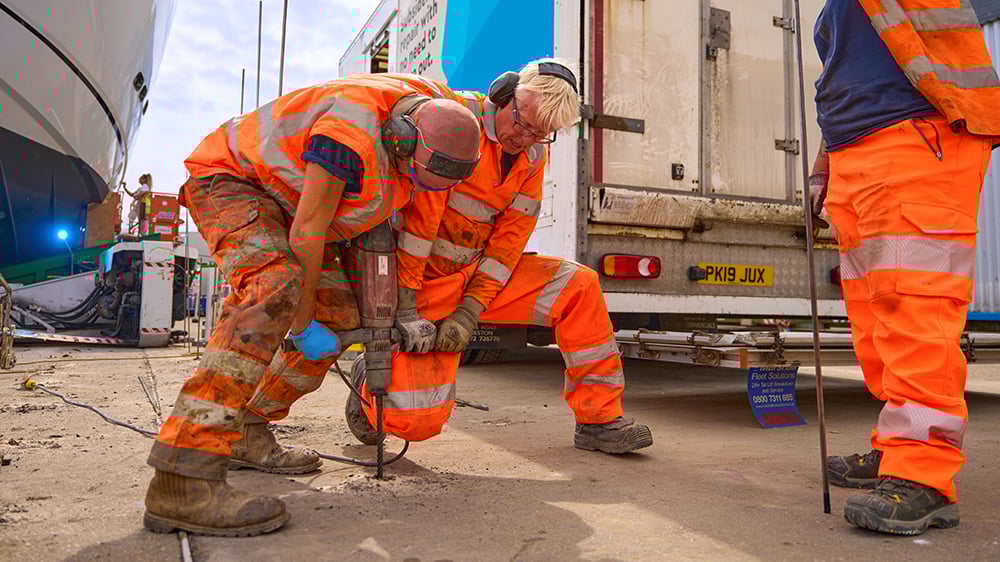
We drill a grid of small diameter holes through the surface asset to varying depths (typically 1m to 6m).
2. Expansion & densification
We inject a highly expansive geopolymer resin. As the material reacts, it expands up to 40 times its volume with significant force (up to 10,000 kPa).
- In granular soils (sand): The expansion pushes the soil particles closer together, increasing relative density and friction angle.
- In voids/washouts: It fills the macropores and locks the soil matrix together.
3. Verification
The result is a verified increase in soil stiffness and bearing capacity (often measured by testing), capable of supporting increased loads or new structures.
Case Studies
Our solutions have been applied across every infrastructure sector. Explore how we’ve solved ground improvement challenges for clients.
Stabilization and leak sealing for sheet-piled quay walls
A historic harbor wall (quay wall) constructed from driven sheet piles was failing due to tidal washout.
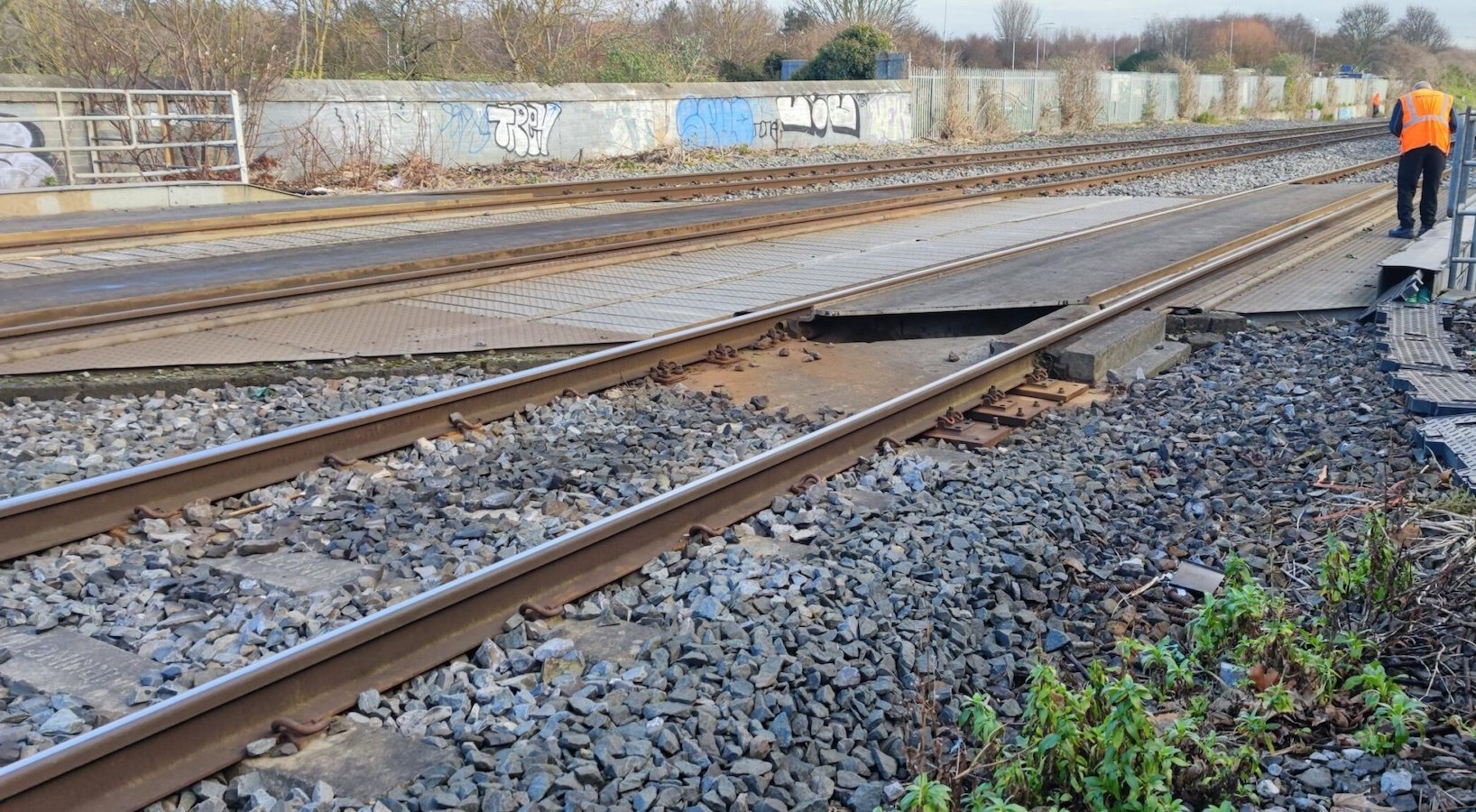
Rail Transition Zone
The asset owner needed a permanent solution to stiffen the subgrade without removing the track, ballast, or sleepers, which would have required an extended line closure and massive cost.
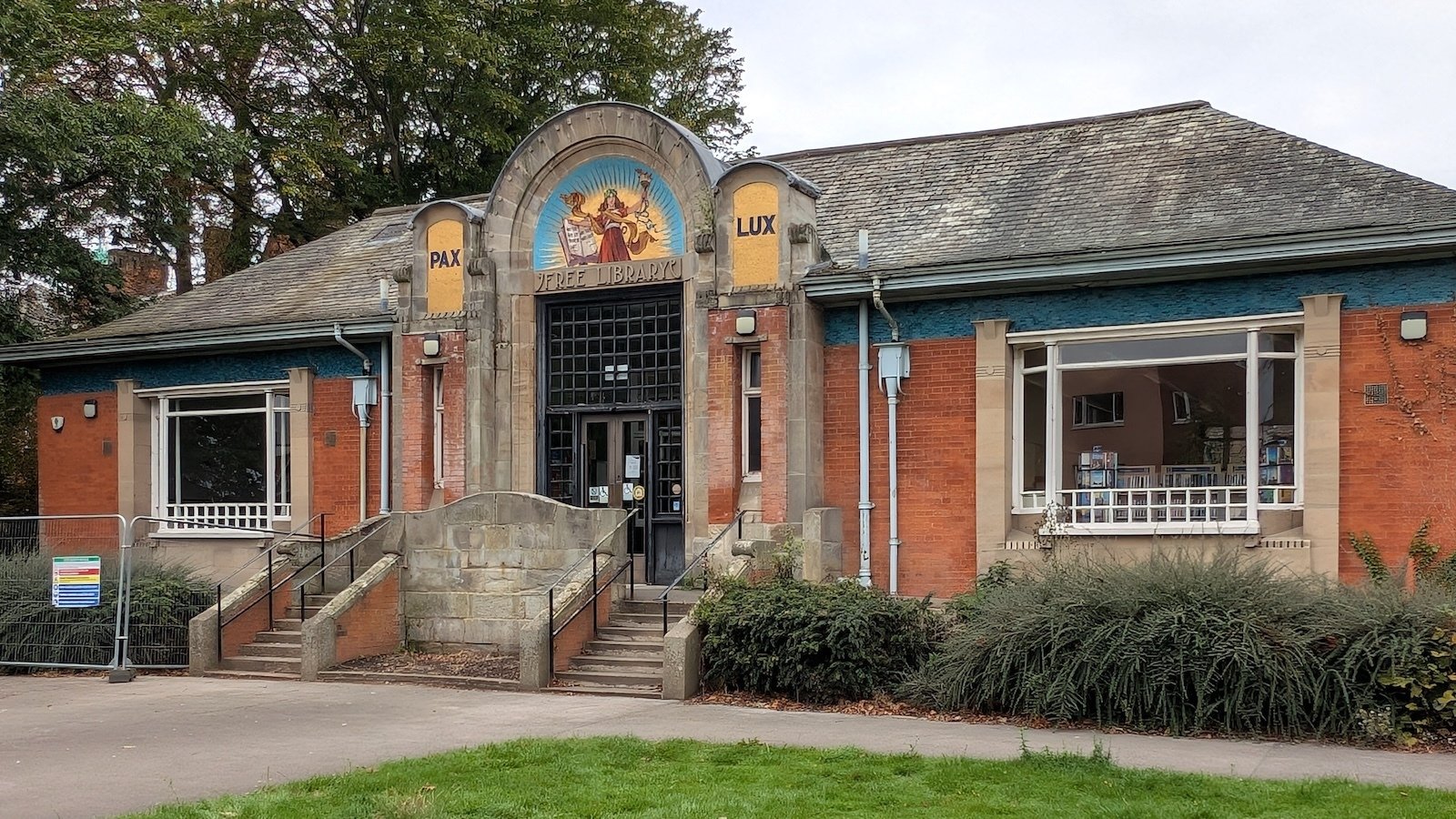
Long Eaton Library
The client needed to stabilize the building to prevent structural failure but could not afford to close the library or damage its heritage features (like stained glass and mosaics) with heavy construction work.
Need to support heavier loads?
Don't rebuild your foundation. Improve the ground beneath it. Contact our geotechnical team for a bearing capacity assessment.