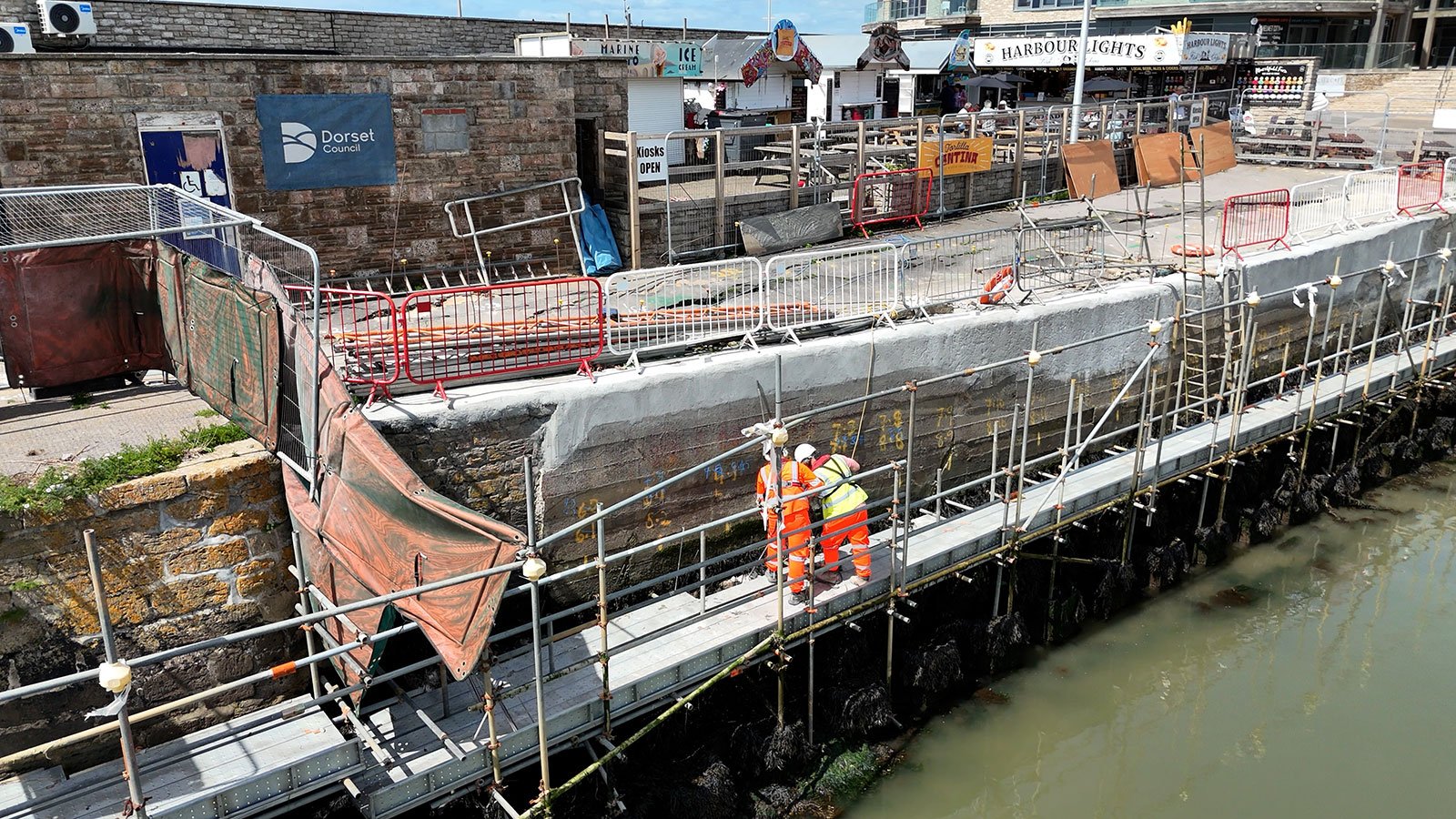
Ports & Harbours
Challenge
A historic harbor wall (quay wall) constructed from driven sheet piles was failing due to tidal washout. Fine material was being sucked out through gaps in the steel piles, causing large voids to form behind the wall and leading to the settlement of the concrete capping beam.
Solution
Geobear injected a hydro-insensitive geopolymer behind the sheet piles. The resin permeated the loose fill, filled the voids, and sealed the interlocking clutches of the piles. This stabilized the wall and stopped the washout cycle without the need for excavation or tie-back replacement.
average increase in soil densification
Void filling and soil compaction to 5 m below ground
Lower CO₂ emissions vs. cement grouting
Note: This project was executed at Bridport Harbour (West Bay) in the UK, demonstrating Geobear’s global expertise in marine infrastructure.
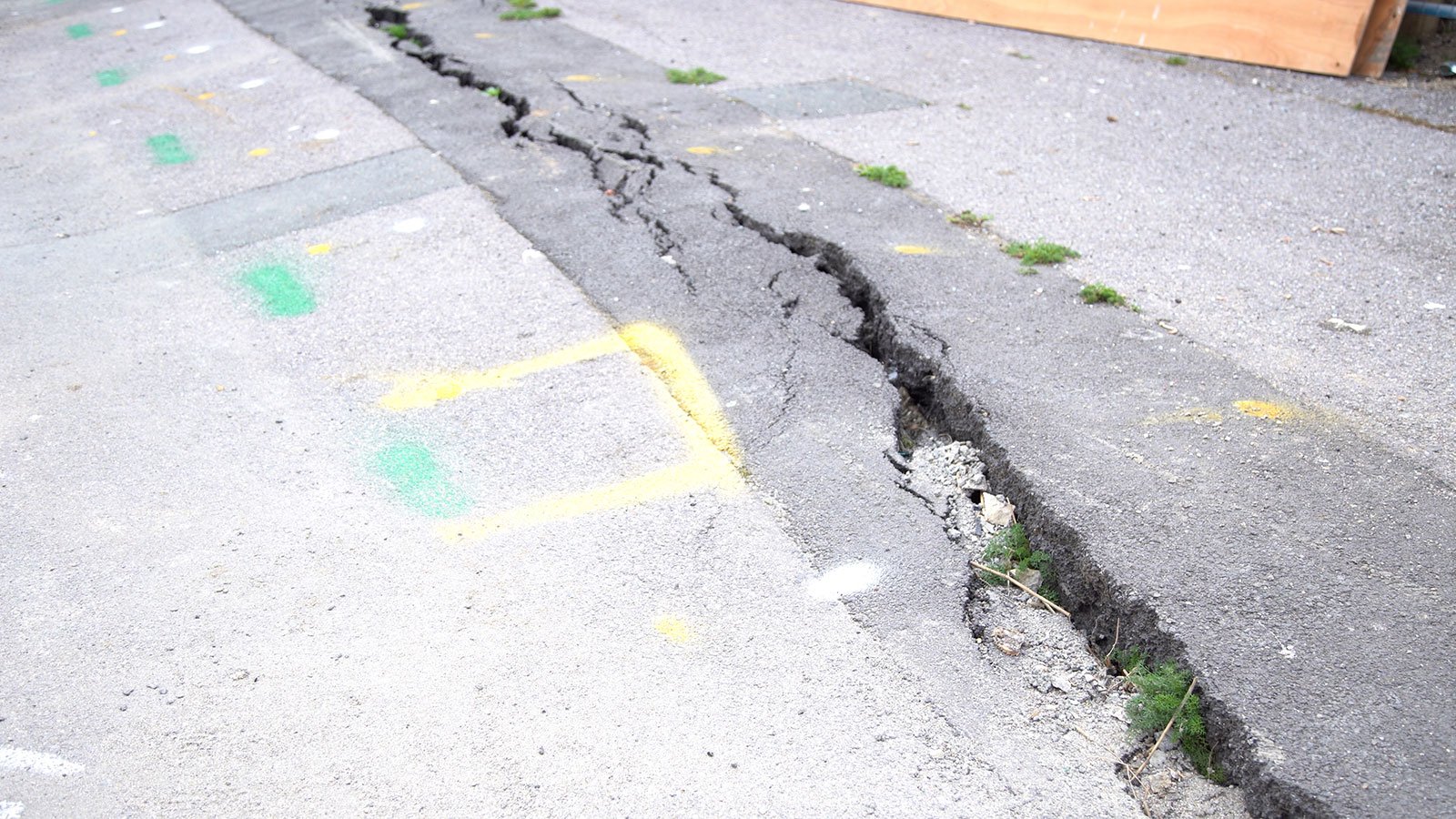
The harbor walls, originally constructed in the 19th century and reinforced with steel sheet piling in the 1980s, protect a busy public promenade. Engineers detected significant settlement in the concrete promenade slabs.
Investigations revealed that tidal action was washing fine gravel and clay fill out through the clutches (joints) of the sheet piles—a process known as "piping." This created extensive voiding behind the wall, compromising its structural stability.
The main challenge was to stabilize an historic harbor wall in an active marine and public environment. Excavation or heavy piling was not feasible as these carried unacceptable risks of vibration, noise, and disruption to kiosks, harbor offices, and tourism.
Site investigations carried out to determine the cause of the problem revealed the soil behind the wall to be composed of very loose brown sand and gravel, with discrete layers of soft brown sandy clay. Localized voiding was noted particularly near the surface.
The asset owner faced a complex marine engineering problem:
Washout cycle: Every tide cycle exacerbated the loss of fines. Simply filling the voids with grout wouldn't work if the "plug" wasn't sealed against the seawater.
Environment: The repair material had to work in saturated, saline conditions.
Access: The promenade was a high-footfall tourist area. Excavating behind the wall to replace the fill and seal the piles from the outside would have required closing the harbor front for months.
Without intervention, progressive settlement could have led to structural collapse. The solution needed to:
client insight
Kevin Davis, Dorset Council
Geobear developed a geopolymer injection scheme designed to compact the soil, fill any voids and provide stabilization ground support without excavation.
The treatment plan developed is shown below. This involves the injection of over 10 tonnes of geopolymer resin across 215 injection locations. Injections were spaced at 1m vertical centers from 1m to 5m bgl, giving a total number of 1075.
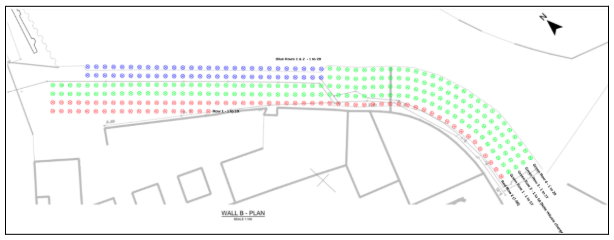
The results of the work were verified by before and after dynamic cone penetration testing using Pagani test equipment. This test uses a 30kg weight that is dropped over 0.20m onto an anvil which drives the test cone via the connecting steel rods into the soil. The curved surface area of the test cone was 10cm2. The number of drops or blows is counted for the cone to be driven an increment of 100mm into the soil and the results of the before and after treatment testing are shown below.
The results showed the average increase in densification to be 120%. Pagani DPM test results can be converted into equivalent SPT(N1)60 using correlations published by MacRobert et al., (2011) which indicate the average equivalent SPT(N1)60 increased from a value of 2 to 6.
The project stabilized 230 linear meters of the quay wall in just four weeks.
Durable seal: The washout path was eliminated, extending the asset's life significantly.
Public safety: The voids beneath the promenade were filled, removing the risk of sudden collapse.
Marine safety: The geopolymer used is inert and environmentally neutral, ensuring no harm to the marine ecosystem.
“The geopolymer has been injected five meters down into the ground, filling the voids behind the wall. The biggest benefit was no vibration at all — piling would have risked losing the wall. This was the best solution for the town, the businesses, and our budget.”
Kevin Davis, Construction Manager at Dorset Council
We seal sheet piles and fill voids in marine environments without excavation. Ideal for ports, canals, and marinas.