Keeping people safe and operations running
Fast, precise re-levelling for sunken slabs

Why infrastructure sinks in the UAE
Settlement is a constant challenge for UAE asset owners. Whether it is a highway built over loose desert sands, an airport on reclaimed coastal land, or a metro line crossing compressible Sabkha soils, the result is the same: loss of level. This leads to:
Safety hazards: "Steps" in pavements, rocking slabs, and ponding water.
Operational limits: Speed restrictions on rail lines or taxiways.
Asset damage: Cracking of rigid slabs and accelerated wear on vehicles.
Geobear solves this by lifting the asset in-situ. We do not rip it out and replace it. We inject expansive forces beneath it to lift it back to its original design level.
Challenges of uneven sites
Weakened soils
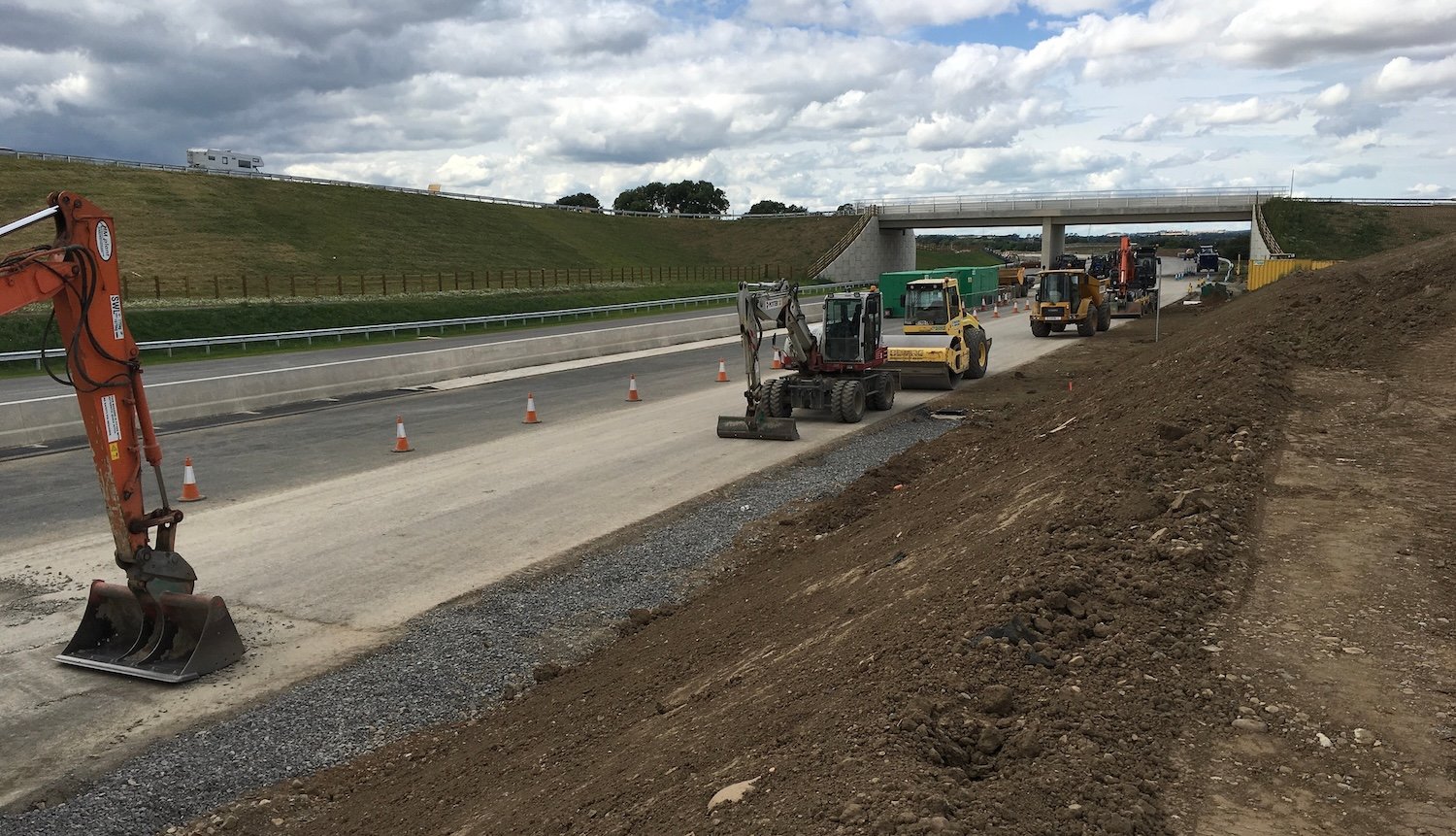
Existing soil conditions can deteriorate over time due to external forces such as water ingress which can wash out fines or due to the impact of clay shrink swell behaviour or due to excessive dynamic loading and vibration damage. As the soil becomes weaker, bearing capacity is lowered and excessive and uneven settlement increases.
Operational disruption
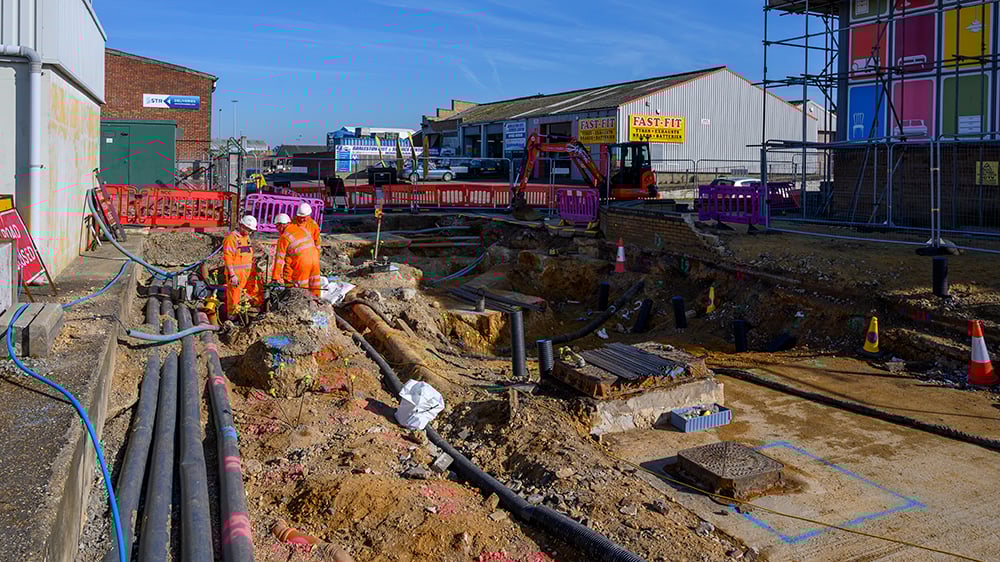
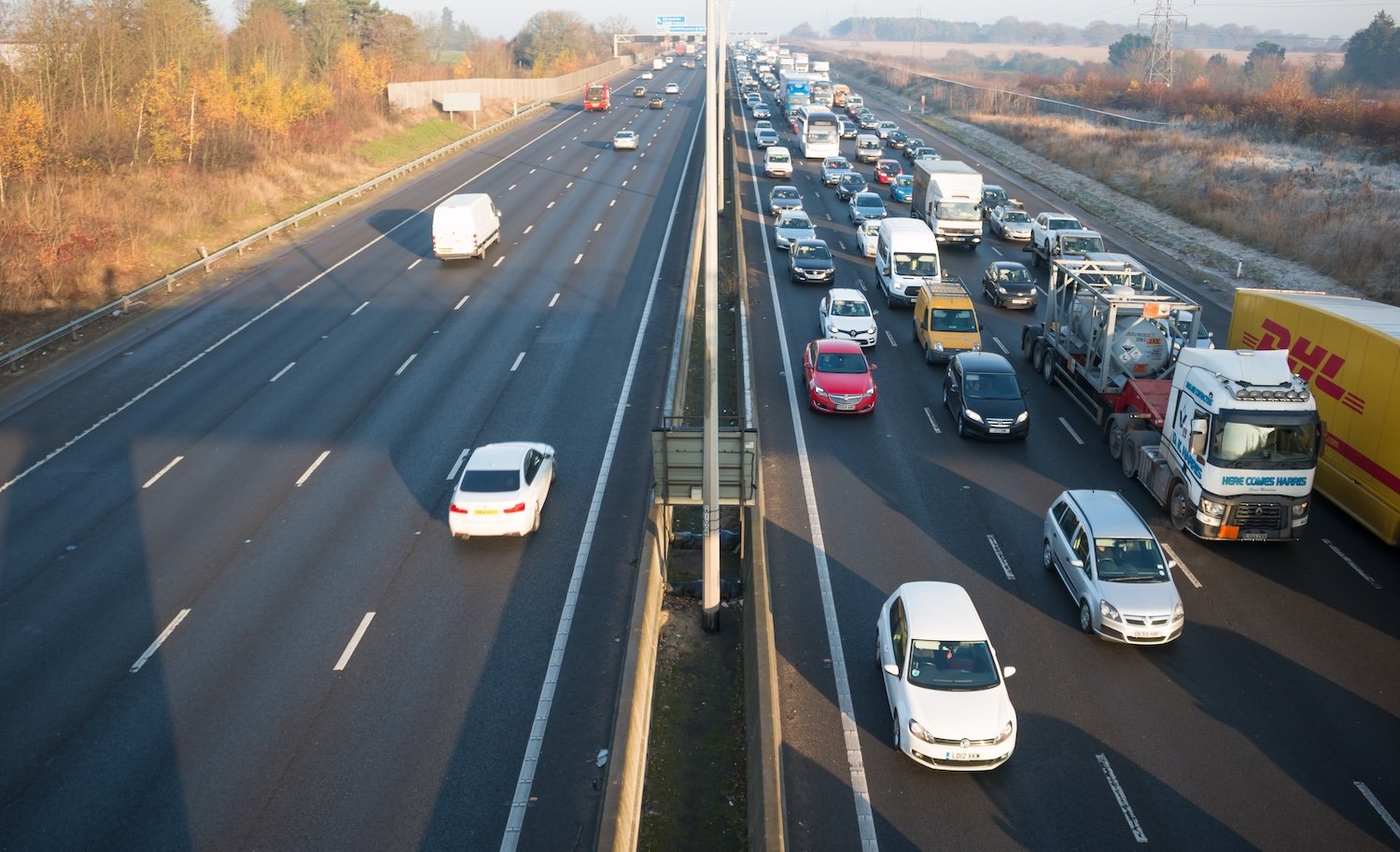
Traditional civil engineering methods for dealing with even slabs normally entails excavation and replacement which is highly disruptive to operations as the area has to be cleared and cannot be used for an extended period of time. This level of disruption to operational schedules is often unacceptable.
High socio-economic cost
The environmental impact of traditional engineering solutions is generally quite high due to the level of disruption and nuisance caused and a generally higher carbon footprint when compared to Geopolymer solutions.
High carbon emissions
Excavating and replacing concrete generates waste, transport impacts, and a heavy carbon footprint.
Solutions and benefits
Our solution is a faster, cleaner, and more precise way to restore sunken slabs.
Minimal disruption
Our no-dig process means operations can continue while we work.
Pinpoint accuracy
Laser monitoring ensures slabs are restored to the exact required level.
Faster completion
Projects finish in days, with resins curing in as little as 15 minutes.
Immediate return to service
Slabs can be safely used almost straight away.
Lower carbon footprint
Around 75% less carbon emitted than concrete replacement.
Specific applications
Our re-levelling and lifting solutions are used across a wide range of infrastructure assets:
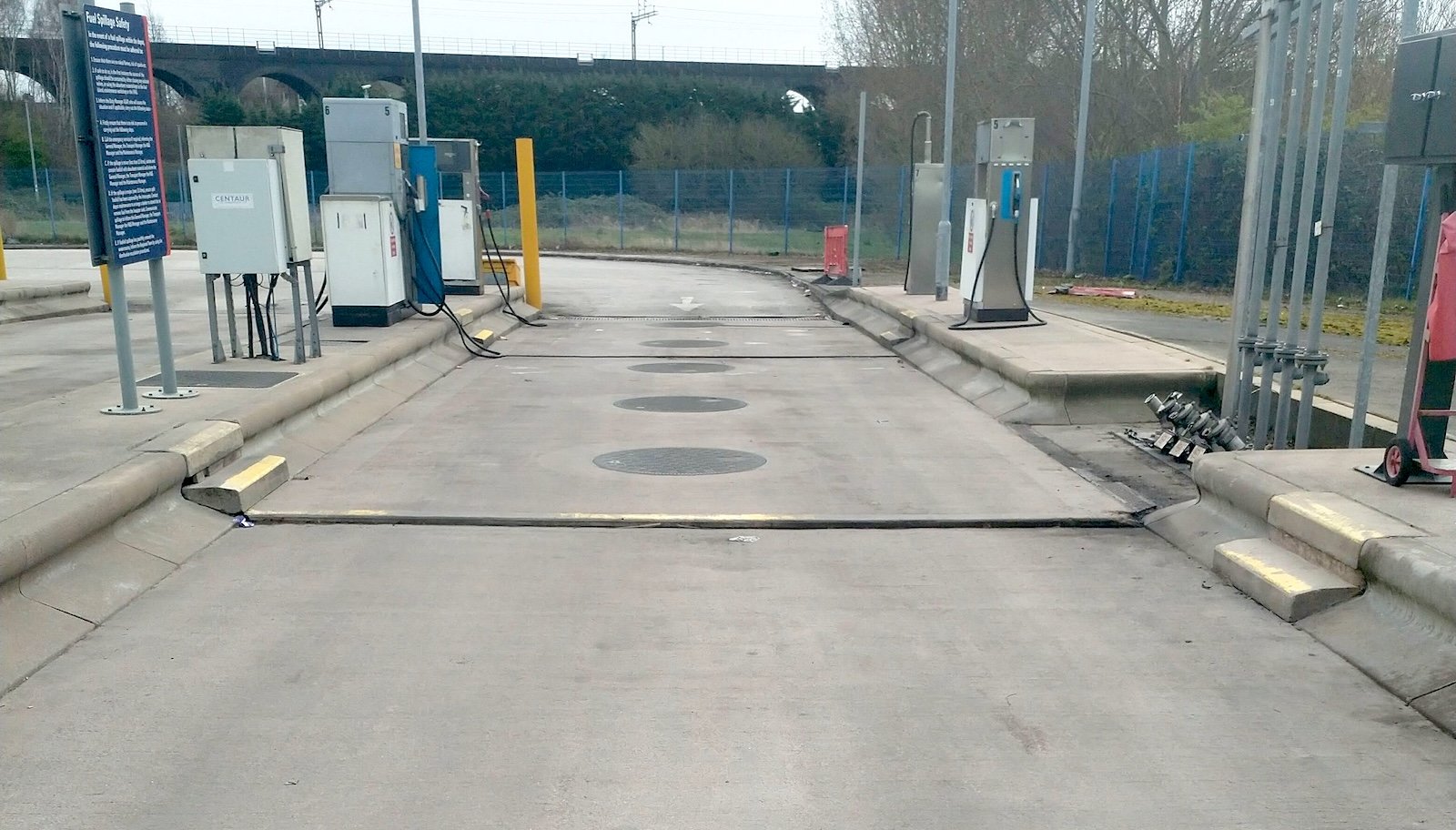
Airport runways, taxiways, and aprons
Port facilities and crane rail foundations
Industrial and commercial warehouse floors
Public roads, footpaths, and hardstanding areas
Rail track beds and slab foundations
Geobear process
Every site is unique, so our engineers start with a detailed survey and design a detailed treatment plan tailored to your project. This will specify exactly where the geopolymer is to be injected and at what level and in what quantities.
Geobear has a range of different geopolymers which have differing performance characteristics, the engineers will choose the one which is best suited for your project.The geopolymer is installed via small diameter temporary steel tubes, which are drilled into the ground to the required depth.
The geopolymer is injected in liquid form which then rapidly expands in-situ into a hardened material with specific engineering properties. The expansion creates lift and the amount injected is controlled to create the amount of re-leveling required.
The reaction profile of the geopolymer is very quick in comparison to cementitious grouts, gaining 90% of its compressive strength within 15 minutes and then fully cured within 1 hour. Throughout the process, we monitor the re-leveling with real-time laser monitoring – ensuring precision, control, and reliable results.
Geopolymer gains 90% of its compressive strength within 15 minutes and fully cures within 1 hour
Case studies
Geobear has restored slabs for airports, ports, warehouses, and transport networks worldwide. Examples include:
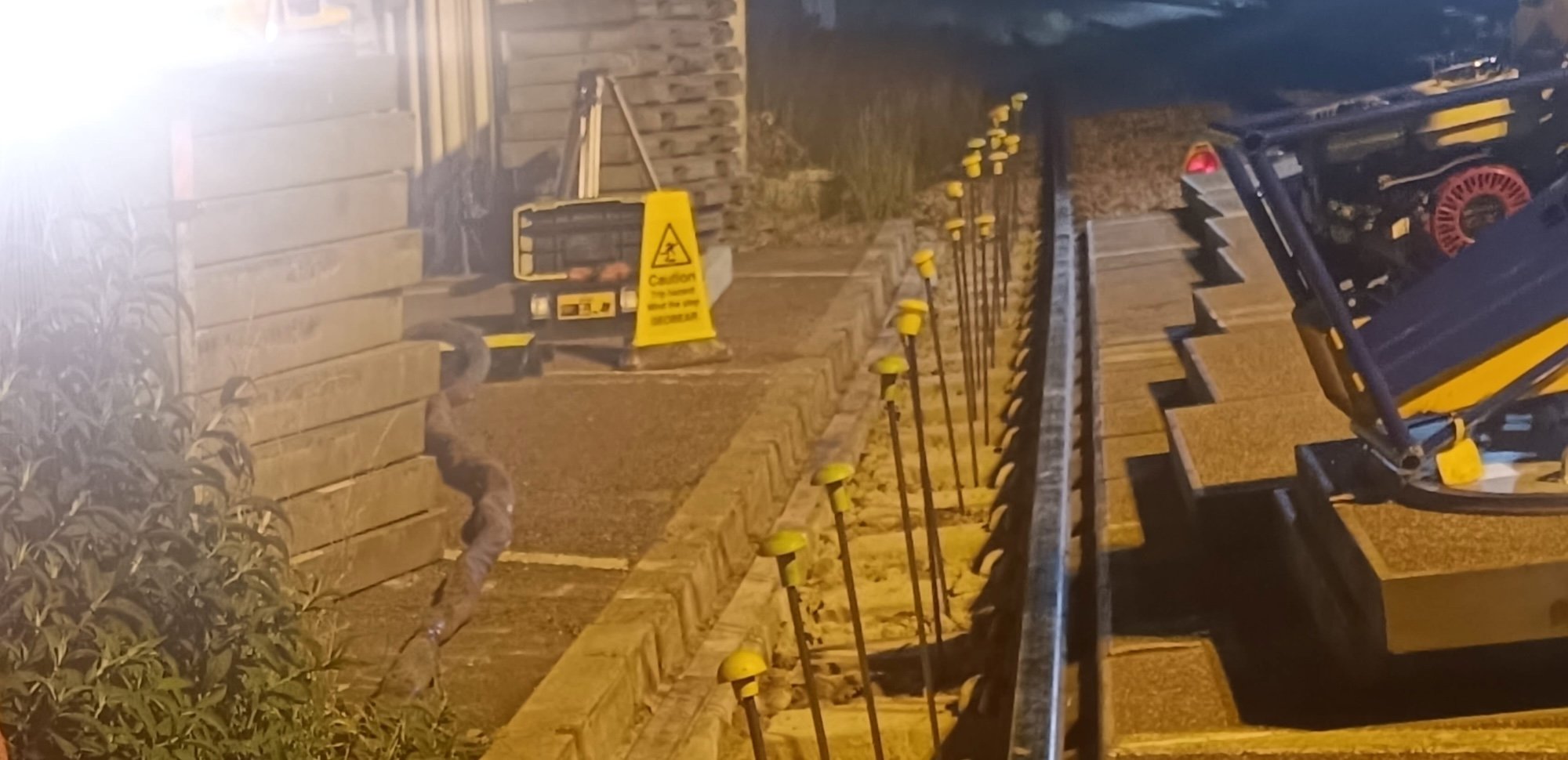
Ballasted level crossing
A newly rebuilt concrete level crossing suffered 60 mm settlement within a year, causing geometry faults, poor ride quality, and ongoing maintenance.
Where we apply this solution
Highways & bridges
Transition slabs: Eliminating the "bump" at bridge approaches where the embankment has settled relative to the pile-supported bridge abutment.
Concrete bays: Stabilizing and lifting rocking slabs on heavy freight routes to prevent corner breaks.
Airports
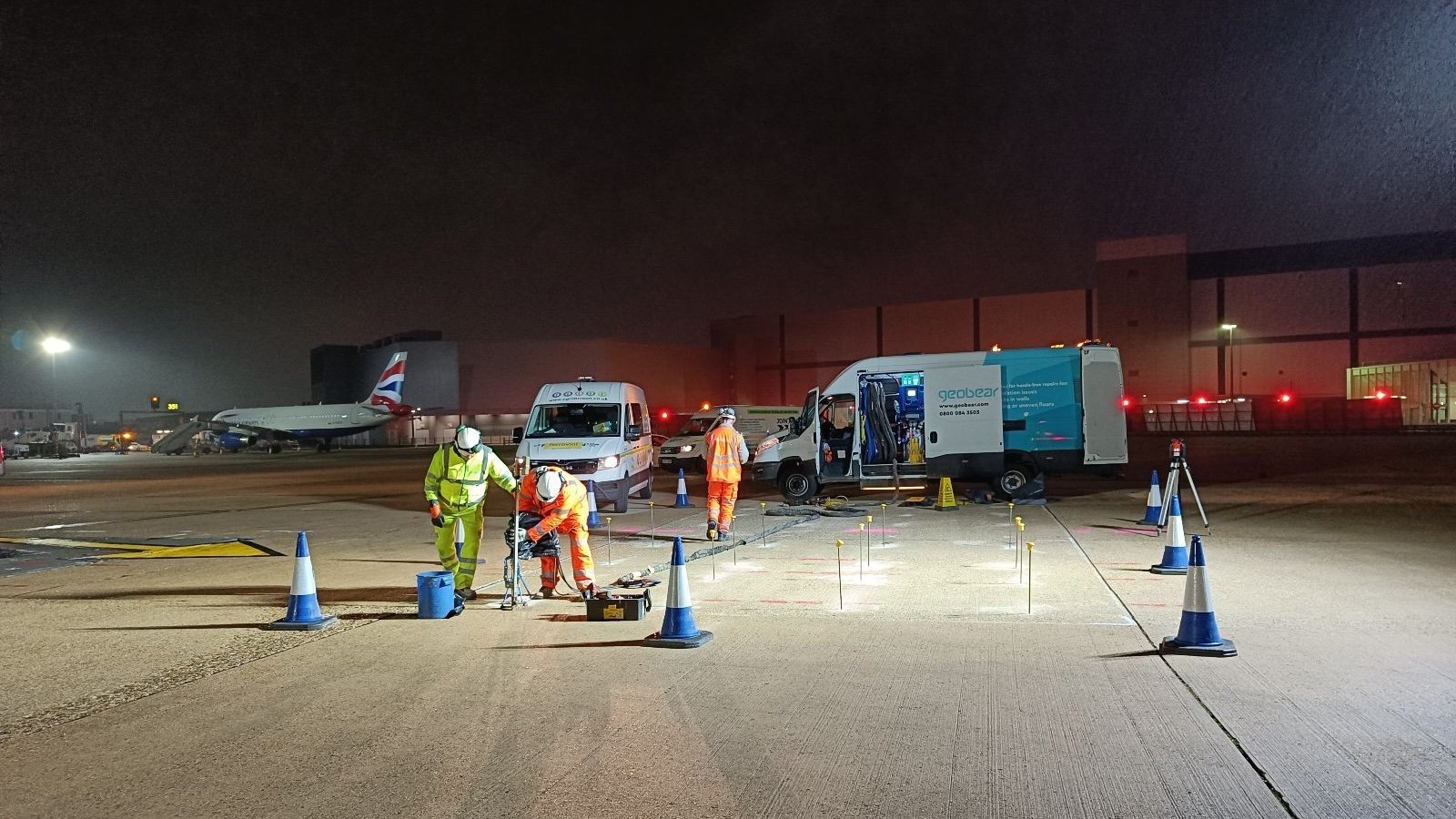
Runways & taxiways: correcting differential settlement to ensure smooth aircraft travel and compliance with safety tolerances.
Apron slabs: Re-levelling parking stands to ensure safe docking for aircraft and ground support equipment.
Rail & Metro
Slab track adjustment: Lifting sinking track slabs to restore vertical alignment and remove speed restrictions.
Platform re-leveling: Ensuring the gap between the train and the platform edge remains compliant with safety standards.
Ports & logistics
Crane rails: Re-levelling sinking rails to ensure gantry cranes run smooth and true.
Warehouse floors: Lifting sinking floor slabs to restore operability for VNA (Very Narrow Aisle) forklifts and automated robots.
Is settlement affecting your operations?
Don't let sinking assets slow you down. Contact our engineering team for a free site assessment and lifting proposal.