Public Assets
Challenge
A Grade II listed library suffered subsidence due to shrinkable clay soils and water ingress. Traditional underpinning would have required excavation, risking damage to the historic fabric and forcing a long-term closure of this vital community facility.
Solution
Geobear strengthened the foundations using non-disruptive geopolymer injection along 25.8m of wall. The process improved soil density threefold, halted settlement, and was completed entirely from the exterior with zero disruption to library services.
SPT values increased from 2–4 to >10
No excavation or vibration to the listed structure
Library remained open throughout for three days throughout the works
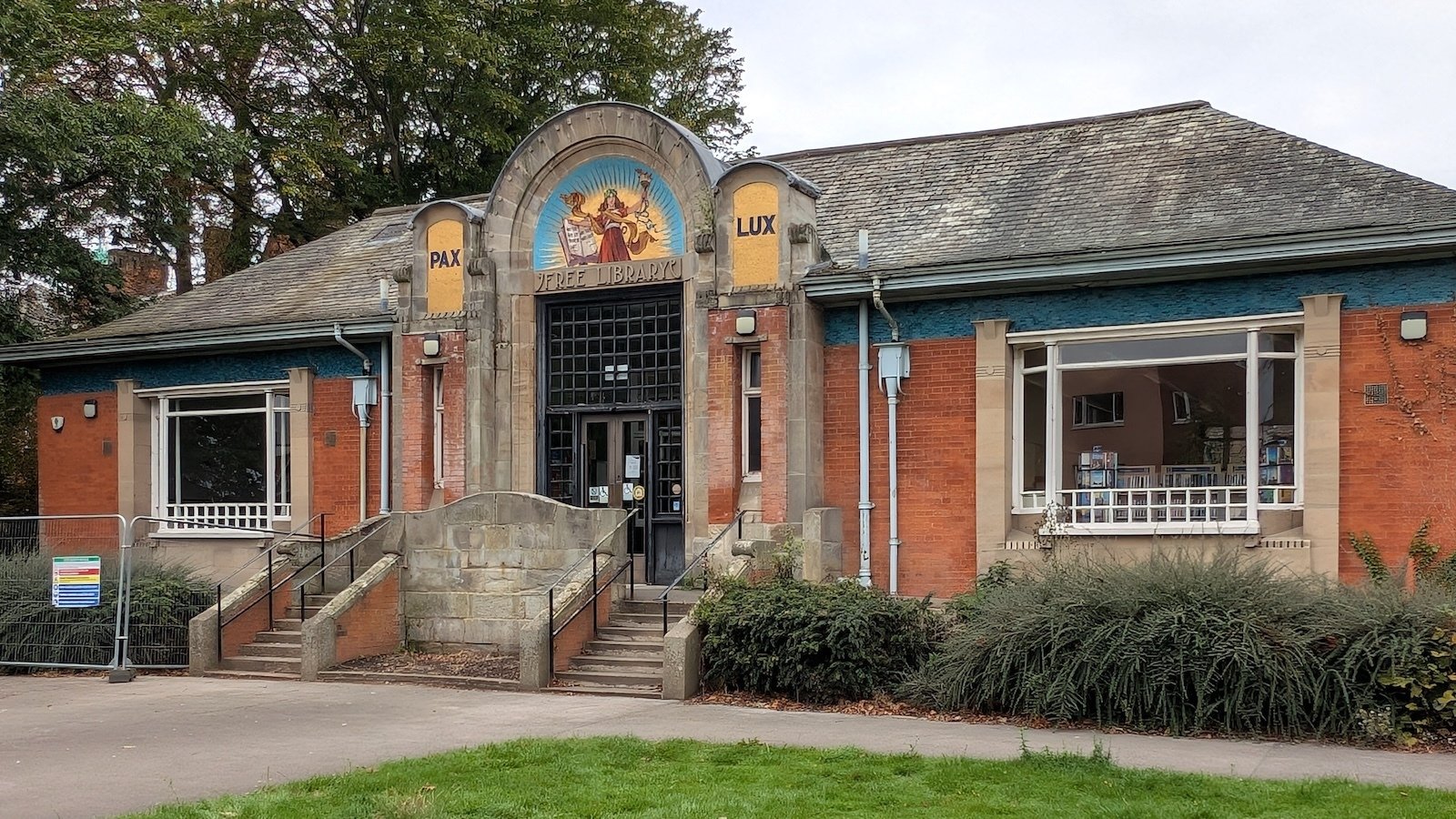
Note: This project was executed at Long Eaton Library in the UK, demonstrating Geobear’s sensitivity to heritage structures.
Historic public buildings often have shallow foundations that are vulnerable to changes in soil moisture. In this case, trees and drainage issues had caused the clay soil to shrink, leading to settlement cracks in the listed brickwork.
The client needed to stabilize the building to prevent structural failure but could not afford to close the library or damage its heritage features (like stained glass and mosaics) with heavy construction work.
Long Eaton Library, a Grade II listed Carnegie library built in 1906, had developed settlement and cracking at its front-left corner. Cracks were visible externally in the brickwork and mullions and internally through plaster finishes.
A structural appraisal concluded that the movement was caused by shallow strip foundations set in high-plasticity clay, affected by tree root activity and rainwater discharge close to the walls. Left untreated, further settlement would have threatened both the structural integrity and the heritage fabric of this important community building.
A ground investigation (2023) confirmed the issue:
The requirement was to stabilize the foundations, increase bearing capacity, and allow the corner of the building to be safely underpinned without excavation or vibration.
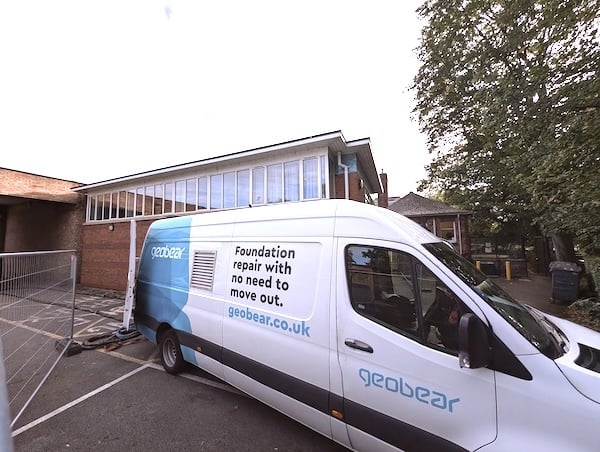
The main challenge was stabilizing a heritage-listed building in the centre of Long Eaton. Traditional underpinning or piling would have involved heavy excavation, vibration, and long-term closure of the library. This was not acceptable for a Grade II listed structure, particularly one with sensitive features such as mosaics, stained glass, and carved brickwork.
The soils posed further difficulties. The very soft clays beneath the shallow foundations had very low SPT values, meaning that any further drying from trees or wetting from downpipes could have caused accelerated movement. At the same time, the load-bearing sands and gravels sat deeper, so the solution needed to strengthen the upper soils while transferring loads into the denser layers.
The client therefore, needed a precise, non-invasive solution that could be installed quickly and safely without damaging the fabric of the library or causing disruption to public services.
Geobear designed and implemented a geopolymer injection program to underpin the affected corner of the library.
The works were carried out entirely from the exterior of the building, avoiding the need for excavation or access restrictions.
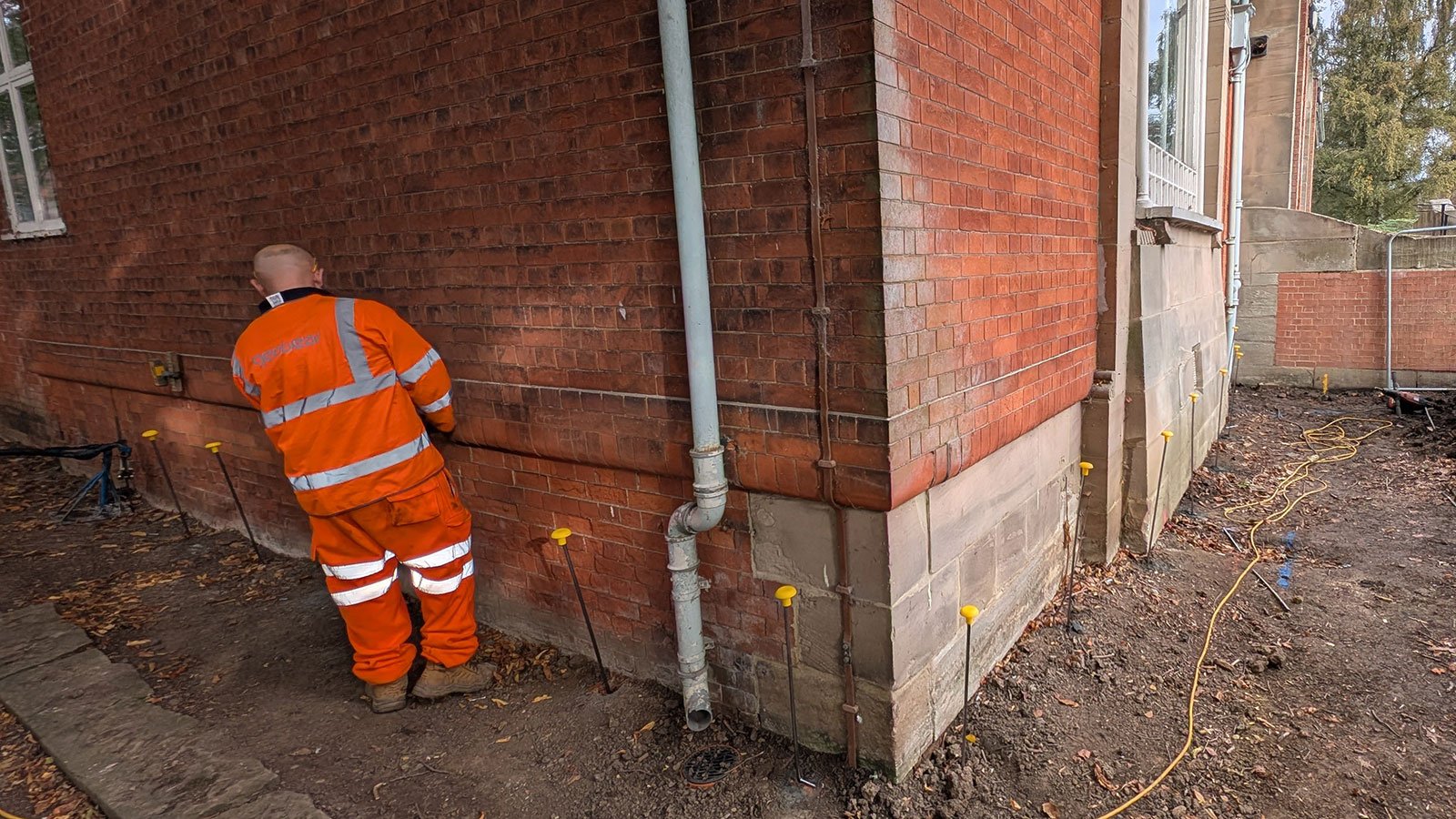
The project was completed in just three days.
Settlement halted: The front-left corner of the library was stabilised, eliminating further structural risk.
Soil bearing capacity improved: SPT values confirmed a three-fold improvement, from very loose to medium dense ground.
Heritage safeguarded: The listed building’s historic fabric was preserved, with no invasive excavation or vibration.
Minimal disruption: Works completed with the library operational, ensuring continued community access.
Carbon savings: Compared to underpinning or piling, the geopolymer solution avoided large-scale excavation, spoil removal, and concrete use, cutting embodied CO₂ significantly.
We stabilize heritage foundations without vibration or closure. Protect your asset's history and future, contact us today.