Rail
Challenge
Hidden construction shafts and voids behind the lining of a critical rail tunnel posed a severe collapse risk. The fragile 19th-century lining could not support the heavy hydrostatic load of traditional cement grout, and the site had severely restricted access.
Solution
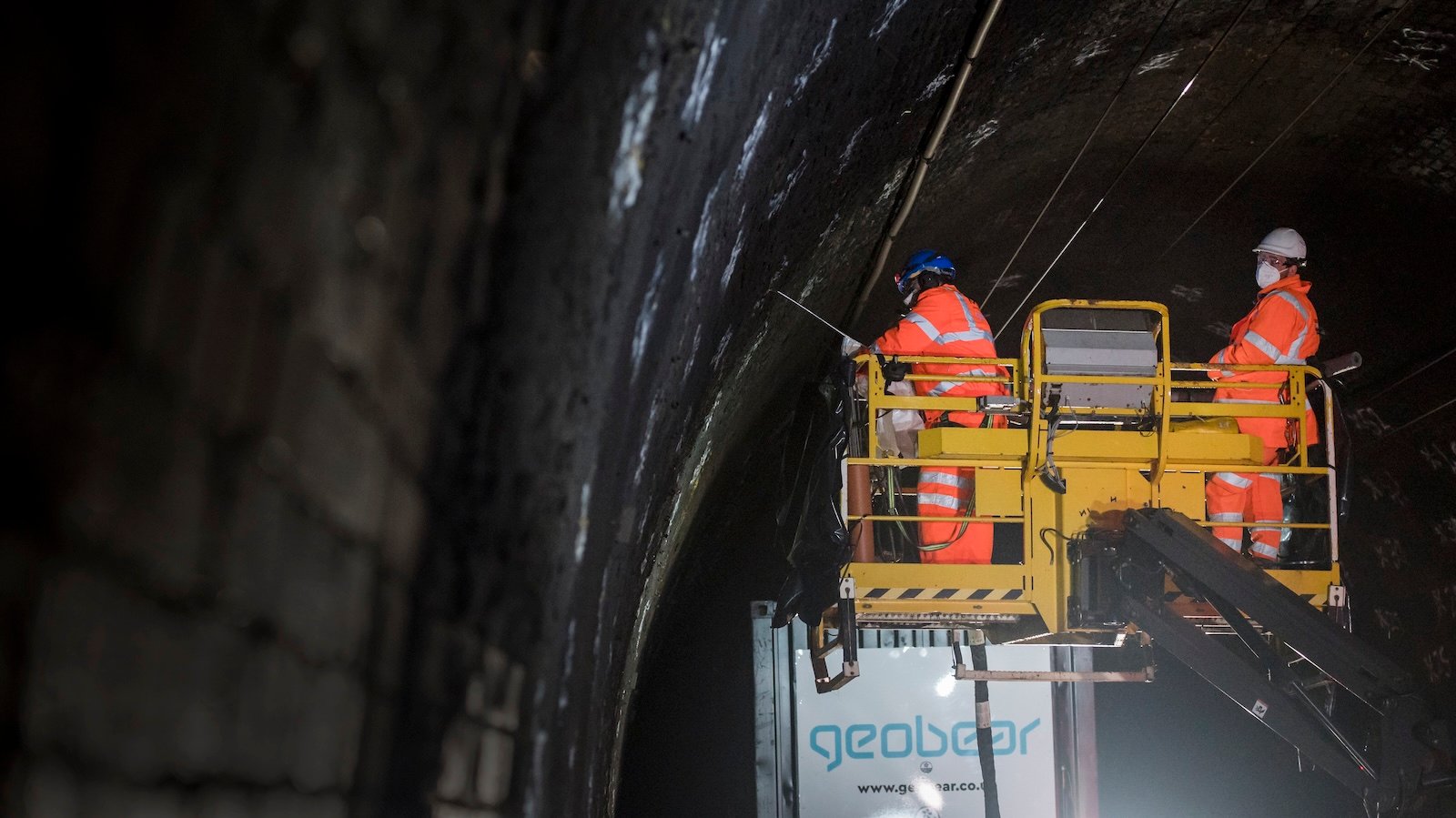
Geobear utilized a remote-injection geopolymer system. We pumped lightweight, structural resin through hoses from a safe distance to fill the shafts and stabilize the lining. The work was completed during short night maintenance windows with zero disruption to the rail line.
Lower CO₂ emissions vs. cementitious grout
Engineered lifespan of treated assets
40 Saturday night possessions — zero disruption to WCML
Deep infrastructure tunnels often have ancillary shafts used during construction for ventilation or access. Over time, backfill in these shafts can settle or washout, leaving dangerous voids above the tunnel lining. If these voids collapse, they can cause catastrophic failure of the tunnel or subsidence on the surface.
In this case, inspections confirmed voids behind the tunnel lining and within old construction shafts. The asset owner needed to fill these voids to prevent collapse, but the tunnel lining was too fragile to withstand the immense weight (hydrostatic pressure) of pumping in wet concrete or cement grout.
Shugborough Tunnel, built in 1846–47 beneath the National Trust estate, carries the West Coast Main Line (WCML) — one of the busiest mixed-traffic corridors in the UK, linking London to the North West.
During construction, temporary shafts were excavated to speed tunnelling. These were capped and backfilled, but many had deteriorated or were never properly infilled, leaving voids above the tunnel lining. Inspections by Network Rail and consultants COWI confirmed the presence of hidden shafts and lining voids, creating a risk of collapse that could damage the railway below or the historic estate above.
Structural fragility: The tunnel lining could not tolerate the heavy load of cementitious grout. A lightweight alternative was essential.
Restricted access: The injection points were located deep within the tunnel (250m from the portal) and up the tunnel walls, making access for heavy plant impossible.
Operational continuity: The line had to remain open during the day. All works had to be completed in short night possessions.
Client insight
Joe Ward, Project Manager
Geobear designed a bespoke geopolymer solution with two formulations: a lightweight resin to stabilize the tunnel lining, and a closed-cell resin to fill shafts.
Works were delivered in three stages:
Tunnel lining stabilization — voids behind brickwork filled 1 m either side of each shaft. This will involve injecting a low expense geopolymer with high compressive strength behind the tunnel lining to fill the voids.
Shaft base sealing — injection through the lining into shafts, binding debris and sealing the lower 4 m.
Shaft top infill — angled drilling from surface to inject geopolymer and fill shafts completely from top-down.
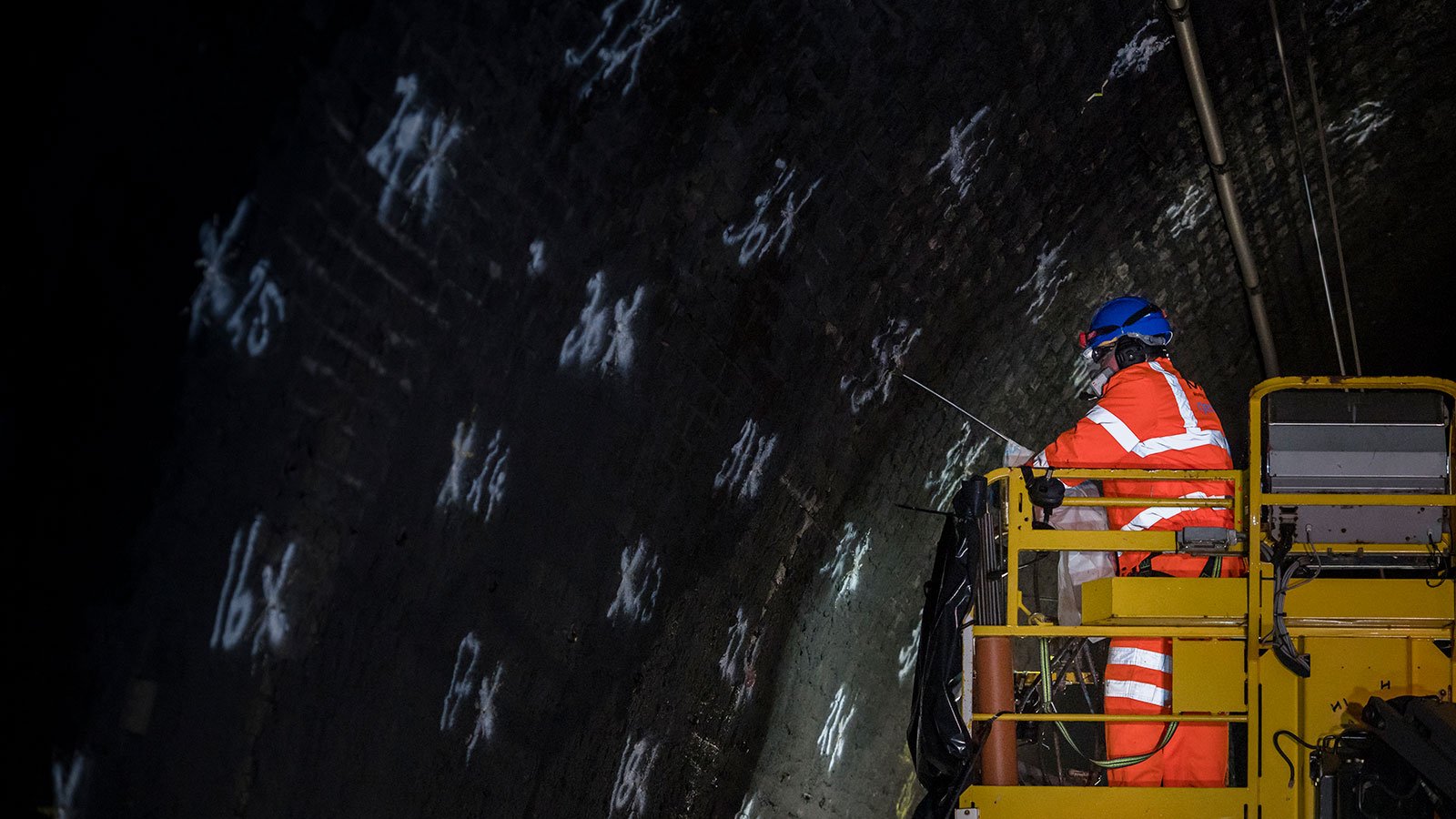
The project was completed successfully in 40 Saturday night possessions, maintaining full availability of the WCML. The shafts and lining voids were permanently stabilized, eliminating collapse risks and extending the tunnel’s life with a 120-year design life.
Compared with cementitious grout, the geopolymer solution delivered ~45% lower embodied carbon, reduced programe duration, and avoided the need for disruptive temporary works.
Collaboration between Network Rail, COWI, Story, and Geobear was critical to success. The project demonstrated the suitability of closed-cell geopolymers for complex tunnel stabilization in heritage and high-demand contexts.
We fill shafts and voids in restricted access tunnels using lightweight, remote-injection technology.