Highways
Challenge
A heavily trafficked dual carriageway suffered from voiding and instability beneath 150 concrete bays. The resulting "rocking slabs" and stepped joints created safety hazards and led to recurring pavement failure. Full-depth reconstruction would have required months of lane closures and massive disruption to freight corridors.
Solution
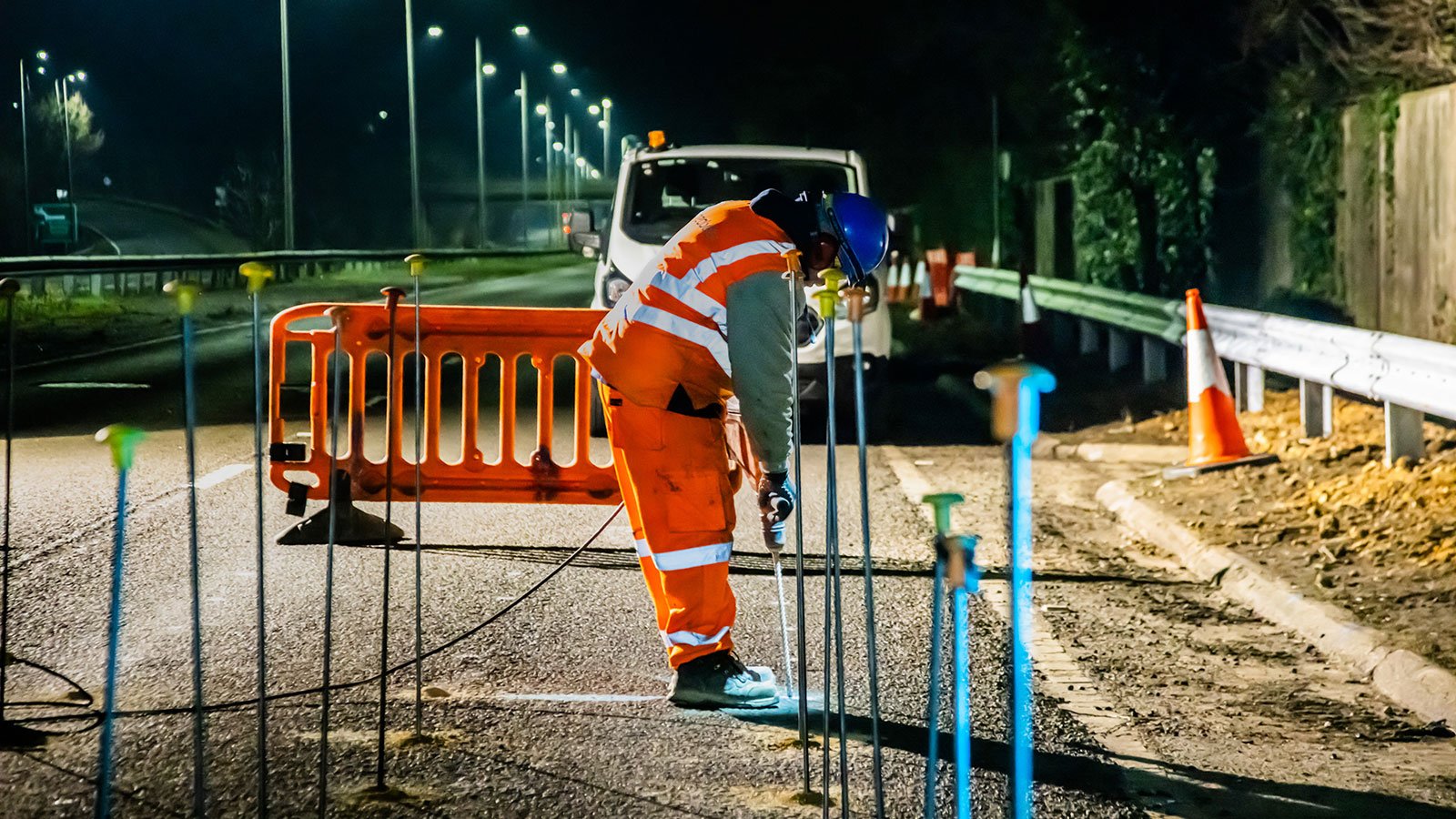
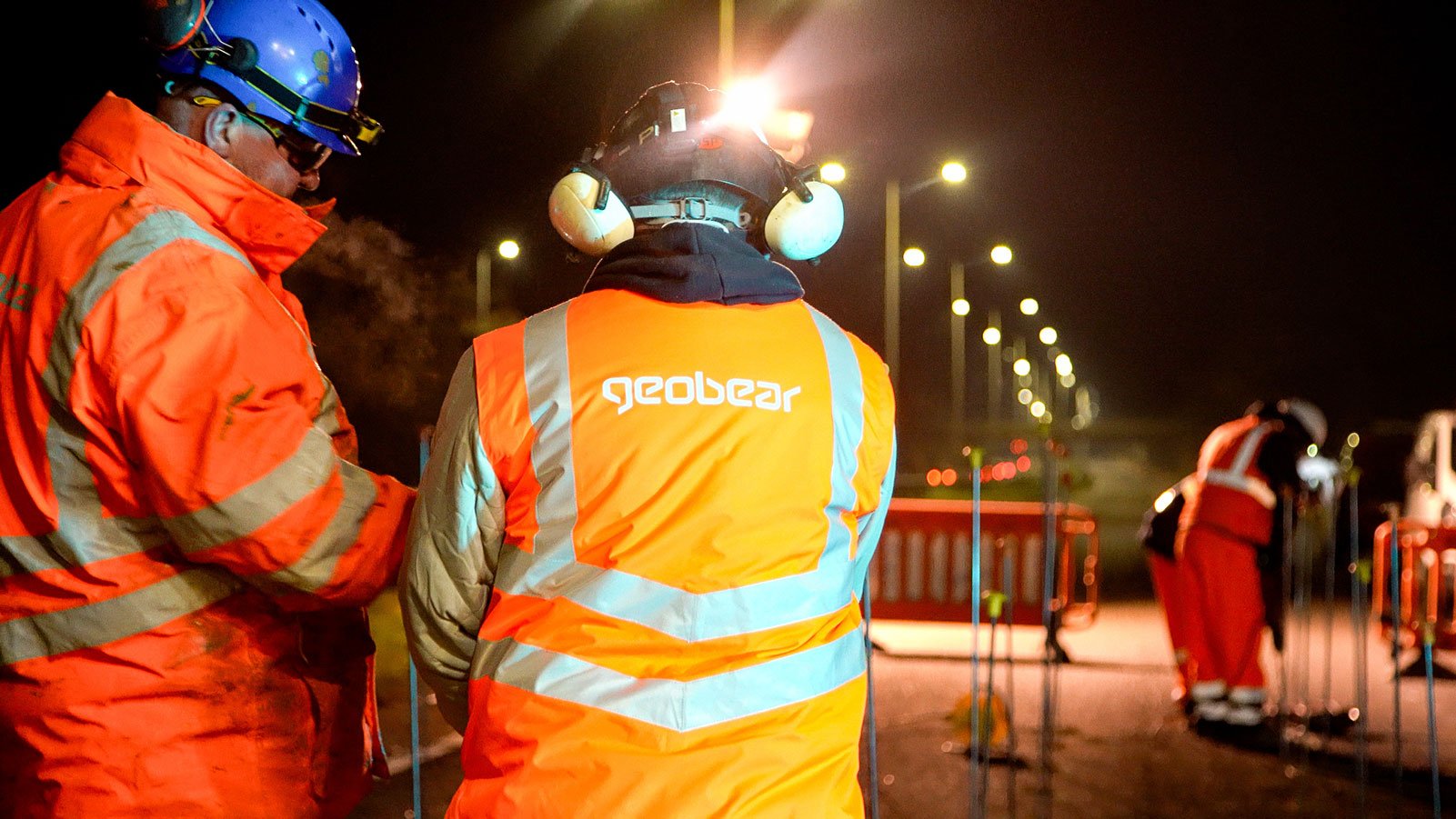
Geobear designed a rapid injection plan to stabilize all 150 bays. Using high-definition GPR to target voids, we injected expansive geopolymer to restore subgrade support. All work was completed during night shifts with the road fully open to traffic every morning.
Reduction (326.7 tCO₂e avoided) vs. full reconstruction
Bays stabilised in just 6 weeks
All works completed overnight with full daytime traffic flow
A heavily trafficked dual carriageway had experienced long-standing deterioration due to instability in the underlying soils. Repeated resurfacing had failed to provide a lasting solution, with cracking and potholes reappearing soon after.
Investigations confirmed voids and subsidence beneath the rigid pavement structure, compromising performance and safety.
Geobear was engaged to design and deliver a solution that would stabilise the pavement, extend its service life, and minimise disruption to road users.
The pavement investigation confirmed widespread voiding beneath the rigid concrete structure. The lack of support caused:
Slab rocking: Dynamic loading from trucks caused slabs to move vertically.
Corner breaks: Unsupported corners were snapping off.
Joint failure: Steps between slabs created a rough ride and damaged vehicles.
The challenge was to stabilize a massive area (150 bays) quickly, sustainably, and without shutting down the road during peak daytime hours.
Fact
Geobear implemented a data-driven "inject and lift" strategy:
1. GPR survey: High-definition Ground Penetrating Radar mapped the exact location and depth of voids across the carriageway.
2. Targeted injection: Based on the GPR data, we drilled 16mm holes through the concrete to inject expansive geopolymer at multiple levels (up to 1.5m deep).
3. Stabilization: The resin filled the voids, displaced water, and compacted the loose subgrade to restore full contact with the slab.
4. Rapid cure: The material reached 95% design strength in 15 minutes, allowing immediate reopening.
The scheme demonstrated the efficiency and sustainability of geopolymer injection for large-scale highway stabilization:
This project proved that geopolymer injection can deliver rapid, sustainable stabilization of concrete pavements at scale, reducing both disruption and environmental impact.
Get in touch with our expert team today and discover how Geobear can extend the life of your critical infrastructure assets.