Public Assets
Challenge
A Grade A-listed museum and government office was suffering from long-term subsidence. High tides were causing fines washout beneath the historic foundations, leading to structural cracking. Traditional underpinning would have required excavation, damaging the heritage fabric and forcing a complete closure of the building.
Solution
Geobear acted as Principal Contractor to deliver a full turnkey ground improvement service. We injected geopolymer at over 250 points to densify the soil and arrest settlement. The entire project was completed in 15 days while the museum and offices remained fully open to the public.
working days — full stabilisation achieved
Building remained fully open throughout
lower CO₂ footprint vs. traditional underpinning
Note: This project was executed at the Burnet Building (Campbelltown Museum) in Scotland, serving as a global reference for Geobear’s heritage capabilities.
Historic buildings often have shallow foundations built on loose fill. In coastal areas, tidal action can wash out fine soil particles over decades, weakening the ground support. This was the case here, where settlement was threatening the structural integrity of a beloved public asset.
The client needed a solution that would stabilize the building without:
1. Damaging the historic stonework or floors.
2. Closing the museum, which would lose revenue and disrupt community services (like weddings and council operations).
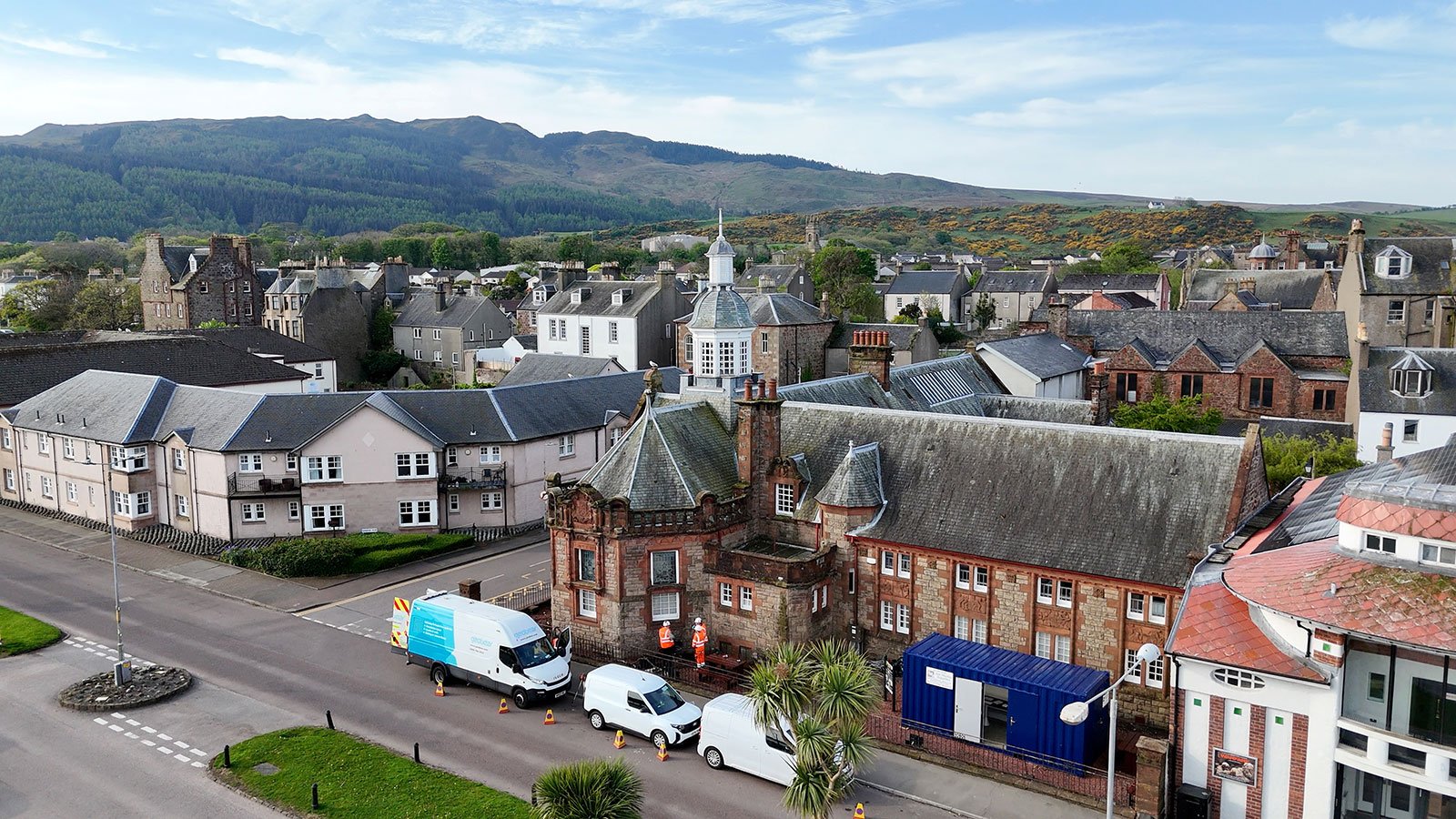
The Burnet building, a Grade A-listed museum and council office in Campbeltown, Scotland, had experienced long-term subsidence since the 2000s. The structure, located adjacent to the dock, was suffering from structural cracking as high tides from Campbeltown Loch washed out fine soils, weakening the ground beneath the foundations.
The client, Argyll and Bute Council, needed to stabilize the historic building. However, traditional concrete underpinning would have required significant excavation and forced the complete closure of the multi-use public building for an extended period. This would have halted museum visits, council operations, and marriage ceremonies, making it an unviable solution. A minimally disruptive approach was a fundamental requirement.
The primary constraints were preservation and continuity.
Vibration sensitivity: Heavy piling or compaction could cause further damage to the fragile masonry.
Access: The works had to be carried out in a live environment.
Carbon: The council had strict sustainability targets that traditional concrete underpinning could not meet.
Geobear was selected as Principal Contractor to deliver a full turnkey service. The decision was based on our non-disruptive solution and our proven experience with heritage buildings.
Our engineers designed a targeted geopolymer injection plan to improve the soil's bearing capacity. The solution involved over 250 injection points, reaching depths of up to 2 meters below the primary load-bearing walls.
The entire 15-day project was completed while the building remained fully operational.
Geobear designed a "surgical" injection plan.
Grid design: We drilled small diameter holes through the external ground and internal floors to reach depths of up to 2 meters below the load-bearing walls.
Material: We used a high-density, hydro-insensitive geopolymer to bind the loose fill and resist future tidal washout.
Monitoring: Laser levels ensured that the injection stabilized the walls without causing excessive lift that could crack the heritage plasterwork.
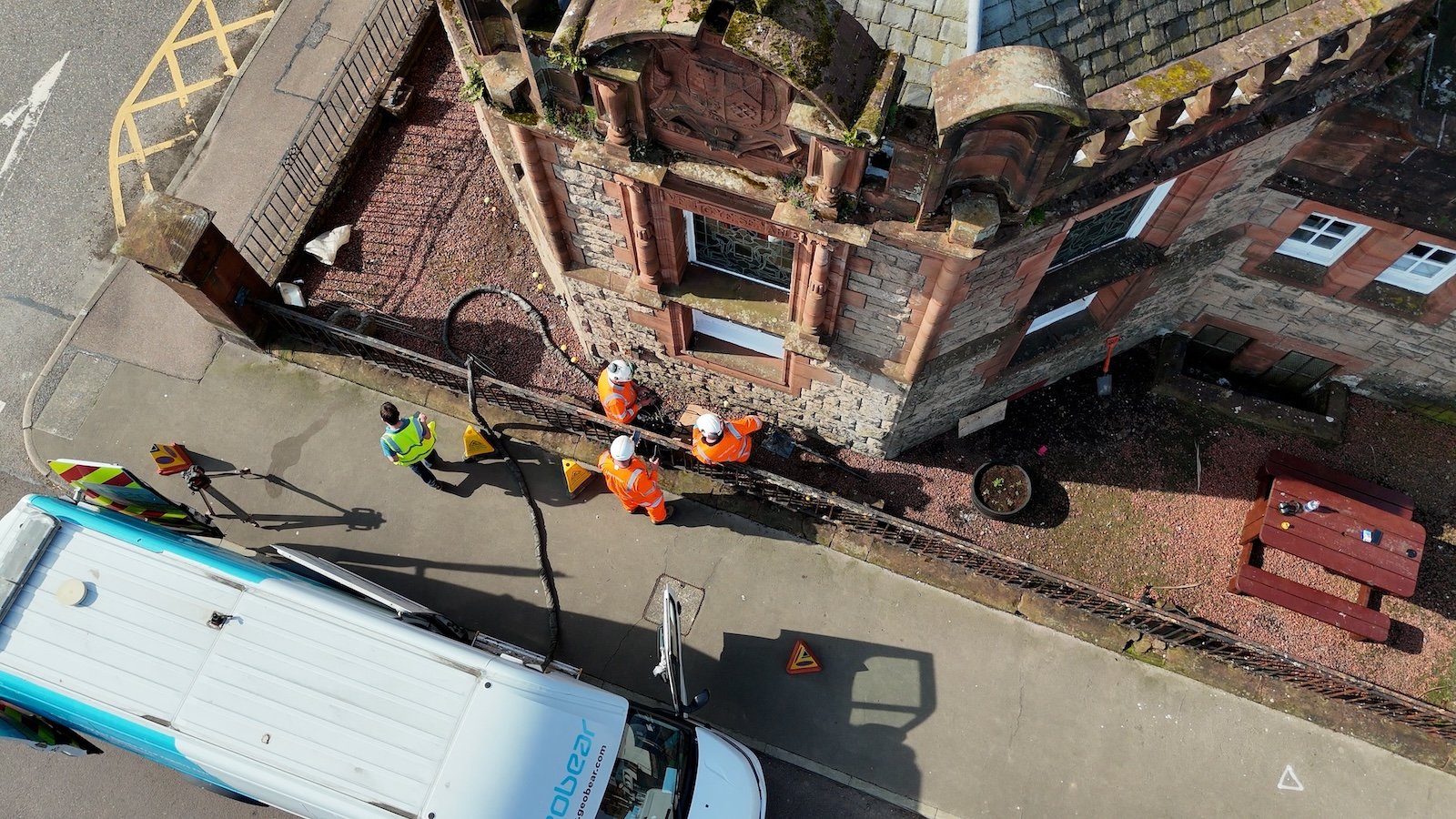
The project was completed on schedule with zero inconvenience to the public or council staff. Pre- and post-treatment Dynamic Probe Testing (DPT) verified the required improvement in ground strength.
The solution avoided a lengthy and disruptive closure, and its carbon footprint was 53% lower than underpinning, saving 23 tonnes of CO₂e.
The client had the confidence to proceed based on Geobear's quality case studies, which demonstrated a capability to deliver in sensitive, high-profile environments.
The project was a textbook example of non-intrusive heritage restoration.
Verified improvement: Pre- and post-treatment Dynamic Probe Testing (DPT) confirmed a significant increase in soil bearing capacity.
Sustainability: The solution saved 23 tonnes of CO₂e compared to underpinning.
Client satisfaction: The building remained open throughout, proving that major structural repairs can be done without "mothballing" a site.
We stabilize historic foundations without vibration or excavation. Preserve the structure and keep your doors open.