Why voids form in the UAE
In the UK/Europe, voids are often caused by old mines or clay shrinkage. In the UAE, the mechanism of failure is different but equally destructive.
Sabkha dissolution (chemical voids)
Coastal regions in Abu Dhabi and Dubai are underlain by Sabkha soils containing gypsum and halite. When groundwater levels fluctuate (due to tides or construction dewatering), these salt layers dissolve, creating large underground cavities that migrate upward to the surface.
Piping & washout (physical voids)
The UAE’s loose, non-cohesive desert sands are highly susceptible to "piping."
Utility leaks: A minor leak in a high-pressure water main or district cooling pipe acts like a jet, washing away cubic meters of sand around the pipe.
Tidal action: Seawalls and quay walls often suffer from "loss of fines" where tidal flow sucks material out from behind the wall, leaving the pavement unsupported.
Flash flood scour
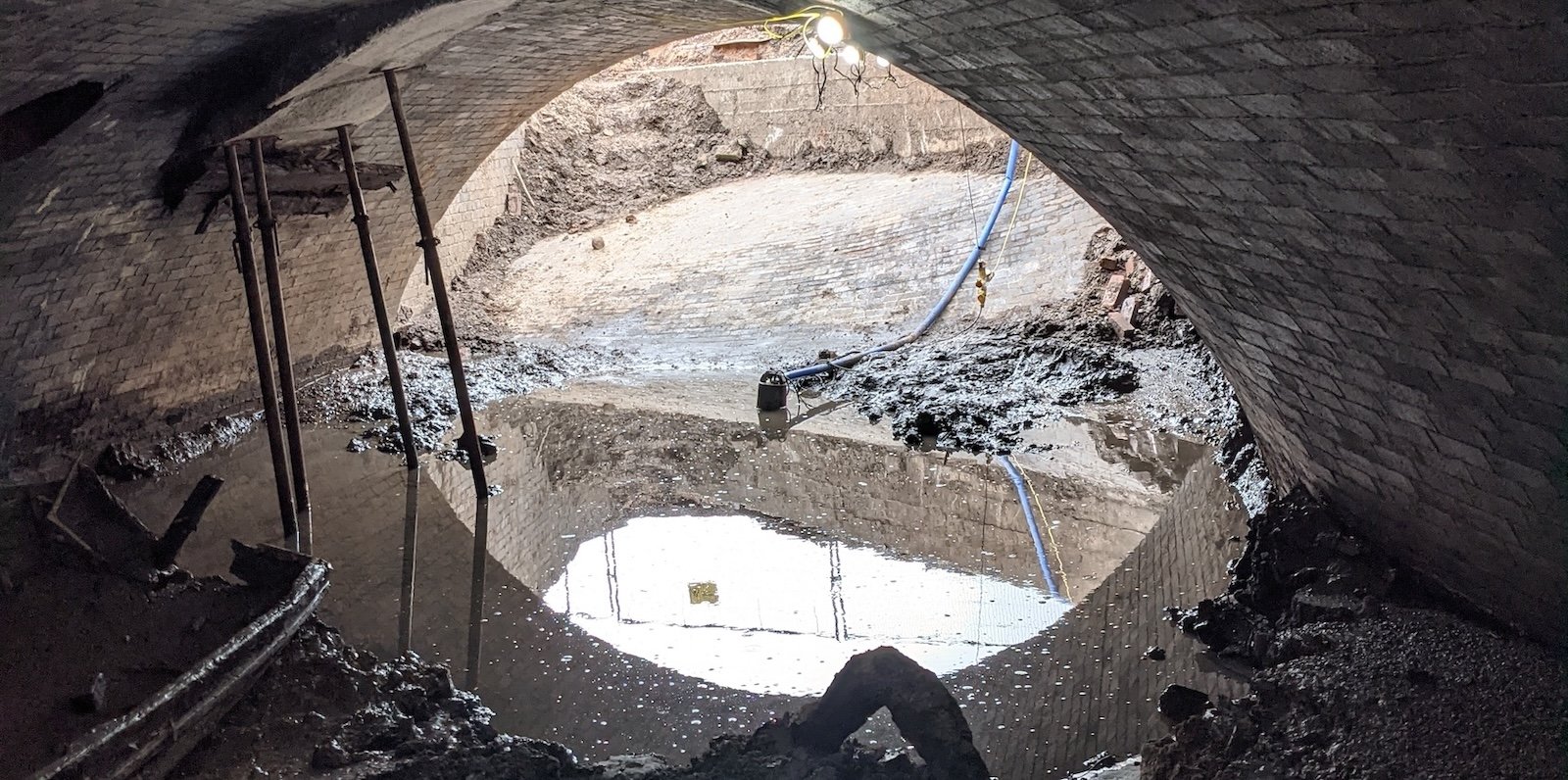
During seasonal storms, wadis experiencing high-velocity flash floods can scour material from beneath bridge abutments and culverts, leaving the heavy concrete structure bridging a dangerous void.
Voids beneath infrastructure
A void is simply an empty space or a cavity in the ground which can vary tremendously in size from the microscopic voids between soil particles to huge natural caverns in chalk and limestone bedrock. The stability of these voids is controlled by strength of the material in which they are formed and overlie them.
Water flow is also generally responsible for forming voids in granular soils due to the fine particle sizes being washed out of the soil matrix. This is much more likely to occur in poorly compacted granular soils whether natural or placed fill. Such voiding is therefore commonly associated with leaking water pipes, drains and sewers. With voiding present beneath infrastructure assets there is now risk of collapse causing excessive differential movement and even bearing capacity failure.
Voids can also be created by burrowing animals such as badgers and rabbits who particularly like to create their warrens in south facing soil embankments. The animal burrows can present a serious risk of instability and collapse to embankments and / or foundations of buildings above them.
Voids beneath infrastructure
A void is simply an empty space or a cavity in the ground which can vary tremendously in size from the microscopic voids between soil particles to huge natural caverns in chalk and limestone bedrock. The stability of these voids is controlled by strength of the material in which they are formed and overlie them.
Water flow is also generally responsible for forming voids in granular soils due to the fine particle sizes being washed out of the soil matrix. This is much more likely to occur in poorly compacted granular soils whether natural or placed fill. Such voiding is therefore commonly associated with leaking water pipes, drains and sewers. With voiding present beneath infrastructure assets there is now risk of collapse causing excessive differential movement and even bearing capacity failure.
Voids can also be created by burrowing animals such as badgers and rabbits who particularly like to create their warrens in south facing soil embankments. The animal burrows can present a serious risk of instability and collapse to embankments and / or foundations of buildings above them.

Pictured: Culvert that needed Geobear void filling
There is of course a large range of voids and cavities created by people either through construction activities such as pipelines, basements, tunnels etc. Or by mining activities where minerals have been extracted from the earth leaving behind empty shafts, tunnels and mine workings.
All of these present a risk of surface failure if they are not decommissioned and abandoned correctly.
Our void filling solutions are suitable for any size of project, whether the voids are under roads, railway tracks, airport runways, or other infrastructure like pipelines, tunnels, culverts, and basements.
Business & Community Impact
For municipalities and asset owners, the cost of a void collapse extends far beyond the repair bill.
Traffic chaos: Closing a major artery like Sheikh Zayed Road or E311 for deep excavation repairs causes gridlock and economic loss.
Safety hazards: Deep sinkholes present an immediate danger to vehicles and pedestrians.
Emergency premiums: Reacting to a collapse is 10x more expensive than pro-active void filling.
How Geobear approaches void filling
Geobear's Void filling treatment is an ideal, non-excavation alternative to traditional methods. Our solution involves a specific expansive geopolymer or a combination of our geopolymer and a lightweight clay aggregate. The material is produced on-site from a liquid base using minimal plant and equipment. This non-disruptive method
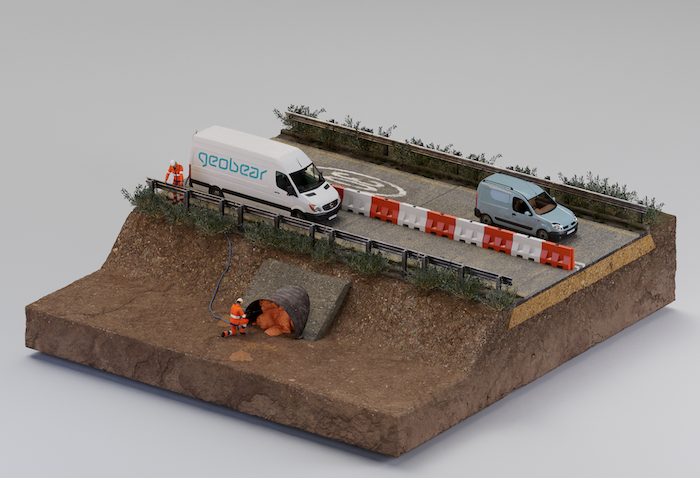
Fills voids instantly
Our expanding geopolymer flows into the void through small diameter drill holes and expands to fill the entire cavity.
Versatility and Accessibility
The material can be pumped over 70 metres, meaning our equipment does not have to be directly on-site. This allows us to reach hard-to-access areas with minimal disruption.
Adds no significant load
We use lightweight materials that do not impart a significant load to the site, meaning our void filling solution will not lead to any negative side effects on the overall stability of the site.
We also provide a strengthening fill material for structural void filling, which is injected into voids to support a loaded floor or piece of infrastructure.
Is easily excavated
A significant benefit is that our materials are inert and can be easily excavated, so if at a later date the void needs to be accessed, the geopolymer can be removed with ease.
Suspect a void beneath your asset?
Don't wait for the road to collapse. Early detection and filling saves millions in emergency repairs.