Utilities
Challenge
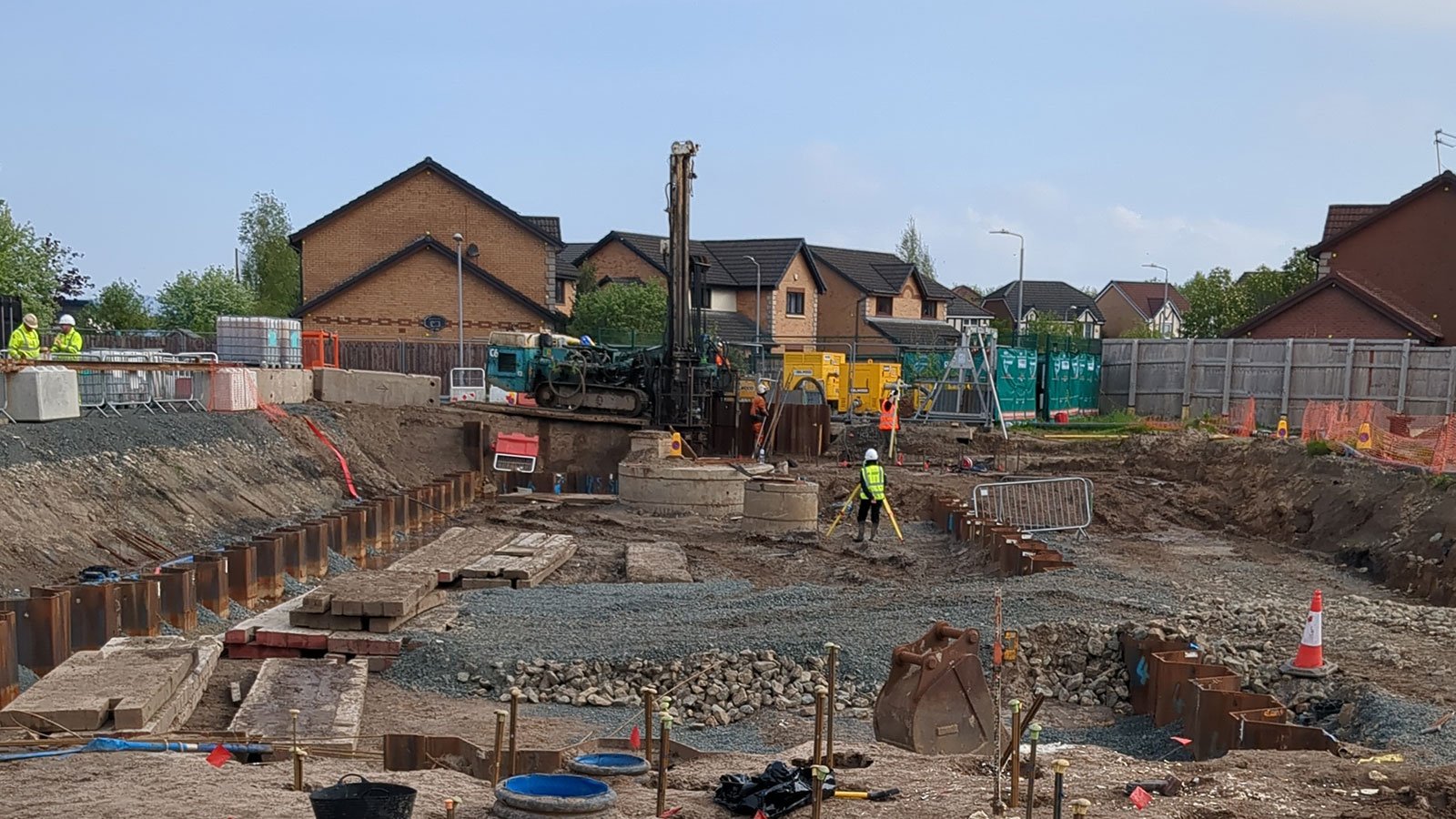
A pumping station and its associated sewer network faced severe settlement risks due to ground loss caused by a broken pipe sucking in silty sands. To fix the issue, the site required aggressive dewatering, which threatened to destabilize the manholes and nearby residential properties further.
Solution
Geobear provided a comprehensive ground stabilization strategy. We injected geopolymer to seal the pipe bedding against water ingress, densify the loose soils, and precision-lift the settling manholes. This allowed the dewatering program to proceed safely without damaging critical infrastructure.
installed — 17 m deep, 20 m diameter
settlement induced, soils consolidated to design density
service disruption, interruption, or property movement recorded
Note: This project was executed at Provost Driver Court, UK, serving as a global reference for Geobear’s dewatering support capabilities.
In the UAE, deep excavations for high-rise towers or utilities require significant dewatering. If not managed correctly, lowering the water table can cause "fines migration" (washout) or consolidation of loose sandy soils, leading to settlement in adjacent structures.
In this case, a broken sewer pipe had already caused ground loss. The required repair involving dewatering threatened to accelerate this settlement, potentially collapsing the pumping station's manholes and damaging nearby homes.
A pumping station at Provost Driver Court, Renfrew, experienced severe settlement — up to 500 mm — due to a broken pipe drawing Clyde alluvial silty sands into the sewerage network.
Over time, groundwater and soils were pumped out, leaving very loose ground beneath the station and associated manholes.
Urgent stabilization was required to protect both the pumping station and nearby infrastructure, including manholes, services, and residential properties at the end of a cul-de-sac. Conventional underpinning or deep excavation was ruled out due to scale, disruption, and insurance implications.
The project faced multiple geotechnical and operational challenges:
Progressive ground loss: The sewer network was actively removing silty sands from beneath the site, leaving very loose soils and driving continued settlement.
Controlled densification: Engineers needed to accelerate settlement in a controlled way via dewatering to re-compact soils, while keeping the pumping station operational.
Infrastructure risks: Dewatering created risks of manhole tilt, chamber movement, and even settlement of nearby houses. Protecting these assets was critical.
Water ingress management: Recharge flows entered the ejector wells along existing pipe bedding, undermining dewatering efficiency and requiring additional sealing works.
Community interface: The works were carried out adjacent to homes and public roads, requiring constant monitoring and stakeholder engagement.
Geobear acted as the "risk mitigation" partner, using expansive resins to control the ground behavior.
Sealing recharge flows: We injected fast-reacting geopolymer around the pipe bedding gravel. This created a cut-off seal, stopping water inflow and allowing the dewatering system to work efficiently.
Active re-leveling: Injection tubes were installed beneath the manholes. As the ground settled during the dewatering phase, we injected resin in real-time to lift the manholes, keeping them within strict tolerances.
Injection beneath manholes: Injection tubes were installed beneath local chambers to allow controlled lifting and re-leveling during dewatering. This kept manholes within pre-agreed tolerances and aligned with surrounding strata.
Pipe sealing: When recharge flows began to overwhelm the dewatering system, Geobear injected fast-reacting geopolymer around pipe bedding gravel, sealing leakage paths and consolidating soils to stem water inflows.
Void filling: Expansive resin was injected into identified voids. Verification included volume calculations, resin rise density checks, and pump back-pressure monitoring to confirm void closure.
Risk mitigation: Geobear’s precision injection method (using 12 mm diameter tubes, accurate to 0.25 mm) was available on standby to remediate houses if movement exceeded thresholds. In practice, careful monitoring meant no intervention was required.
Material selection: A geopolymer resin was specified for wet soil conditions, with high expansion and rapid gel time to minimize washout and allow efficient placement.
This flexible methodology allowed the scheme to adapt as challenges emerged, providing reassurance to both the client and local residents.
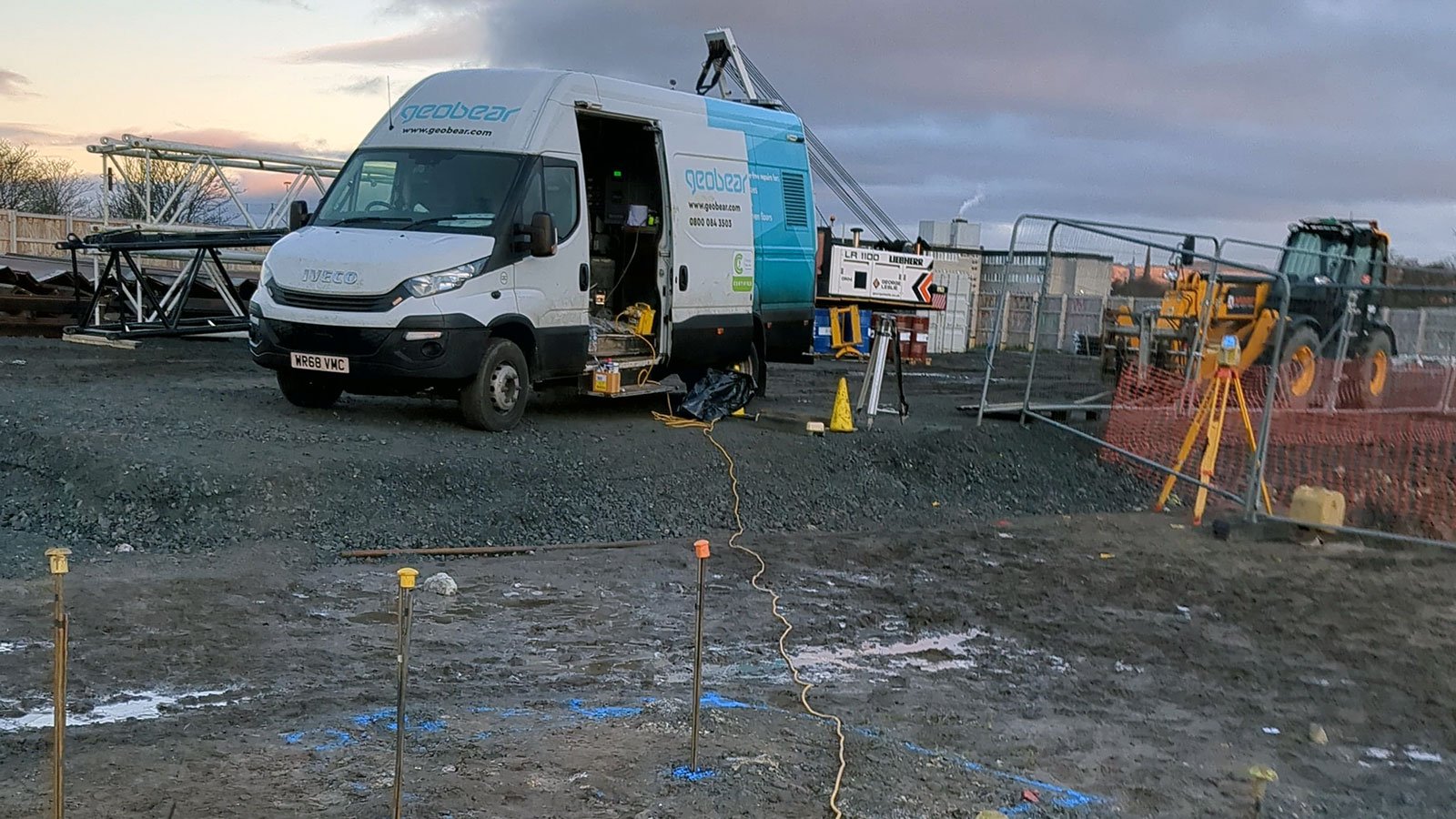
The approach allowed the main contractor to complete their works safely.
“The pumping station presented us with very loose soils and high uncertainty. Having Geobear on board allowed us to manage the risk, knowing their injection system could stabilise manholes, seal leaks, and even remediate nearby houses if needed. Their flexibility on site solved unforeseen problems and was key to delivering the project safely and on program.”
- Michael Purkis, Principal Engineer, Donaldson Associates
We stabilize adjacent structures and seal ground leaks to protect your site and neighbors during dewatering.