Precision re-leveling of a Formula 1 track using Geobear's solution for flexible pavements

Challenge

Severe surface bumps emerged at high-speed sections of an F1 track due to subsurface settlement. Mandatory remediation was required, but strict racing regulations and timelines made conventional resurfacing impossible.

Solution

Geobear utilized precision geopolymer injections to lift the track with millimeter-level control. Guided by live laser monitoring, the zero-excavation treatment permanently eliminated surface dips while preserving the high-performance asphalt.

Up to 16 mm

of precise vertical lift achieved to eliminate critical high-speed dips.

840 m²

treatment area completed in just three weeks, avoiding a massive 4,500 m² milling operation.

105 km/h

dynamic testing verified a significant reduction in peak vertical accelerations and a restored smooth ride quality.

Background

This project involved the precision re-leveling of an international Formula 1 racing circuit in the Middle East, one of the most demanding operational environments for pavement performance and geometric tolerances.

The track, originally constructed in 2004, was designed to deliver exceptional grip through the use of high PSV aggregates and a robust pavement structure over predominantly limestone subgrade conditions

More than two decades after construction, the track remained structurally sound and retained its original surfacing. However, localized geometric defects began to emerge—specifically surface undulations (“bumps”) at critical high-speed sections. 

Main Contractor: CEBARCO

Solution Provider: Geobear

Installation Period: ~2 weeks

Treatment Area: ~840 m²

Challenge

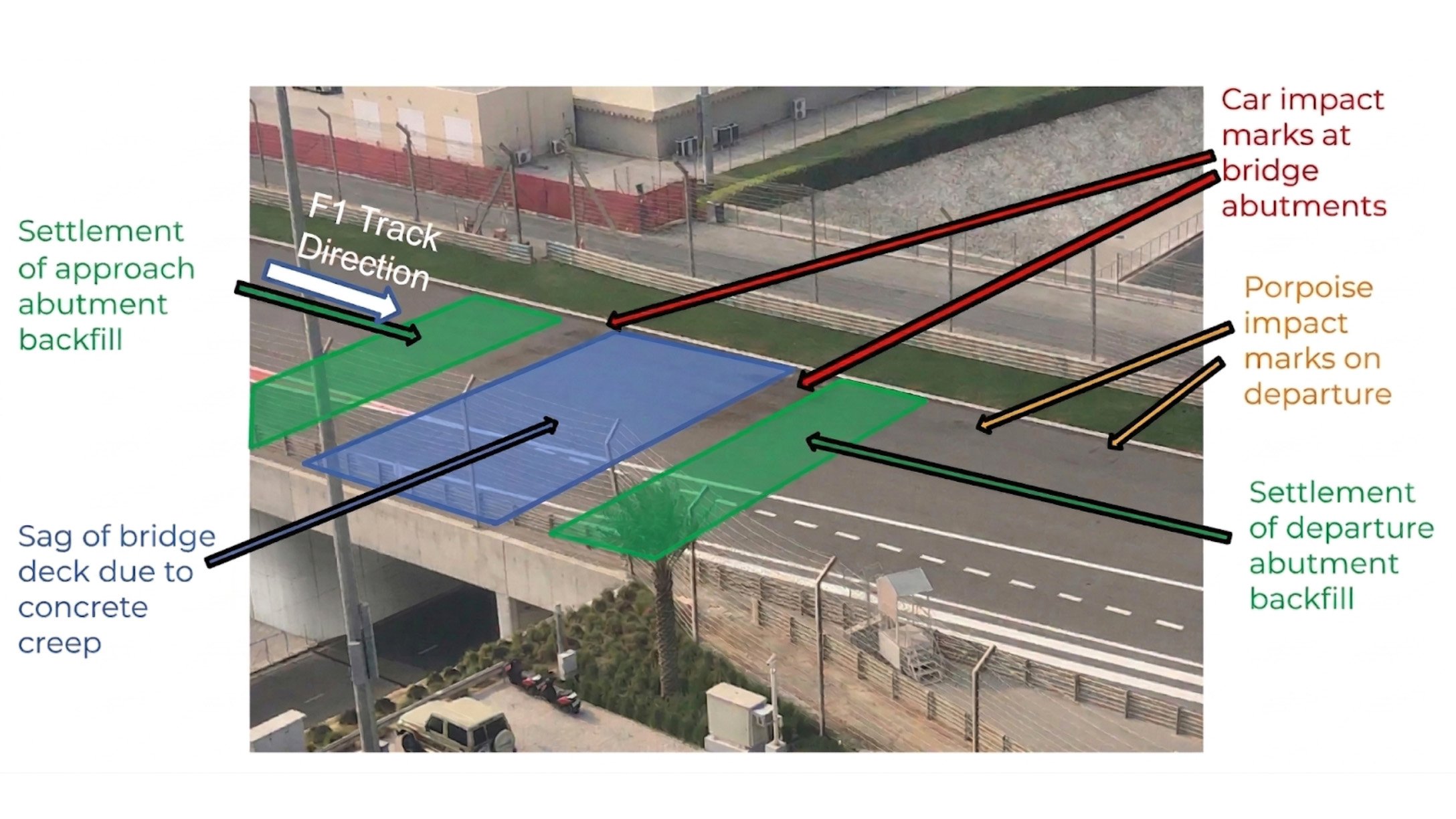
Diagram showing F1 track uneven pavement cause and conditions

During a major racing event, drivers reported significant “bumps” at critical track sections, 

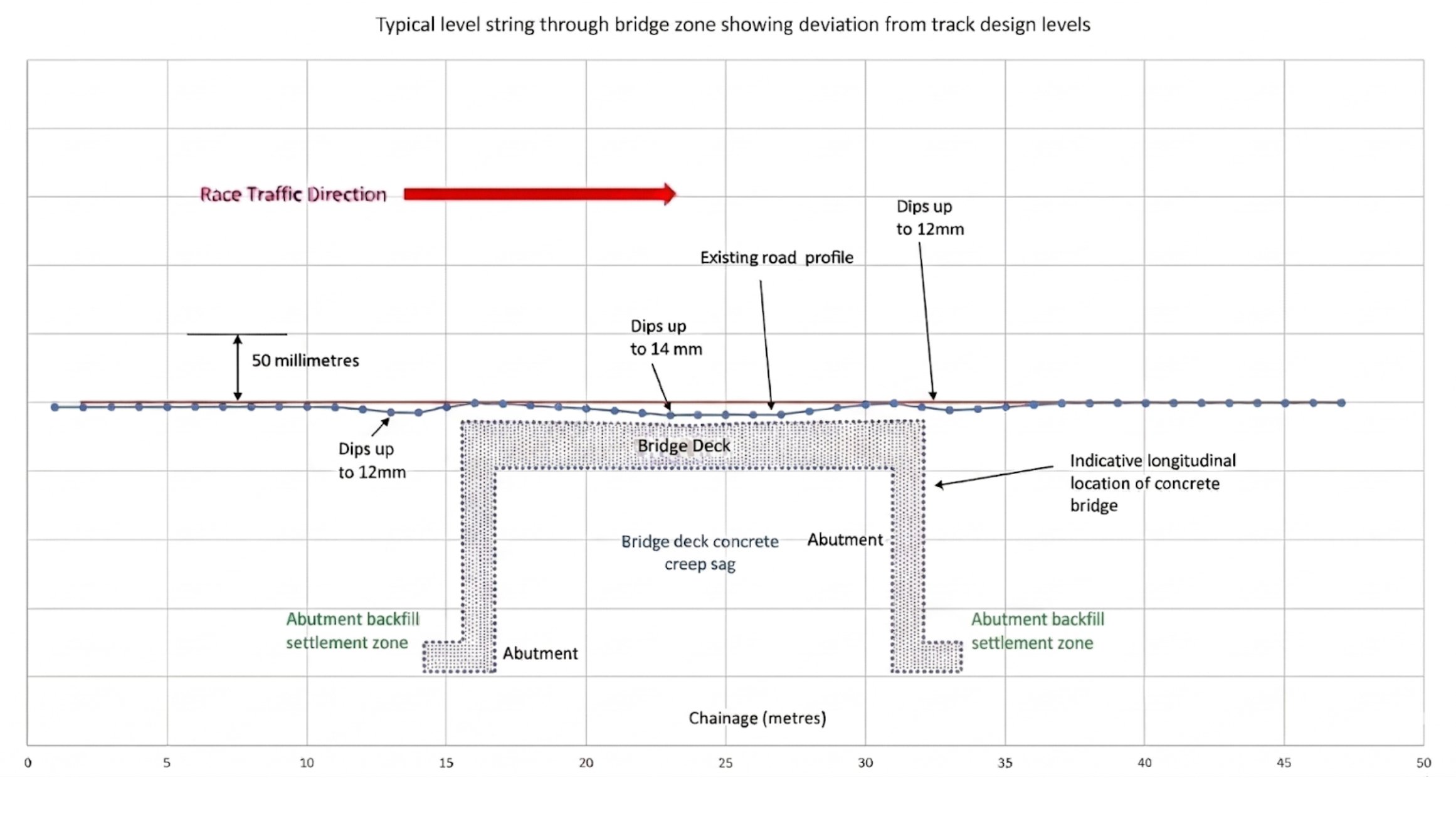
These defects were not superficial—they were driven by long-term structural and geotechnical mechanisms, including:

  • Settlement of backfill at bridge abutments
  • Long-term concrete creep causing bridge deck sag
  • Differential stiffness between structures and surrounding soils

The result:

  • Reduced vehicle stability
  • Safety concerns
  • Mandatory remediation before next race season

Diagram of F1 track bridge section and typical level string showing deviation from track design levels


The processes undertaken by Geobear are technically ingenious and innovative and are carried out with meticulous planning and expertise by highly experienced teams using specialist equipment. Cebarco would have no hesitation in recommending Geobear for similar projects.”

Mr Duncan MacKillop, Engineering Manager for Cebarco

Solutions

The Conventional solution

The standard approach—mill and relay asphalt—was immediately ruled out.

Reasons were practical, not theoretical:

  • Required 300 m of resurfacing (~4,500 m²)
  • Limited availability of specialist 3D milling equipment.
  • Need to import high PSV aggregates.
  • Strict FIA 60-day rule for resurfacing
  • Prohibitive cost and logistics

Traditional methods were too slow, too expensive, and too disruptive.

Adapted solution and engineering approach: precision geopolymer re-leveling

With conventional resurfacing ruled out, the project required a solution that could directly address the root cause—subsurface deformation—while preserving the existing high-performance asphalt surface. The selected approach was a precision Geopolymer injection re-leveling system, designed to locally lift and stabilize the track with millimeter-level control.

High-resolution survey and digital modeling

The starting point was accuracy. Without that, the rest fails.

  1. A dense topographic survey was carried out using total station, capturing thousands points across the affected zones
  2. A full 3D surface model was developed
  3. A 1 m × 1 m grid was imposed across the treatment areas
  4. Each grid line (“longitudinal string”) was analyzed independently

From this:

  • A design profile was created for each string
  • Required vertical lift (in mm) was calculated at every point

Targeted injection design

Instead of treating large areas blindly, the solution focused only where needed.
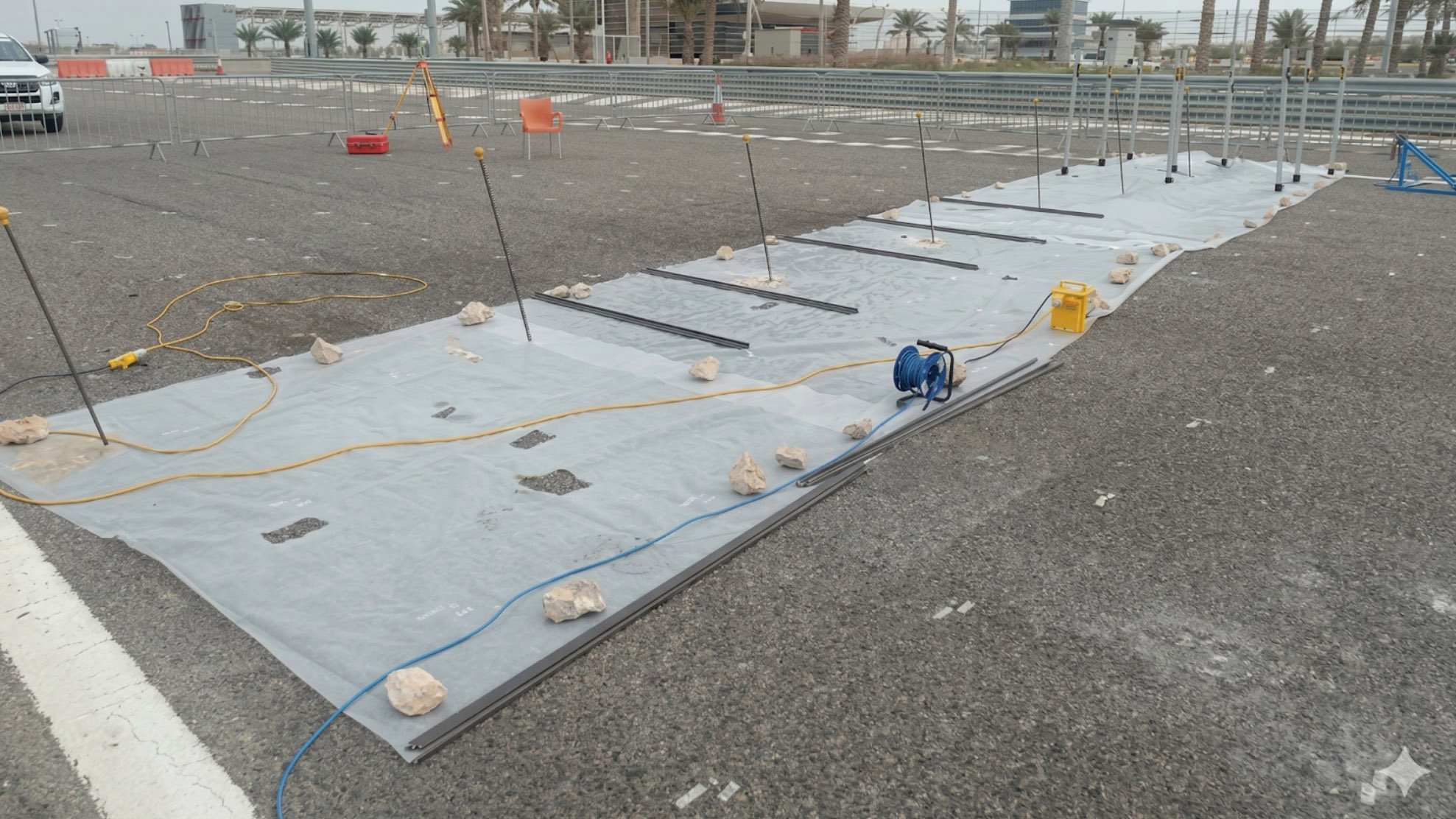
  • Total treatment area reduced from ~4,500 m² to ~840 m²
  • Injection depth: ~1 m below surface (within sub-base / fill layer)
  • Lift influence zone: 30–45° 

Geobear's targeted flexible pavement releveling injection design on F1 track section

Controlled lifting strategy

This is where most projects fail. Control.

  • Injection carried out in incremental passes (≤ 4 mm per lift)
  • Always starting from the lowest point
  • Sequential progression to avoid stress concentration

The objective:

  • Achieve smooth longitudinal transitions, not isolated corrections
  • Prevent over-lifting or “peaks”

Real-time monitoring and feedback loop

This was a live system—not install-and-hope.

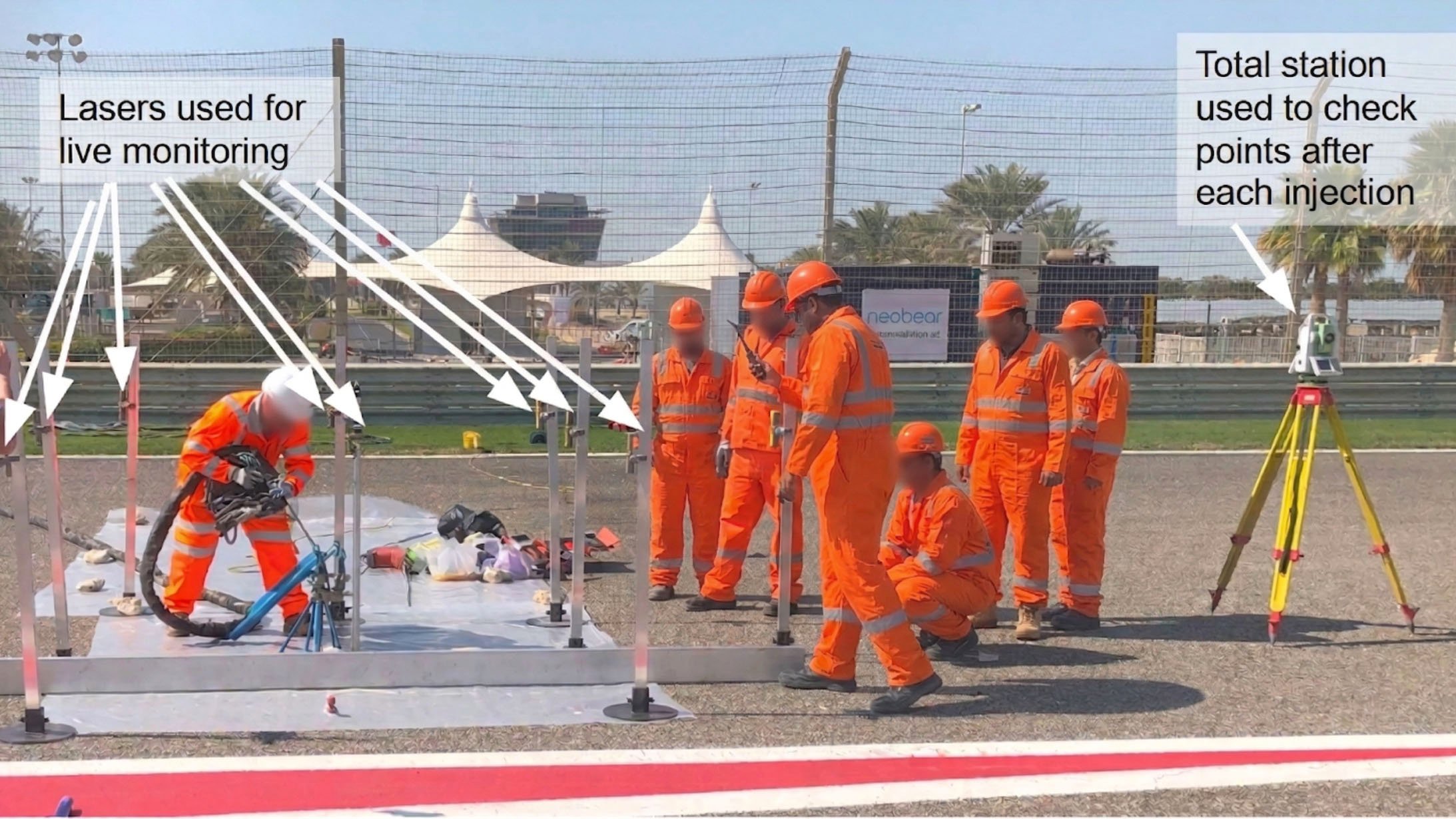
  • Laser monitoring (±2.5 mm accuracy) at each active injection point

  • Each injection monitored against:
    • ¢The primary point
    • 8 surrounding points

Diagram showing how real-time-laser-level monitoring was used on F1 track geopolymer injection lifting

After each injection:

  • Points were re-surveyed using total station
  • Design updated dynamically if required

This created a closed-loop control system: 
Inject → Monitor → Verify → Adjust → Continue

Results

Performance verification

Verification on this project was not treated as a formality—it was the critical proof that the intervention actually worked under real operating conditions. Given the sensitivity of a Formula 1 track, success could not be claimed based on visual inspection or survey data alone. It required multi-layered validation, combining geometric, dynamic, and real-world performance evidence.

1. Dynamic performance testing

The most meaningful verification was how the track behaved under speed—not how it looked.
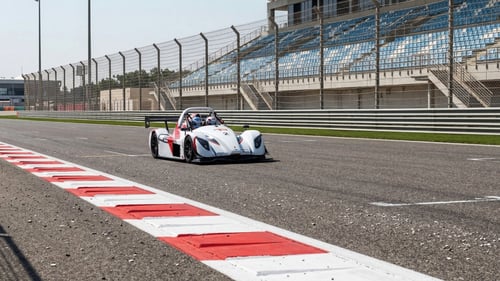
  • A test vehicle equipped with an accelerometer was driven across the problematic zones (before and after the treatment 
  • Test speed: ~105 km/h
  • Measurement: vertical acceleration response (m/s²)
This directly captured:
  • Ride quality
  • Surface-induced vibration
  • Dynamic interaction between vehicle and track

F1 track test measurement vehicle equipped with accelerometer

Results

Pre-treatment:

  • Clear spikes in vertical acceleration at defect locations
  • Indicative of sharp dips and uneven geometry
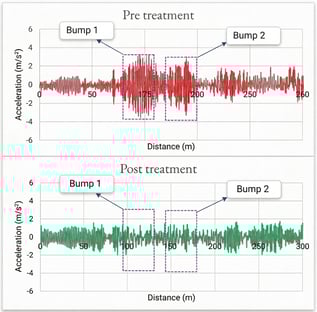
Post-treatment:
  • Significant reduction in peak accelerations
  • Smoother, more uniform response profile
  • Elimination of abrupt dynamic inputs

F1 track chart showing pre vs. post treatment dips and spikes in vertical acceleration

2. Geometric verification (pre vs post survey)

While dynamic performance proves functionality, geometry proves compliance.

  • High-resolution pre- and post-treatment surveys were conducted by the client CEBARCO
  • Same grid system used for design was used for verification
  • Hundreds of points were compared directly

Outputs included:

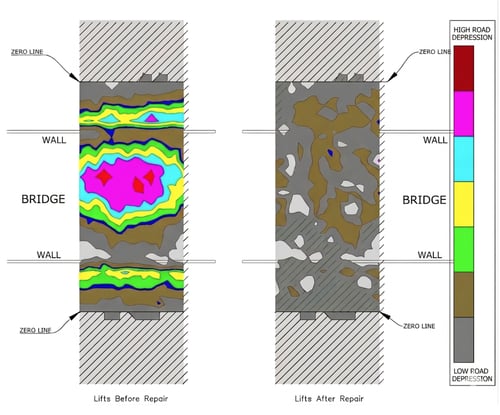
  • Heat maps of vertical deviations
  • Lift distribution plots
  • Longitudinal profile comparisons

Findings

  • Previously recorded dips (up to ~12–14 mm) were eliminated
  • Continuous longitudinal smoothness achieved
  • Transition zones (abutments) corrected without creating new irregularities

UAE F1 track pre-and-post-treatement survey

Client testimonial

“Due to the specialist material and construction specifications for the F1 track installation a conventional track relaying operation was logistically infeasible in the available timescales.

To resolve the problem Cebarco contacted Geobear who provided cost effective proposals to use resin injection techniques to re-level the track. Works were carried out, at short notice, to 840 square metres of track during a three week period in January 2024 and the track alignments were successfully rectified using a close tolerance laser controlled methodology, lifting the track by amounts ranging from 1 millimetre to 16 millimetres.

The processes undertaken by Geobear are technically ingenious and innovative and are carried out with meticulous planning and expertise by highly experienced teams using specialist equipment. Cebarco would have no hesitation in recommending Geobear for similar projects.

- Mr Duncan MacKillop, Engineering Manager for Cebarco, who was leading this project from Cebarco. 

Conclusion

This project demonstrates that even in the most demanding engineering environments, complex surface defects can be resolved without reconstruction.

Faced with mandatory remediation of localized surface undulations ("bumps") at critical high-speed sections of an international Formula 1 track—driven by deep-seated geotechnical issues like settlement and concrete creep—the project was under strict time pressure with zero tolerance for failure ahead of the next racing cycle. 

Geobear's precision releveling solution provided an innovative and cost-effective alternative that addressed the surface deformation while preserving the high-performance asphalt. Performance was confirmed through multi-layered validation. Geometric verification confirmed the elimination of previously recorded dips (up to 16 mm). More critically, dynamic performance testing using an accelerometer-equipped vehicle at ~105 km/h demonstrated a significant reduction in peak vertical accelerations, confirming the elimination of abrupt dynamic inputs and achieving a smoother, more uniform response profile.

Completed during a three-week period in January 2024, the project successfully rectified the track alignments. The client, CEBARCO, concluded that Geobear’s processes are "technically ingenious and innovative" and set a new precedent for non-disruptive, high-precision remediation in the most demanding operational environments.

Have a challenging project?

Get in touch to discuss the details with us. Our professional engineering team are ready to listen and discuss options.

Bear pointing Bear pointing