The problem leaking in
Uncontrolled water ingress is a serious threat to commercial structures, leading to flooding, asset damage, and destabilised ground. We solve this by creating waterproof barriers within the soil itself, preventing water from reaching your foundations, basements, or retaining walls, without disruptive excavation.
The problem: Groundwater ingress in the UAE
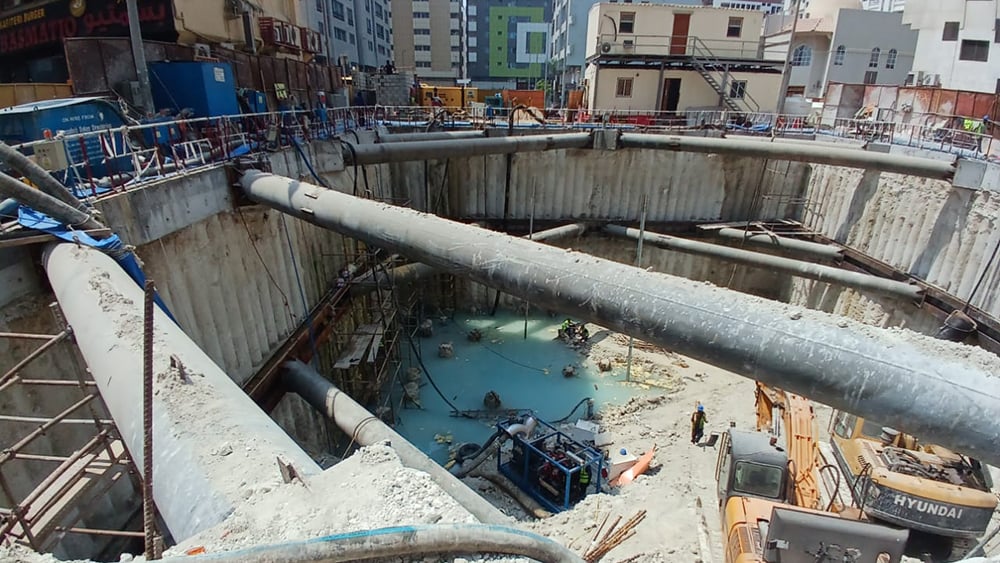
In the UAE, high groundwater tables—often saline and aggressive—pose a constant threat to deep structures.
When the waterproofing of a basement, retaining wall, or tunnel fails, the result is not just a wet floor; it is a structural risk. Ingress leads to corrosion of steel reinforcement, damage to high-value assets (like parked cars or electrical rooms), and destabilization of the surrounding ground due to fines washout.
We solve this by creating waterproof barriers within the soil itself, cutting off the water path before it reaches your structure, all without disruptive excavation.
Technical causes of water ingress
Understanding why water is entering your structure is key to stopping it permanently.
High hydrostatic pressure
Many structures in Dubai and Abu Dhabi are built deep below the water table. The immense pressure forces water through even microscopic cracks or failed joints in the concrete.
Permeable soil layers
The UAE's sandy soil profiles often contain highly permeable layers that act as a "superhighway" for groundwater, directing it straight to the weakest point of your basement wall or shoring pile.
Failed waterproofing membranes
External membranes can fail due to poor installation, ground movement, or chemical attack from saline groundwater. Once compromised, repair is difficult without massive excavation.
Construction joint failure
Water frequently exploits weak points like cold joints, kicker joints, and pipe penetrations (service entries), especially where waterstops have been displaced or damaged.
What are the signs of water ingress and soil permeability?
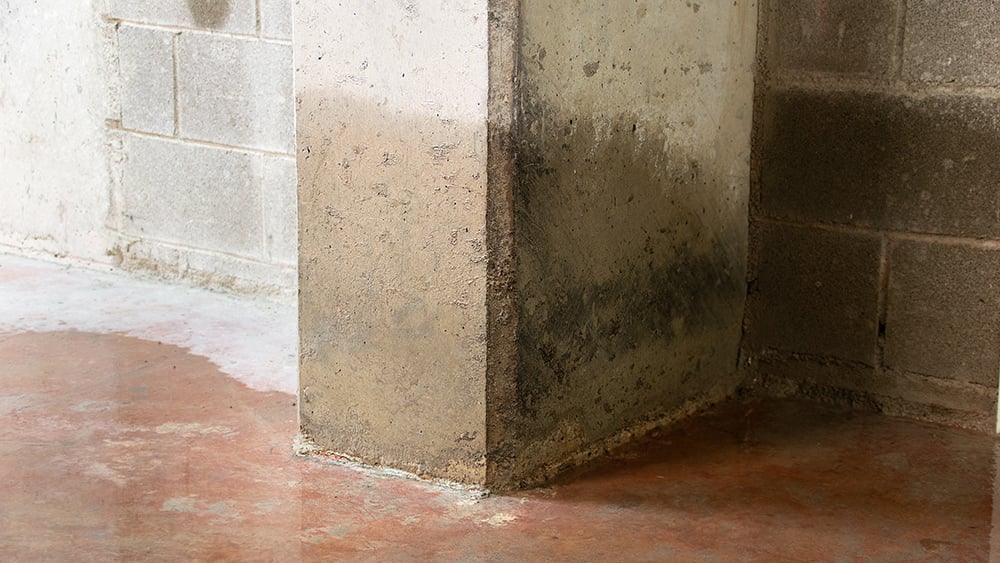
Dampness, mould, or water leaks in basements, lift pits, or tunnels
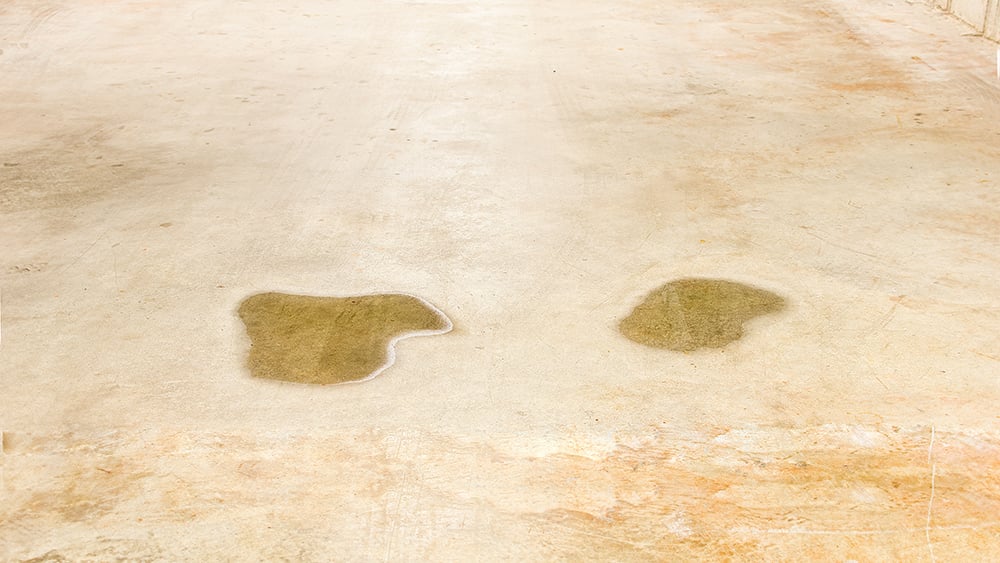
Pooling water on floor slabs or against retaining walls
Visible soil erosion or "washout" near foundations or drains
Ground settlement or voids appearing after heavy rain or flooding
Water leaking through piling at construction sites
What are the technical causes?
High hydrostatic pressure
The weight of saturated ground pushes water through any crack, joint, or porous section of a concrete structure.
Permeable soil layers
Strata of sand, gravel, or poorly compacted fill act as a "superhighway" for groundwater, directing it straight to your structure.
Failed joints & penetrations
Water exploits weak points like construction joints, pipe penetrations, and minor cracks.
Erosion & washout
Flowing water carries away fine soil particles, creating voids (see our void filling page) and destabilising the ground, which makes the leak worse.
Our solution
The Geobear solution: in-situ geopolymer injection
Our treatment is not a temporary internal patch. We engineer a solution that addresses the problem from the outside, within the ground itself.
1. Injection
We drill small-diameter holes through the wall or floor slab. We inject our specialist hydro-insensitive geopolymer resin directly into the saturated soil or void behind the structure.
2. Expansion & displacement
The resin is designed to be injected into active water flows. It is hydrophobic and denser than water in its liquid phase, meaning it powerfully displaces the water rather than diluting. It expands rapidly to fill voids and fissures.
3. Barrier formation (cut-off wall)
The geopolymer permeates the local soil matrix and cures to form a solid, impermeable mass. This creates a permanent "curtain wall" or "grout block" behind your structure, relieving hydrostatic pressure and preventing water from ever reaching the concrete.
Key applications in the UAE
Basement & car park leaks
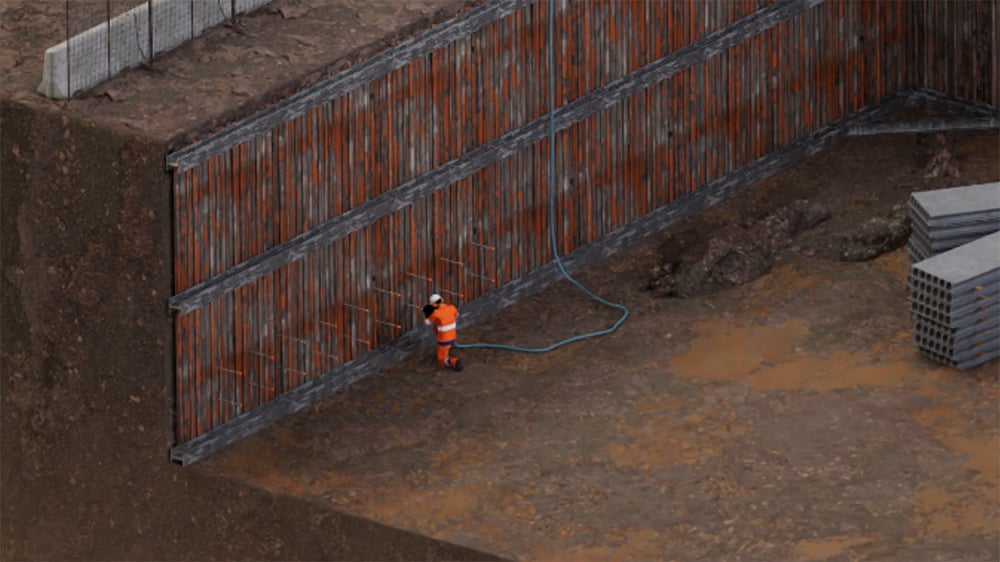
Sealing leaking diaphragm walls (D-walls), secant pile walls, and floor slab joints in deep basements.
Lift pits & sump tanks
Sealing deep, water-logged pits that are prone to ingress.
Construction dewatering
Creating impermeable barriers to seal shoring walls, reducing the need for expensive and continuous dewatering pumping.
Coastal protection
Stabilizing and sealing sea walls or quay walls against tidal erosion.
Technical advantages of the Geobear solution
| Feature | Geobear geopolymer | Traditional cement grouting |
|---|---|---|
| Reaction time | Fast. Cures in minutes, stopping live leaks instantly. | Slow. Takes hours/days to set; can wash out. |
| Water resistance | Hydro-insensitive. Does not absorb water or segregate. | Vulnerable. Can dilute or wash away in flowing water. |
| Durability | High. Resistant to saline/sulfate attack. | Variable. Cement breaks down in aggressive saline soil. |
| Precision | High. Controlled expansion fills micro-fissures. | Low. Hard to control flow path. |
Frequently asked questions about resin water sealing
Yes, this is a major benefit. By permeating and binding the loose sandy soil, our process not only blocks water but also densifies the ground, filling any washouts or voids that the leak may have caused.
Stop water leaks at the source
Don't let saline groundwater damage your assets. Contact our engineering team for a site assessment to design a permanent, non-disruptive water sealing solution.