A philosophy of minimal intervention
Upholding the principles of conservation
The UAE’s heritage buildings—from the wind towers of Al Fahidi to the historic forts of the Northern Emirates—are treasures that require delicate care. These structures, often built on traditional coral stone or shallow footings, are highly susceptible to ground movement, rising groundwater, and soil washouts.
Traditional repair methods like underpinning are often too aggressive. They require heavy excavation, cause damaging vibrations, and involve replacing original materials with concrete.
Geobear offers a different approach. We use advanced geopolymer injection technology to strengthen the ground beneath the building, restoring stability while leaving the structure itself completely untouched.
The challenges facing heritage assets
Historic structures in the region face unique ground engineering challenges that threaten their survival:
Shallow foundations
Many traditional buildings have shallow or spread footings that are easily compromised by loose sandy soils.
Salt weathering & rising damp
Saline groundwater can weaken the soil and degrade traditional masonry. Our polymers are hydro-insensitive and can help seal against water ingress.
Soil washout
Heavy rains or leaking utilities can wash away fine sand particles beneath the building, creating voids and causing settlement.
Vibration damage
Nearby modern construction or traffic can cause vibrations that fragile historic masonry cannot withstand.
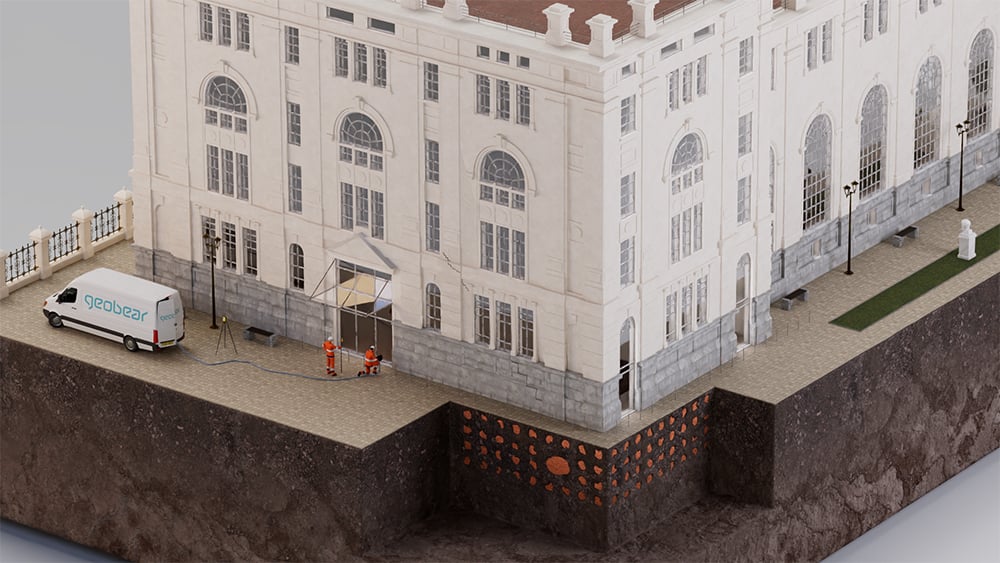
The Geobear solution for heritage structures
Our solution is often described as "keyhole surgery" for buildings. We don't dig up the foundations. Instead, we drill small holes through the soil or floor slab to reach the weak ground beneath.
We inject our expansive geopolymer resin, which fills voids and gently compacts the soil. This restores the load-bearing capacity of the ground and, if necessary, can lift the structure back to level with millimeter precision.
Non-invasive preservation
Our primary goal is to protect the original fabric of the building. Because we do not excavate, we do not disturb archaeological layers or damage traditional flooring and masonry.
Vibration-free application
Unlike pile driving or mechanical excavation, our injection process creates zero damaging vibration, ensuring the safety of fragile walls and decorative plaster.
Speed and efficiency
We can improve a structure in days, not months. This minimizes the time the site is closed to the public or exposed to the elements during repair.
Hydro-insensitive materials
Our geopolymer materials are not affected by saltwater or groundwater, making them ideal for coastal heritage sites or areas with high water tables.
FAQ
Frequently asked questions: Heritage projects
Here are answers to common questions from conservation architects, structural engineers, and custodians of historic and listed buildings.
Secure the future of your heritage asset
Don't let ground instability threaten history. Contact our specialist team for a discreet, technical assessment of your heritage site.