Challenge
A ground floor slab at the University of Suffolk had settled by up to 40 mm over voids, with work needed quickly within an active refurbishment programme.
Solution
A Geobear void filling and slab lifting solution restored support beneath approximately 275 m² of slab and re-levelled approximately 142 m², without excavation.
Void filling area
Slab re-levelled
Maximum settlement recorded
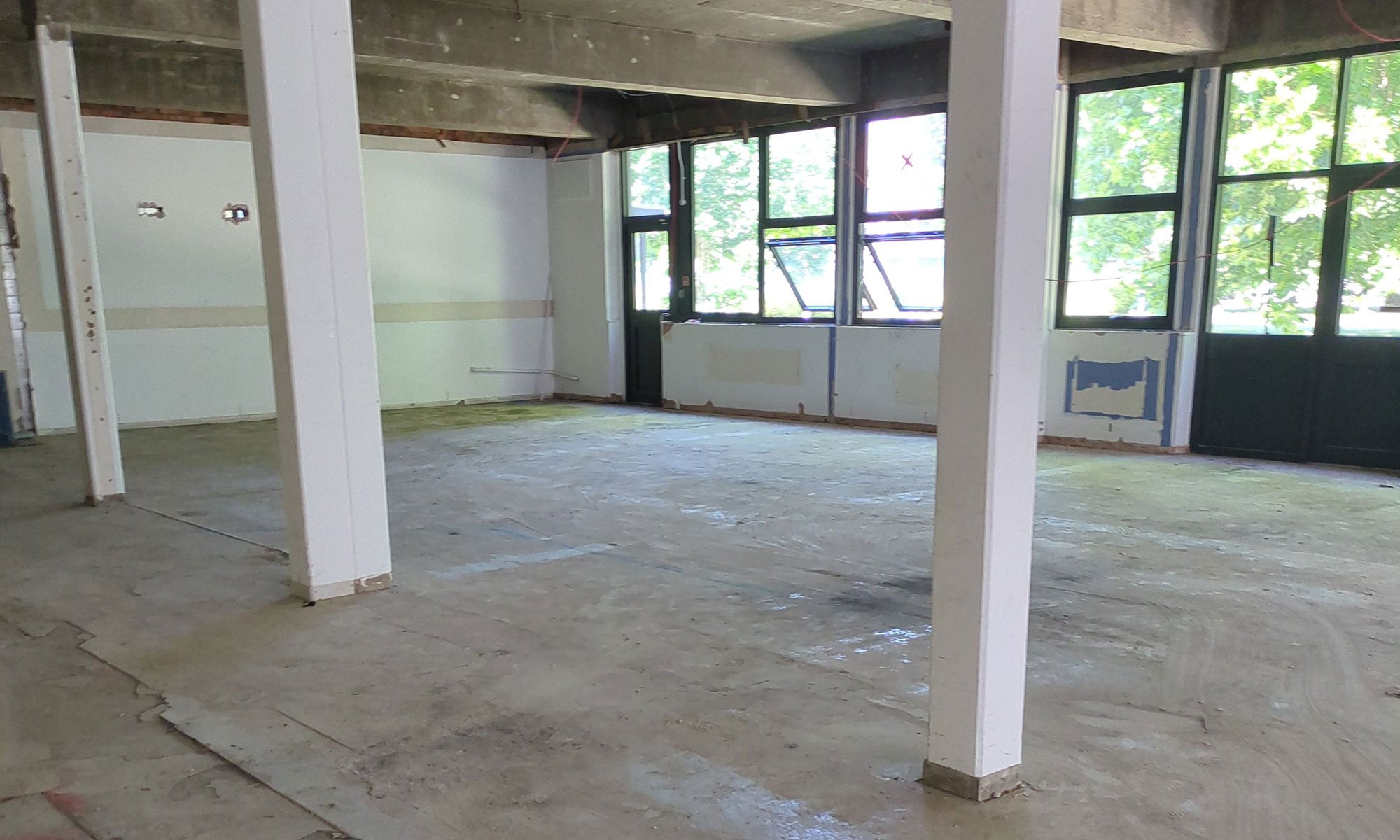
The University of Suffolk’s New Student Hub occupies ground floor space at 19 Neptune Quay, Ipswich. In 2026 the area was being refitted to create the hub, including studios, a gym, changing rooms, circulation space and a careers office, with Pentaco Construction Ltd as principal contractor and Concertus Design & Property Consultants as structural engineer.
Settlement of the ground floor slab was first raised with Geobear in April 2026. At that stage the reported problem was a section of slab that had dropped by approximately 20 mm beneath a 5.4 m long non-load-bearing masonry wall, with cracking in the wall above. Pentaco then commissioned a floor level survey and an investigation of slab thickness and voiding, which showed that the settlement extended well beyond the wall line.
Remediation was required before the fit-out could be completed. Pentaco described the slab works as time critical, and the start date was agreed around resource availability and the contractor’s programme.
The floor level survey of the University of Suffolk slab, carried out in May 2026, compared levels across the affected rooms with the mean finished floor level at the room edges. Across 142 grid points in the main affected area, the slab sat between 8 mm and 40 mm below that reference, with an average drop of approximately 20 mm, forming a dished profile centred on the proposed studio and circulation areas.
Pentaco drilled 29 investigation holes of 25 mm diameter through the slab and dipped each to measure slab thickness and any void beneath it. The ground-bearing slab was recorded as 125–240 mm thick, and voids of up to 50 mm were identified beneath parts of the affected area, meaning sections of the floor were no longer in full contact with the ground below.
The works had to meet several constraints:
The principal conventional alternative for the University of Suffolk slab was to break out the affected area of floor, excavate and replace or recompact the disturbed sub-base, and recast the slab. This is a credible repair for a ground-bearing slab that has lost support, and it allows the ground beneath to be inspected directly.
On this project, slab replacement would have meant breaking out and removing concrete up to 240 mm thick inside a building under fit-out, excavating around drainage that had only just been relined, disposing of the arisings, and recasting and curing a new slab before floor finishes and partitions could follow. Each of those steps would sit on the critical path of a programme the contractor had already described as time critical.
The Geobear void filling and slab lifting solution works through small drilled holes, so the slab, the drainage and the new internal walls stay in place. The work was programmed to be completed within three shifts.
Geobear designed a void filling and slab lifting solution to restore support beneath the University of Suffolk’s ground floor slab and return the dished area towards the surrounding floor level, using targeted geopolymer injection beneath the slab.
The solution was delivered in two phases. In the first, approximately 275 m² was treated to fill voids and re-establish full contact between the slab and the underlying soils. In the second, approximately 142 m² of the dished slab was lifted, with the lift required at each location set by the May 2026 level survey.
Before mobilisation, Pentaco traced and marked services and issued a permit to dig, and Geobear carried out its own cable avoidance scans. Geobear mobilised on 29 June 2026 with a programme of three shifts, parking its self-contained injection unit close to the work area and running hoses into the building.
Verification
Lift was controlled in real time. An independent level surveyor was on site to set out the required lift at each injection location, using the May 2026 survey of 142 grid points as the baseline, and re-checked levels as the slab rose, revising the remaining lift as work progressed. Laser and digital monitors tracked movement at each point, and the drainage network was monitored throughout injection.
Geobear’s works at the University of Suffolk were completed within three shifts, with no variations. The slab, the newly relined drainage and the new partitions all remained in place, with no excavation or concrete waste, in a building under a time-critical fit-out.
Don't let unstable ground put your business at risk. Our commercial team can provide a clear assessment and a fast, effective solution tailored to your operational needs.