Ground improvement beneath hospital foundations affected by leaking drains in Castle Douglas

Challenge

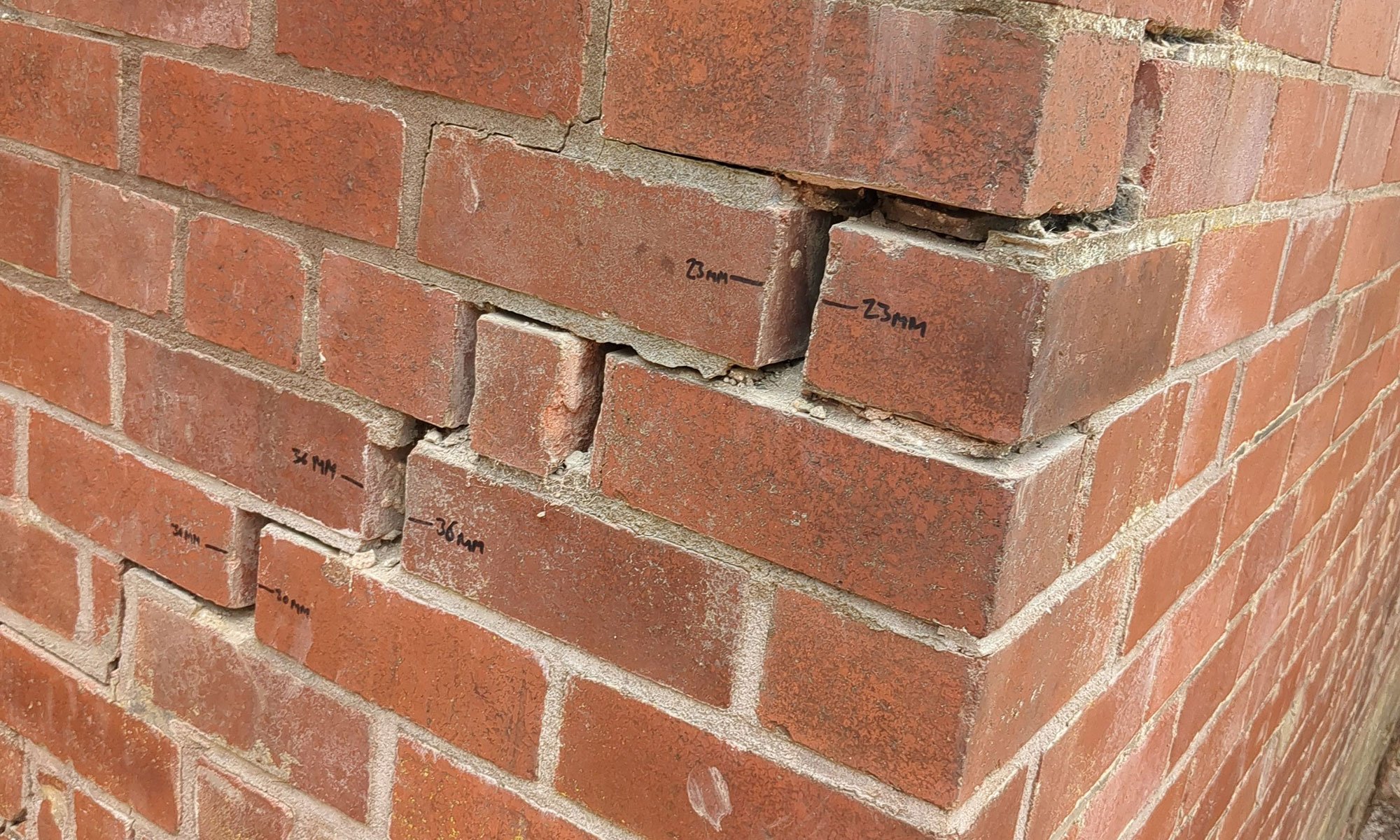
Leaking drains softened the made ground beneath a hospital’s strip foundations in Castle Douglas, causing movement, cracking and voids beneath the foundation.

Solution

Geobear ground improvement solution designed to strengthen soils beneath circa 15 linear metres of hospital foundation, avoiding deep underpinning beside live services.

15 m

Foundation length treated

1 shift

Programmed time on site

0.9 m

Made ground recorded

Background

Castle Douglas Hospital on Academy Street in Castle Douglas, Dumfries and Galloway, is operated by NHS Dumfries and Galloway. Part of the masonry building, which sits on shallow strip foundations with a suspended timber ground floor, began to show structural distress along one gable elevation, with cracking to internal and external walls.

A CCTV drainage survey in December 2024 found significant defects in the combined drains running alongside the building. The consulting structural engineer then commissioned a ground investigation in April 2025 to establish ground conditions and inform remedial works. The repair was let through a main contractor tender in early 2026, with the elected main contractor appointing Geobear to carry out the ground improvement package.

The engineer’s scheme combined several trades: the damaged drain would be removed and replaced, the void found beneath the foundation would be filled, the softened ground beneath the foundation would be strengthened by Geobear, and cracked masonry would be repaired with helical bar reinforcement and replastered.

Challenge

The December 2024 CCTV survey covered 26.26 m of 100 mm combined drain around the building. Two of the three runs were given the most serious structural grade, grade 5, with 15 mm open joints, joints displaced by 15 mm, and a broken pipe section in the clay and PVC drains next to the building. Defects of this kind allow water to escape into the surrounding ground.

The ground investigation in April 2025 drilled two window sampler boreholes to 2.0 m. Both found 0.90 m of made ground, comprising asphalt and hardcore over sandy and clayey fill with brick, burnt shale and cobbles. In one borehole the natural clay beneath was soft between 1.10 m and 1.60 m before becoming firm and then stiff. The investigation identified the stiff clay at 1.50–1.60 m as a suitable bearing stratum, with an allowable bearing capacity of 150 kN/m², and recommended that foundation loads be transferred to it to limit further settlement.

Geobear’s assessment, based on the investigation and the drainage survey, is that the leaking drains softened and washed out the made ground beneath the foundation. A void was also discovered directly beneath part of the foundation once it was exposed.

The work had to be carried out at a hospital site, with a gas main, water main and high-voltage cable running in the footpath beside the foundation, a suspended timber floor inside the building requiring access hatches, and permits to drill issued by the principal contractor.

Solutions

The conventional alternative for this hospital building was traditional mass-concrete underpinning, excavating in short sections beneath the strip foundation and casting new concrete down to the stiff clay that the site investigation recommended as the bearing stratum.

At Castle Douglas Hospital, deeper underpinning excavations would have been dug directly beside a gas main, water main and high-voltage cable, each needing to be exposed and protected, and beneath the foundation of an occupied building. Underpinning is typically carried out in a sequence of short bays, with each bay excavated, concreted and left to gain strength before the next, which extends the time spent working next to the hospital.

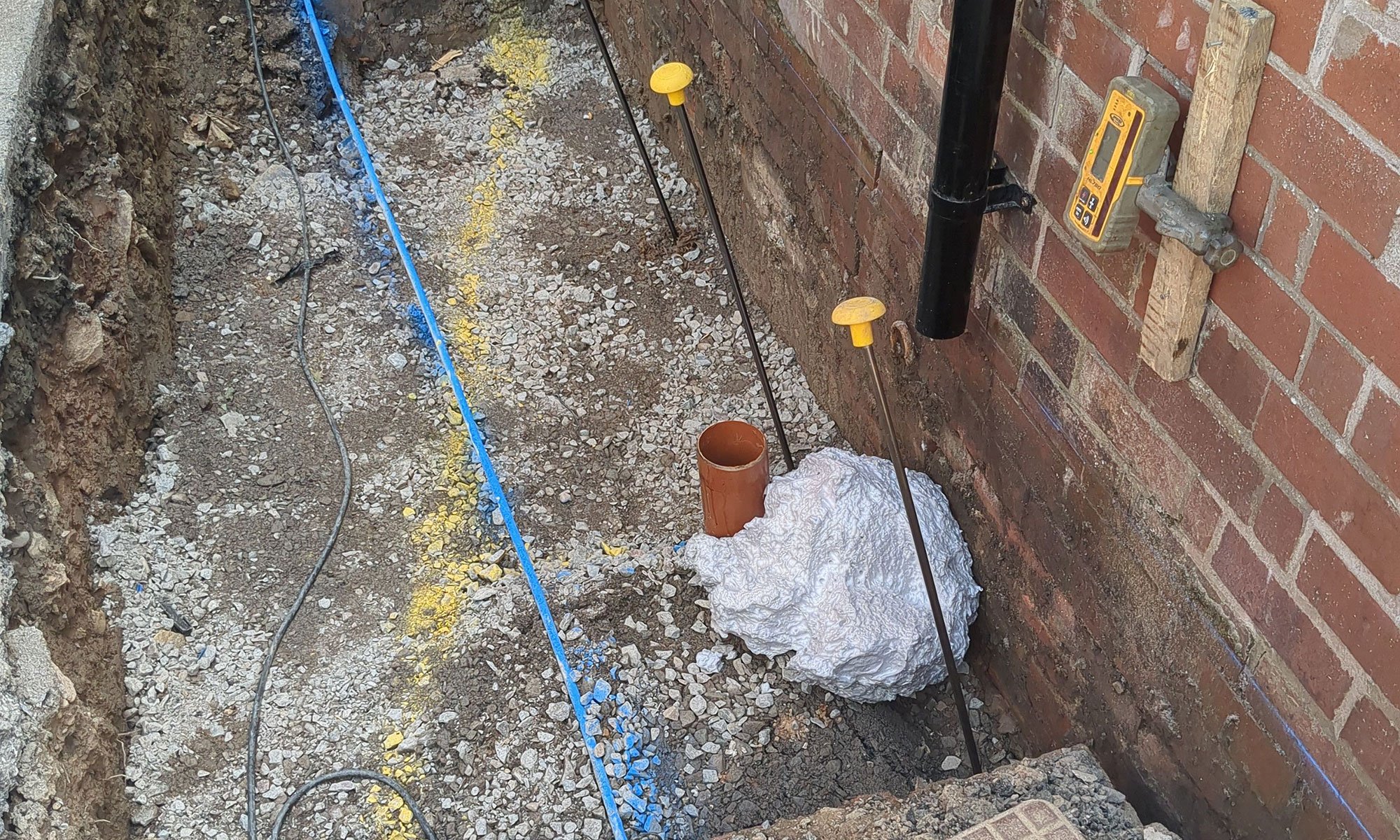
The engineer’s scheme instead used a shallow excavation along the gable to replace the drain and fill the void, with the trench backfilled to the top of the foundation as a working platform. From there, a Geobear ground improvement solution strengthens the soils beneath the foundation through small drilled holes, without excavating below foundation level.

injection-points-1


Results

Geobear designed a ground improvement solution using targeted geopolymer injection to strengthen the made ground and soft clay beneath approximately 15 linear metres of the hospital’s strip foundation, where the soils had been affected by leaking drains. The geopolymer expands as it is injected, compacting and binding loose and softened soils to improve their bearing capacity. The solution was designed to strengthen the ground, not to lift the building or close existing cracks.

The main contractor exposed services, overpumped the foul drainage, removed the damaged drain and filled the void beneath the foundation with dry-packed mortar, then backfilled the trench to the top of the foundation. Geobear’s ground improvement was sequenced to take place from that level, using a self-contained injection unit. A new twinwall foul drain was then laid, the excavation compacted and reinstated, and the masonry repaired. The Geobear works were programmed as a single shift in May 2026.

Verification

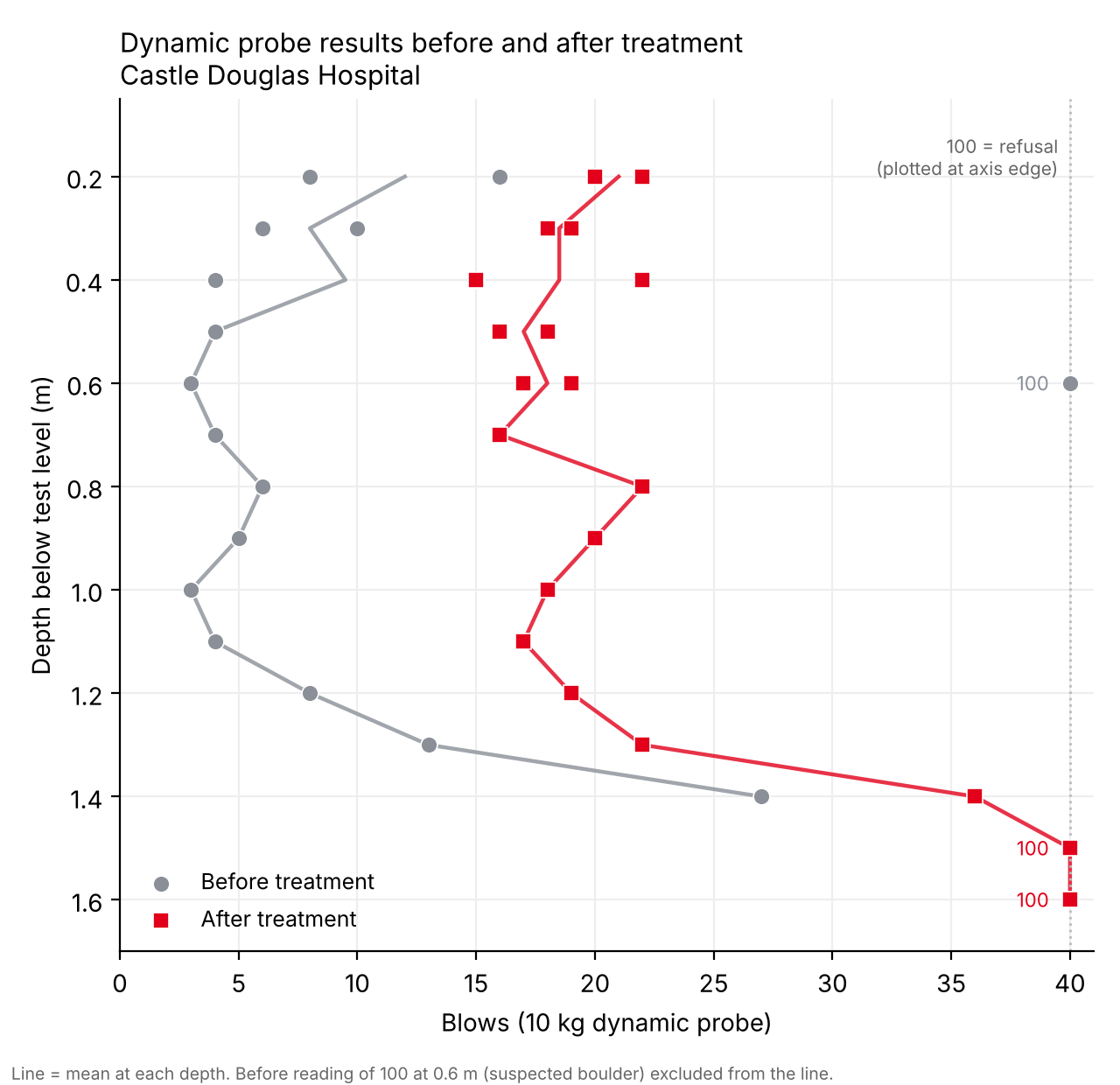
Dynamic probe resistance in the treated zone (0.5 m to 1.2 m) increased by an average of 296%
castle_douglas_probe_chart


Discuss your project with an expert

Don't let unstable ground put your business at risk. Our commercial team can provide a clear assessment and a fast, effective solution tailored to your operational needs.


Bear pointing Bear pointing