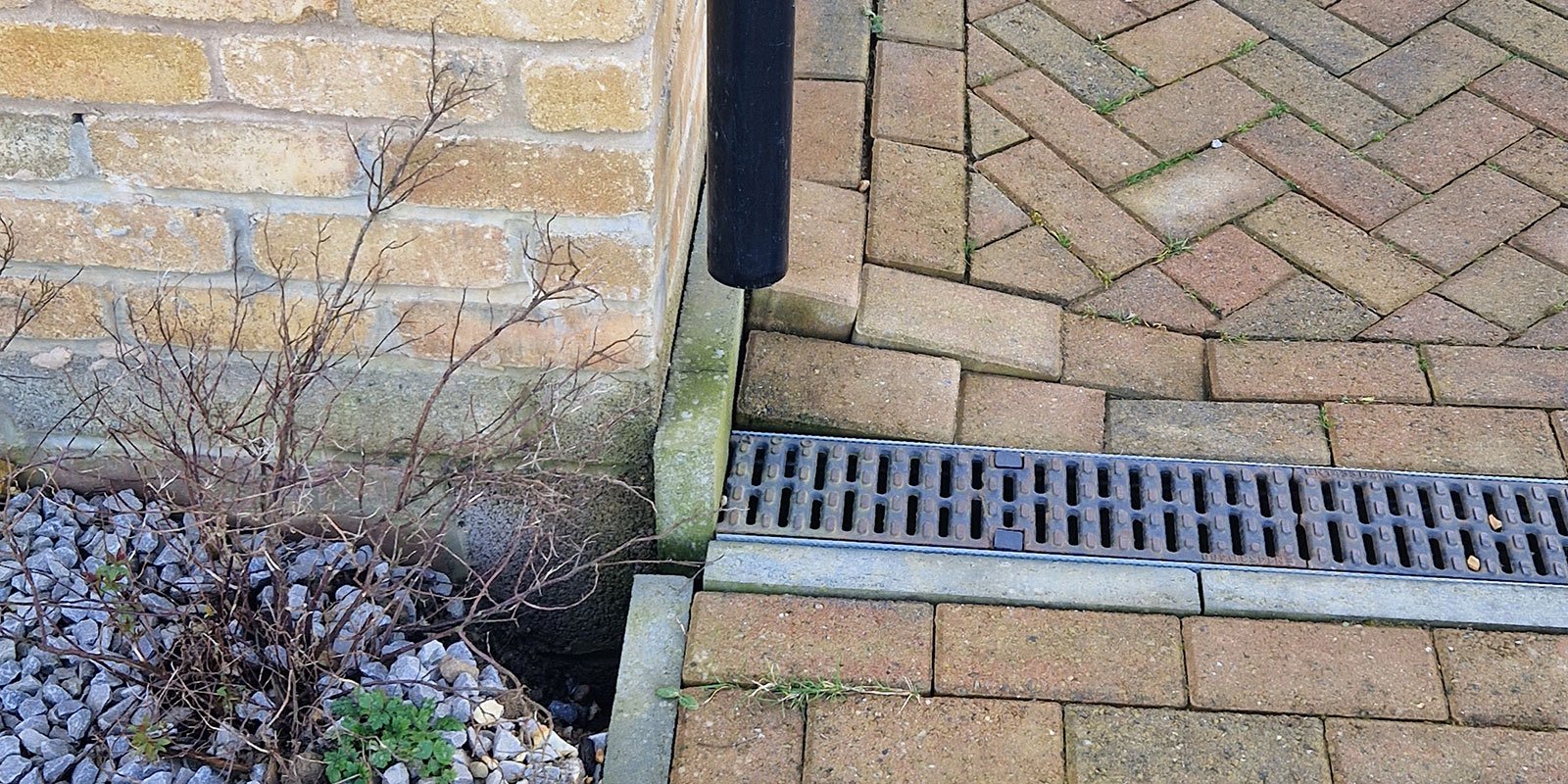
Residential development ground improvement
Challenge
Severe differential settlement caused by soft marine clay beneath a residential development in Littlehampton led to voiding beneath ground, distorted roads, and damaged utilities — with long-term settlement predicted to reach 600mm.
Solution
Geobear delivered targeted geopolymer ground improvement to depths of 9m, increasing soil shear strength by up to 400% and reducing predicted long-term settlement by approximately 50% without excavation or utility diversions.
Maximum depth
Ground strength increase
Settlement reduction
Settlement impacted a residential development in Littlehampton situated on highly variable ground conditions. The stratigraphy comprises up to 4.5m of made ground and fill deposits overlying 6–15m of very soft to soft marine alluvium, which ultimately rests on chalk. The marine alluvium exhibited exceptionally low undrained shear strengths (averaging ~20 kPa) and high compressibility, compounded by historical groundwater levels sitting between 2m and 4m below ground level.
The placement of fill materials during site development imposed a significant surcharge load on the highly compressible soft marine clay, triggering immediate and long-term consolidation settlement. Site monitoring revealed total surface settlement ranging from 100mm to 440mm across external areas, with ongoing movement rates of up to 36mm per year.
Because the residential structures were founded on piles, they remained stable while the surrounding ground continued to consolidate. This severe differential settlement led to voiding beneath structural ground beams, distortion of roads and hardstanding, and severed utility connections. Geotechnical modelling predicted that without intervention, the site could experience up to 600mm of total residual settlement.
Geobear designed a targeted ground improvement programme to increase the undrained shear strength and reduce the compressibility of the marine alluvium.
Using track-mounted rotary drilling rigs, injection tubes were installed across a grid pattern at 1.2m centres. A specialist material was injected at depths ranging from 4.0m down to 9.0m below ground level to target the weakest soil zones showing SPT N-values of less than 2. Additionally, shallow treatments between 0.3m and 1.8m were applied to provide positive support directly beneath the affected ground beams.
The high-pressure injection process fractured the cohesive soils, allowing the expansive geopolymer to permeate and solidify, effectively creating a stiffened soil-polymer composite that improved global load distribution.
Operating within a live residential environment required strict operational constraints. Digital monitors and tripod-mounted spinning lasers ensured controlled observation of ground movement in real-time, while strict 500mm exclusion zones were maintained to protect known buried services and drainage assets.
Alternative solutions considered Traditional remediation methods to address the deep consolidation would have required large-scale enabling works, extensive excavation, and costly utility diversions. The geopolymer injection approach circumvented these requirements entirely, stabilising the infrastructure without structural removal or extended programme durations.
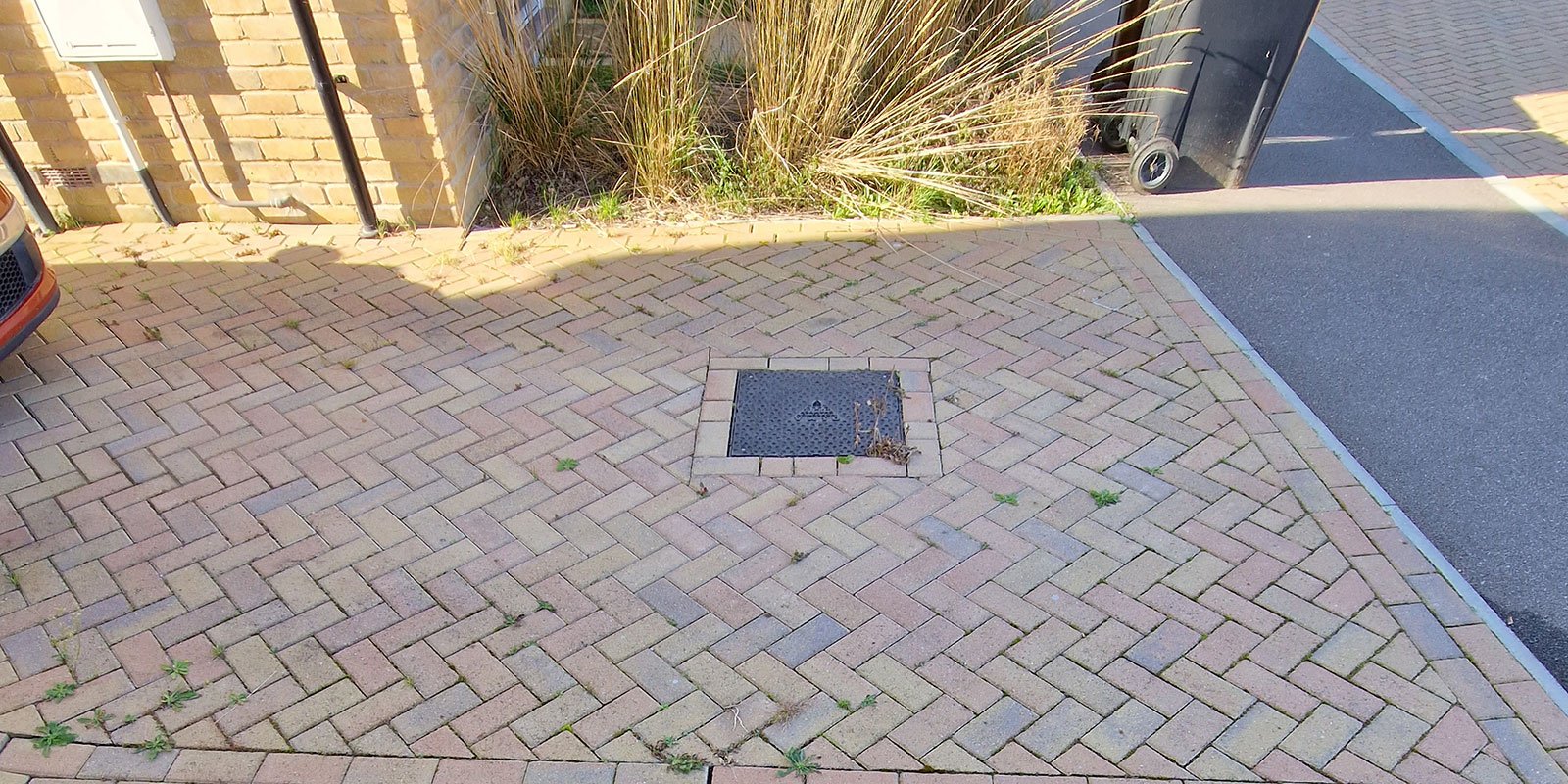
Verification testing using Super Heavy Dynamic Probing (SHDP) confirmed the treatment's success against strict engineering criteria. The geopolymer injection achieved a 200% to over 400% increase in shear strength within the targeted shallow zones (4–7m depth).
Revised consolidation modelling based on the post-treatment data confirmed a ~50% reduction in predicted long-term settlement. Specifically, projected settlement at the road edge was reduced from 166mm to 87mm, while front garden settlement was mitigated from 91mm down to 30–41mm. The works successfully stabilised the external infrastructure, mitigating differential settlement risks without disruption to the residents.
Don't let unstable ground put your business at risk. Our commercial team can provide a clear assessment and a fast, effective solution tailored to your operational needs.