Stadium Pitch Ground Improvement

Challenge

A UK sports stadium built on a former industrial site suffered subsidence and voiding from corroded buried structures, threatening player safety, fixtures, and major financial losses.

Solution

Geobear injected geopolymers to 5.5 m depth, filling voids and stabilising soils while keeping the stadium operational — achieving zero fixture disruption and 75% lower carbon.

Zero

Match fixtures cancelled over 9 months

75%

Lower emissions than alternatives including excavation

5.5 metres

Depth of geopolymer injections into ground beneath pitch

Background

A major UK sports stadium underwent significant remedial works to address pitch subsidence issues. Constructed within the last 20 years, the stadium was built over an old industrial site and was experiencing surface depressions.

The cause of surface depressions was determined to be infiltration of surface water leading to washout of fines and variable Made Ground underlying the pitch. A localised increase to water ingress was also deemed likely due to the presence of historical sewers buried below the pitch.

Challenge

Issues Identified

Visible depressions

Eight significant depressions were identified within the pitch area, causing potential hazards for pitch users and risking the usability of the stadium for matches. The pitch depressions had reached allowable tolerances for use of the pitch, and further movement would render the pitch unsafe to use. If the pitch could not be used, it would have a devastating financial impact on the club using the stadium.

Investigations and findings

Extensive site investigation was carried out on the pitch using a combination of window sampling and dynamic probing. The following was observed:

  • A thickness of variable Made Ground with possible voids was present across the whole footprint.
  • A perched groundwater table was encountered at a shallow depth.
  • Buried sewers / hard spots were encountered.

Derived causes

  • Ground conditions: Variable Made Ground with SPT N blow count values ranging from 0 to 11 across the footprint of the pitch, potentially resulting in differential subsidence.
  • Buried drainage: Historic pipework buried beneath the pitch, potentially increasing washout locally
  • Water Infiltration: Surface water infiltration causing a shallow perched water table and washout of fines

Precision engineering beneath the pitch — Geobear kept the stadium open, safe, and sustainable with zero lost match days.

Solutions

Solutions considered

  1. Cementitious Grout: Rejected due to extensive damage and prolonged stadium closure.
  2. Geopolymer Injection: Selected for minimal disruption and flexibility, allowing continued use of the pitch between Geobear visits.

Solution implementation

Injection process

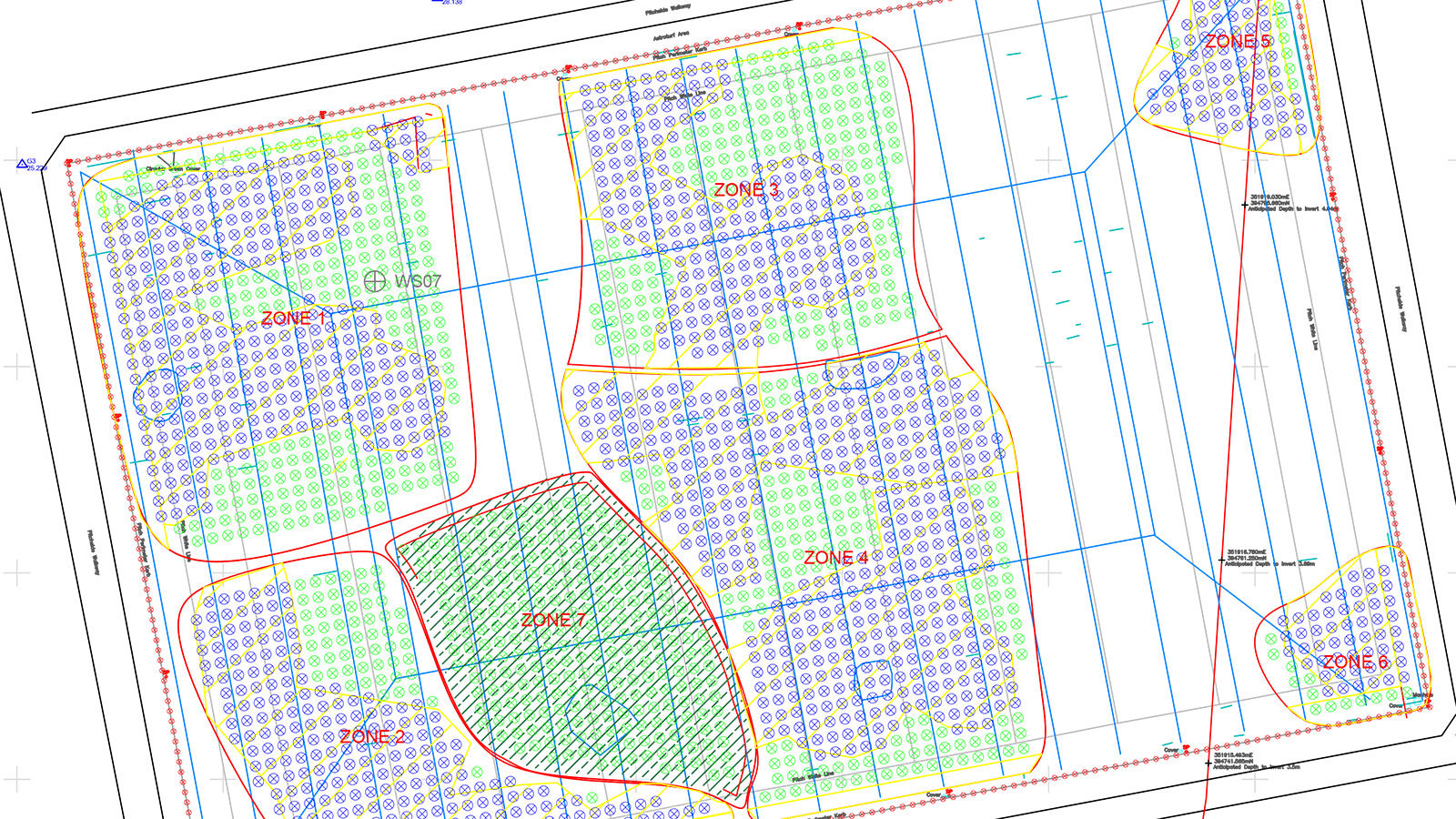
  • Zones and Grid Patterns: High-intensity and medium-intensity treatment zones were designed with consideration of the local ground conditions, presence of voids and location of surface depressions.
  • Depth and Method: Injection tubes were installed to between 4.5 and 5.5 meters below pitch level and an extraction method was used to inject geopolymer at different levels according to the design. This methodology also ensured all tubes were removed for safe use of the pitch.
  • Surface Protection: Enkamat was rolled out over each Injection zone as required for pitch protection along with Purpose-built plyboards with an injection hole to allow the board to be placed over the injection tube and prevent pitch damage during ground treatment.

Challenges resolved

  • Hard Spots: Hard spots and areas of stiff ground were found during the drilling works which delayed the ground improvement process. Geobear mobilised additional teams to progress drilling as a result of stiff ground.
  • Soft Layers: Very low strength ground was encountered between stiffer layers within the Made ground. Geobear therefore agreed verification criteria with the scheme designer using cone penetration test rather than standard penetration test due to the variability in ground conditions over limited bed thicknesses.
  • Validation Testing: Validation testing was carried out across the treated area and treatment depths. Where necessary, additional treatment was carried out where the cone penetration test highlighted thin layers of soil (up to 300mm thick) with cone resistance below 500kPa. On conclusion of the works, the validation testing requirements were achieved.
  • Dynamic Working: Our works were programmed around use of the pitch for matches and events. We worked flexibly with the client to undertake the void filling and ground improvement works over a 9 month period.

Results

The pitch was successfully stabilised across all the identified depressions and validated by cone penetration testing. The validation testing showed that the soils exhibited cone resistance above 1000kPa, except where thin layers of very soft clay had been encountered. Such layers were however improved to achieve a cone resistance of over 500kPa. The works therefore achieved the validation criteria.

Our minimal disruption technique addressed the client's concerns around pitch closure, as the delivery teams mobilised between matches. Geobear mobilised and demobilised rapidly with little evidence of having worked on the pitch. The fast curing time of Geobear geopolymers and the swift demobilisation ensured the pitch could be used within 24-hour periods.

The solution ultimately permitted matches to continue without interruption, avoiding significant revenue loss for the club and the need to relocate to another stadium.

Future applications

The success of this project, the first such remediation of its kind, highlights the potential for using geopolymer injection in other sports facilities experiencing similar subsidence issues. Potential applications include:

  • Any stadium affected by ground depressions
  • Local sports pitches and educational sites
  • Facilities built on Brownfield sites.

Discuss your project with an expert

Don't let unstable ground put your business at risk. Our commercial team can provide a clear assessment and a fast, effective solution tailored to your operational needs.

Bear pointing Bear pointing