Targeted geopolymer injection design
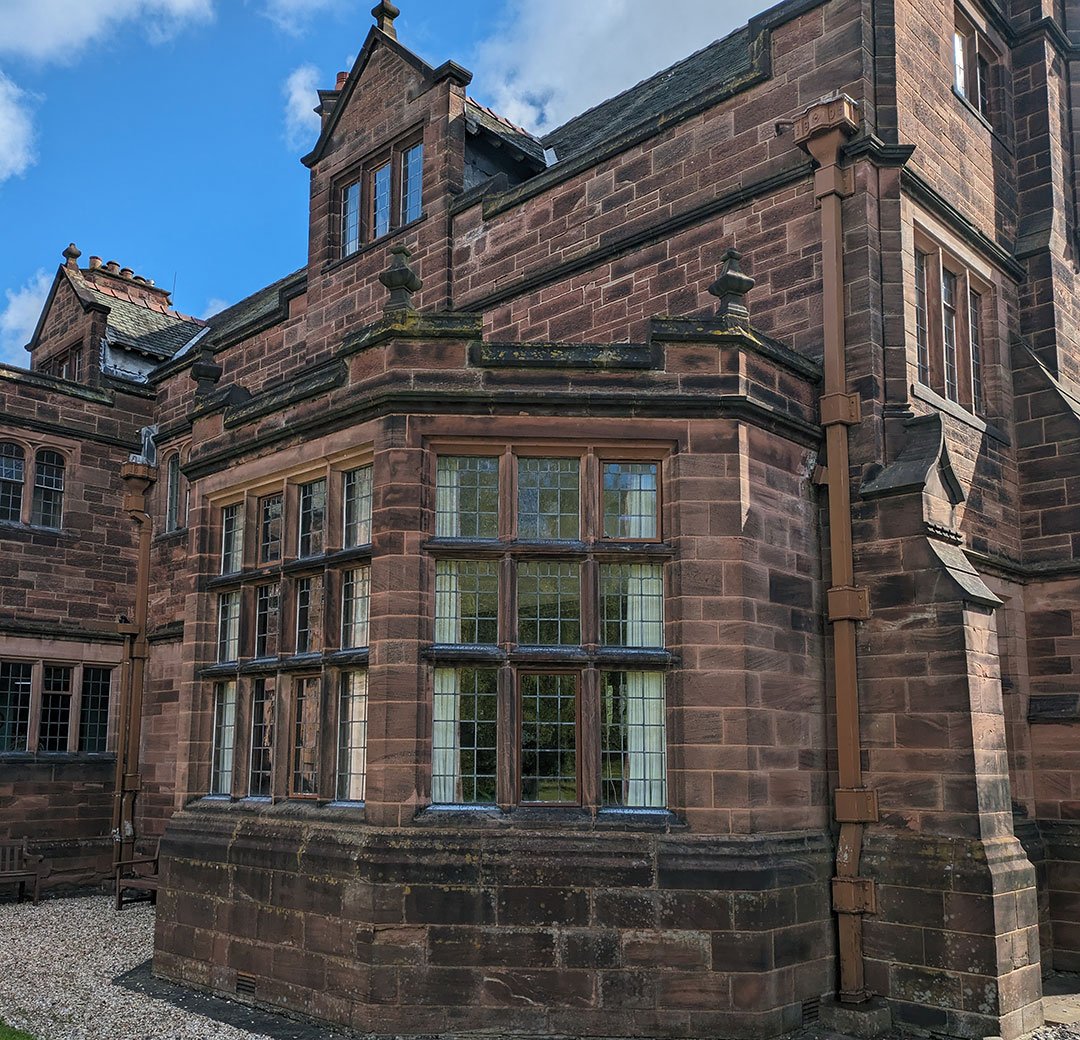
Geobear developed a precision ground improvement solution targeting only the affected foundation zones beneath:
- The porch structure
- The corner of the Gladstone Room
The approach avoided unnecessary intervention while addressing the root cause of settlement.
Geotechnical verification and design approach
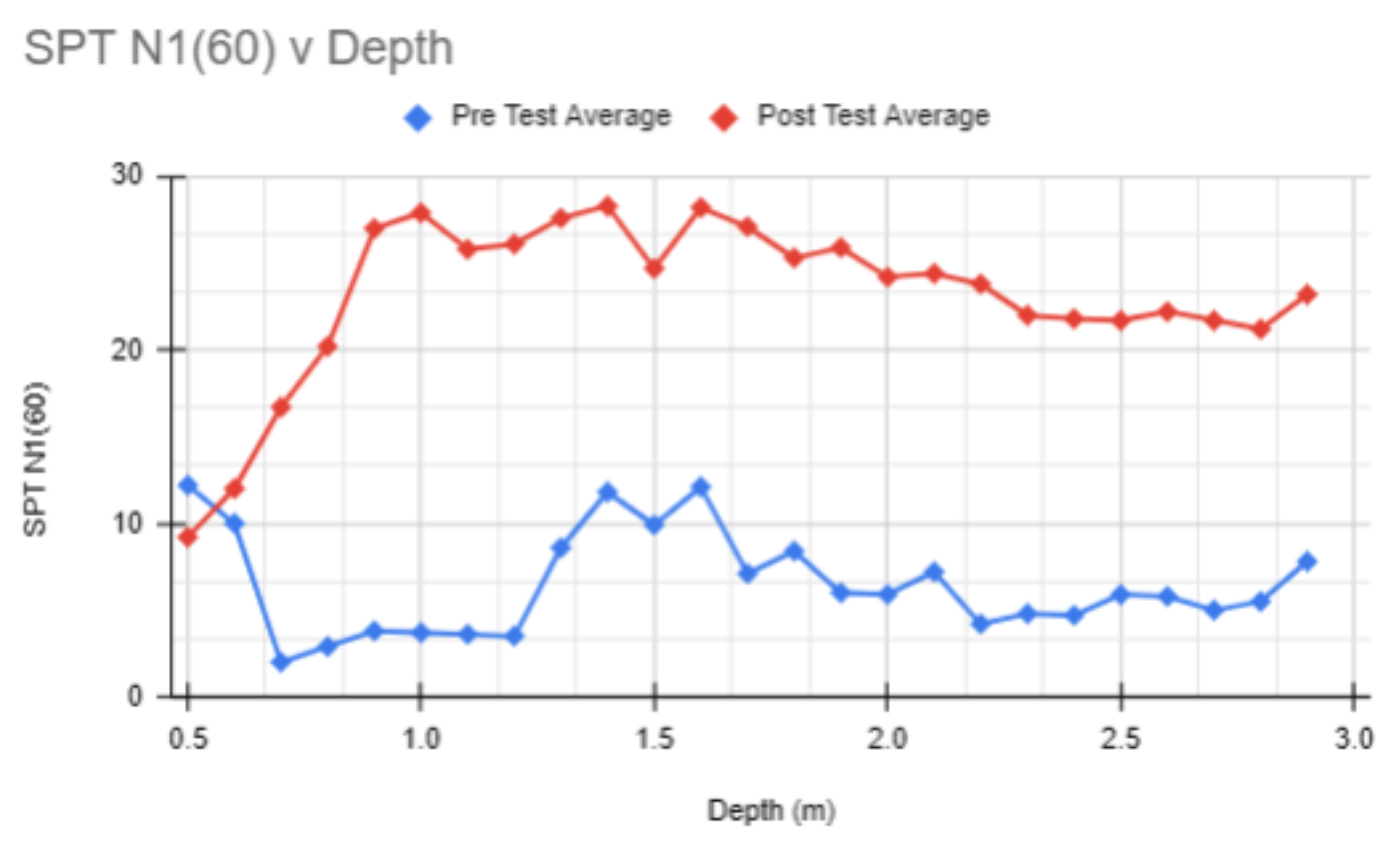
Dynamic probing was undertaken to assess in-situ soil conditions, with results converted to SPT N₁(60) values to quantify ground strength.
Pre-treatment results indicated:
- Low and variable SPT values (approximately 3–10)
- Loose to medium-dense granular soils
- Reduced bearing capacity beneath foundations
These findings confirmed that ground improvement, rather than structural alteration, was the appropriate intervention.
Injection process and ground improvement mechanism
The geopolymer injection process involved:
- Small diameter drilling through external surfaces
- Injection of expanding geopolymer resin beneath foundations
- Controlled expansion to densify and compact surrounding soils
- Void filling and displacement of weak material
This process resulted in:
- Increased soil density
- Improved stiffness modulus
- Enhanced load transfer beneath foundations
All works were carried out with real-time monitoring, ensuring controlled lift and preventing overstressing of the structure.
SPT validation and performance improvement
Post-treatment testing demonstrated a significant increase in SPT N₁(60) values, confirming the effectiveness of the ground improvement.
- SPT values increased from approximately 3–10 (pre-treatment)
- To 15–45 (post-treatment) depending on depth and location
The accompanying chart clearly illustrates:
- A consistent uplift in strength across the treated depth range
- Reduced variability in soil conditions
- Transformation from loose to dense ground behaviour
This provides quantifiable engineering validation that the bearing capacity and stiffness of the subsoil were significantly improved.