Clay soil shrinkage
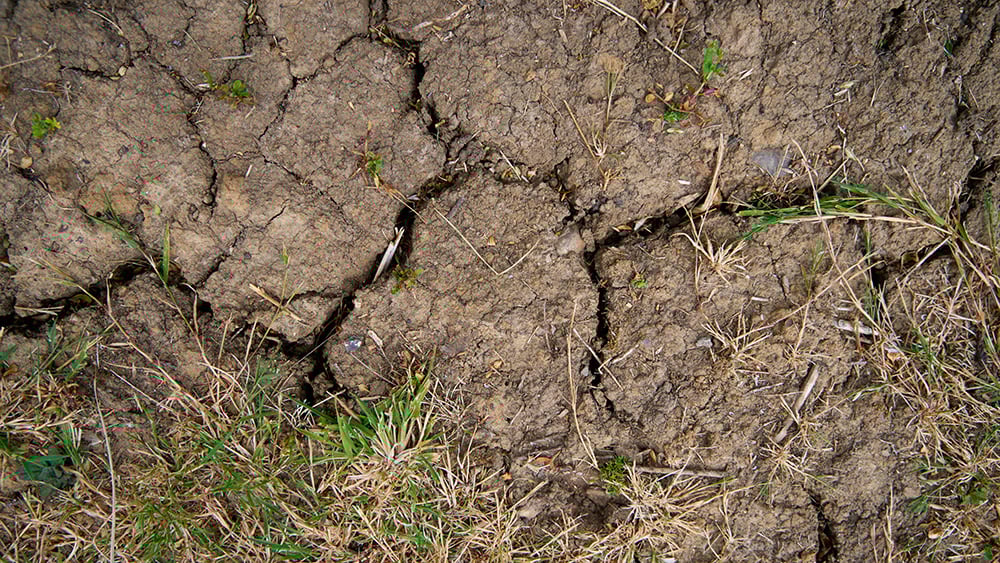
This is the single biggest cause of subsidence in the UK. Clay soil is "cohesive," meaning it behaves like a plasticine or a sponge. It swells in volume when it gets wet and shrinks dramatically when it dries out. During long, dry summers or periods of drought, the clay soil beneath a house can lose a significant amount of moisture and shrink. This loss of volume causes the ground to sink, taking the foundations with it. This is often worse on one side of a house (e.g., the sunny, south-facing side), leading directly to differential settlement.

Puiden juuret
Suuret puut ja pensaat tarvitsevat paljon vettä. Niiden juuret voivat imeä valtavia määriä kosteutta savimaasta saaden sen kutistumaan. Riski on sitä suurempi, mitä kookkaampi puu on ja mitä lähempänä perustuksia se kasvaa.
Vuotavat viemärit ja vesijohdot
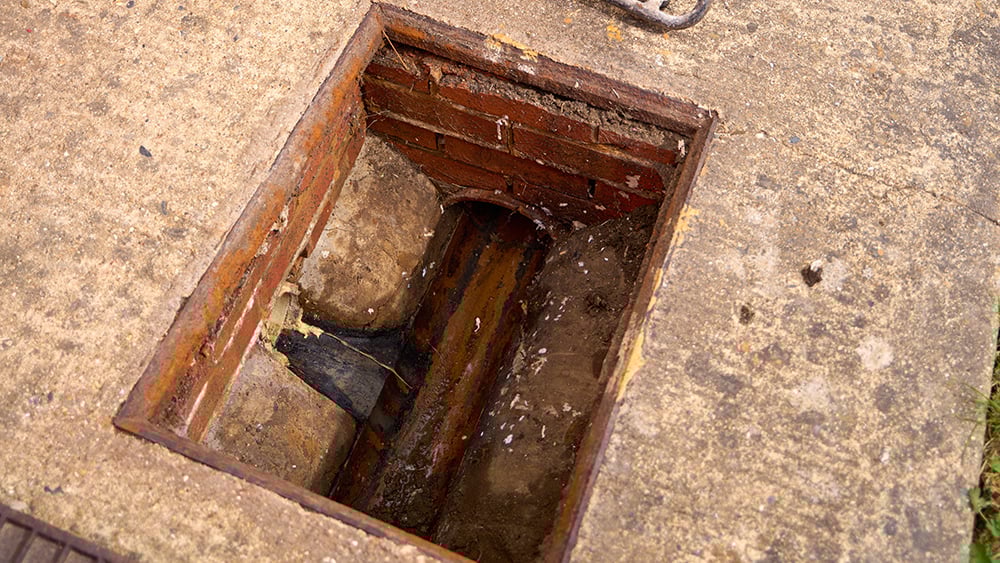
Rikkoutuneista putkista vuotava vesi voi pehmentää tai huuhtoa maata pois perustusten alta. Tämä heikentää maaperää, kunnes se ei enää kestä kotisi painoa.
Huonot pohjaolosuhteet
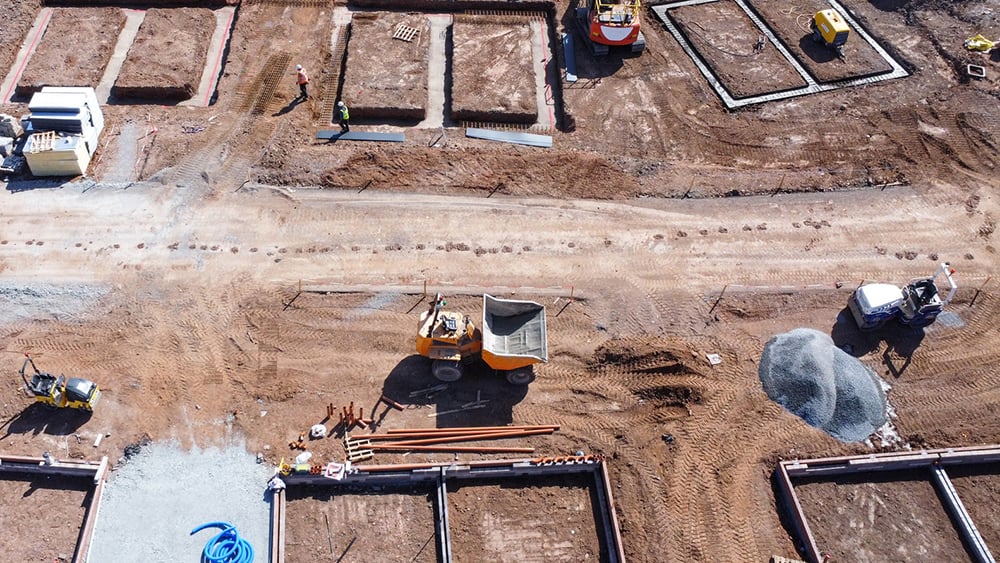
Joskus maaperää ei ole tiivistetty kunnolla rakennusvaiheessa tai rakennuspaikalla on käytetty täyttömaata, joka painuu ajan myötä. Myös lähellä oleva raskas liikenne tai räjäytystyöt voivat aiheuttaa tärinää, joka tiivistää maaperää.

Clay Soil Shrinkage
This is the single biggest cause of subsidence in the UK, especially in the South East. Clay soil shrinks and loses volume when it dries out, causing the ground to sink. Prolonged dry spells or hot summers can make clay soil subsidence much worse.
Tree Roots
Large trees and shrubs are thirsty. Their roots can draw huge amounts of moisture from clay soil, causing it to shrink dramatically. The risk increases with the tree's size and proximity to your home. Poplars, willows, and oaks are known for having extensive root systems, so subsidence tree distance is a key factor.
Leaking Drains and Water Pipes
Slow, steady leaks from broken drains can wash away or soften the soil under your foundations, weakening the ground until it can no longer support the weight of your home. This is a common but often overlooked cause of subsidence.
Poor Ground Conditions
Sometimes, the ground may not have been properly prepared when the house was built, or it could be affected by historical issues like old mining works in the area.
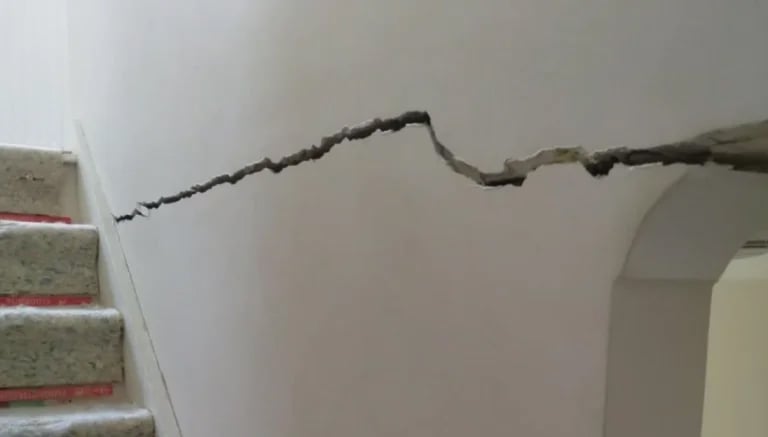
Vinot halkeamat
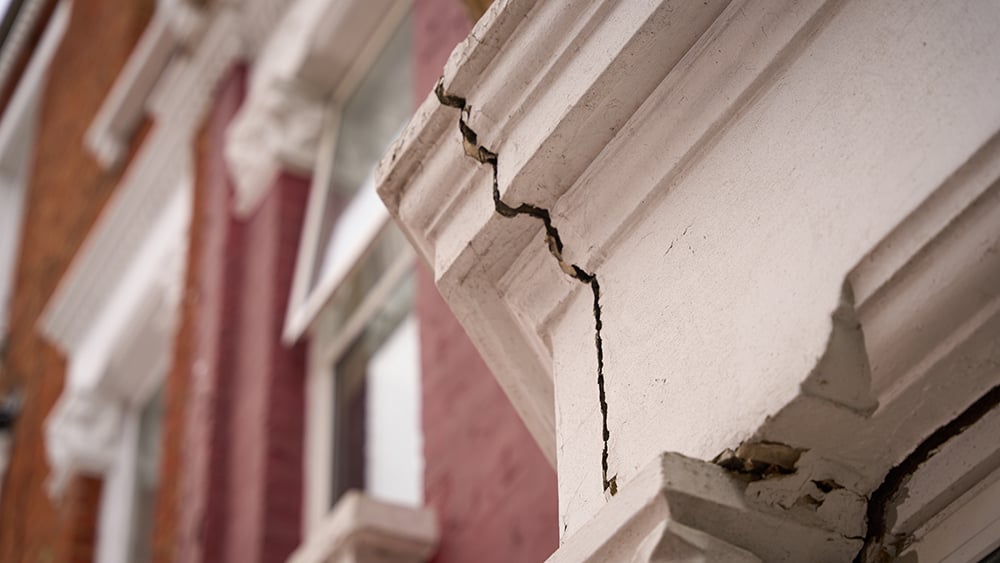
Vinot halkeamat ovat klassisin merkki rakennuksen painumisesta. Etsi seinistä halkeamia, jotka etenevät vinottain. Niitä voi olla sekä rakennuksen sisä- että ulkoseinissä, ja ne ovat tavallisesti ylhäältä leveämpiä. Painumiseen viittaavat halkeamat ovat tavallisia myös ovien ja ikkunoiden ympärillä.
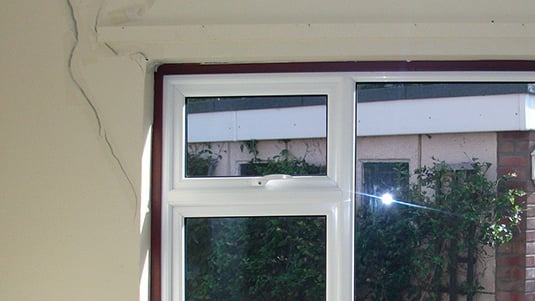
Jumittavat ovet ja ikkunat
Kun rakennus liikkuu, se voi vääntää ovien ja ikkunoiden karmeja, minkä vuoksi ne alkavat jumittaa tai eivät mene enää lainkaan kiinni.
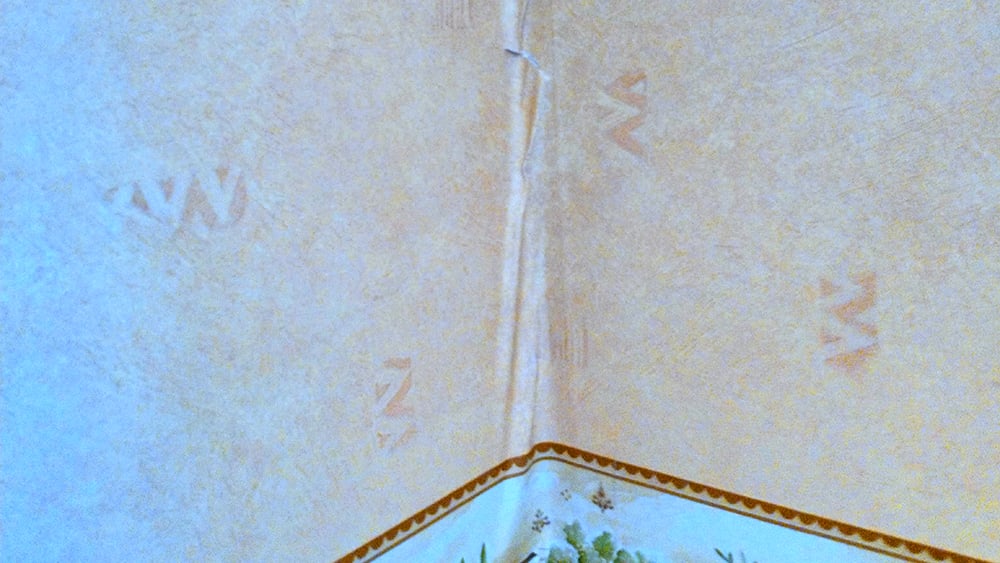
Tapetin rypistyminen
Jos tapetissa näkyy ryppyjä tai repeämiä, jotka eivät johdu kosteudesta, se voi olla merkki seinän liikkumisesta.
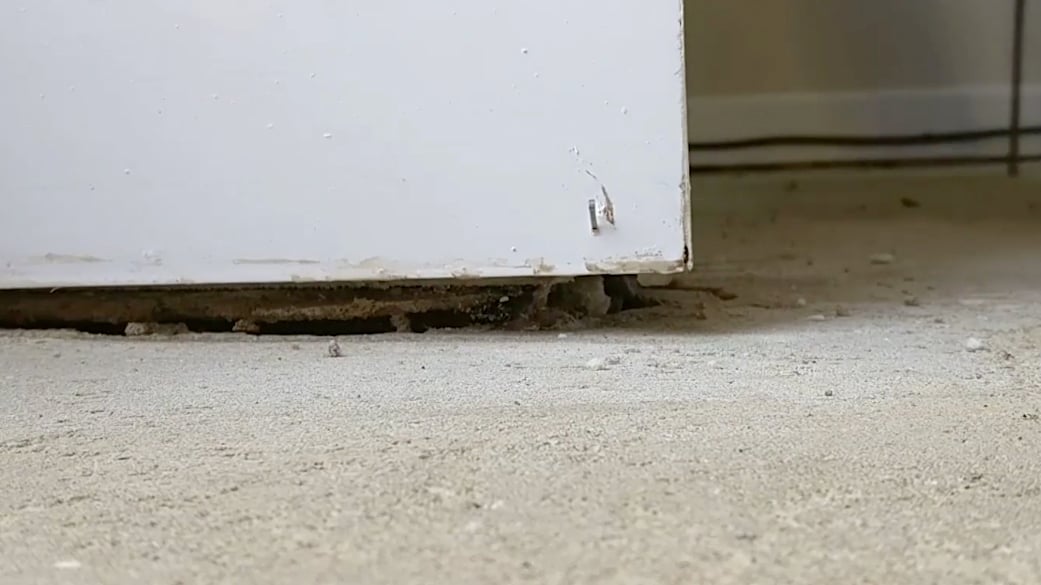
Raot ja repeämät
Etsi rakoja lattian ja jalkalistan välistä tai repeämiä kohdista, joissa laajennusosa kohtaa päärakennuksen.
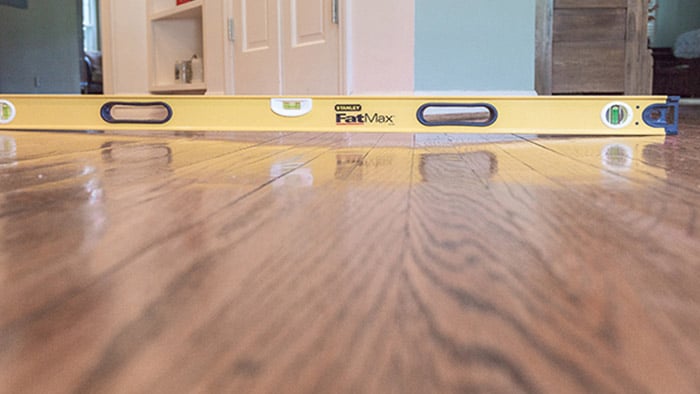
Kaltevat lattiat
Huomattava kallistuma lattiassa on selvä merkki rakenteen painumisesta.
Sloping floors
A noticeable slant in your floors is a clear indicator that the structure is moving.
Diagonal Cracks
These are the classic sign. Look for diagonal cracks in walls, often appearing around doors and windows. They are usually wider at the top than the bottom and are visible both inside and outside.
Sticking Doors and Windows
When a building moves, it can warp the frames around your doors and windows, causing them to stick or not close properly.
Rippling Wallpaper
If you see creasing or tearing in your wallpaper that isn't caused by damp, it could be a sign that the wall behind it is moving.
Gaps Appearing
Look for gaps where your extension meets the main house, or where the skirting boards are coming away from the floor.
Sloping Floors
A noticeable slant in your floors is a clear indicator that the structure is moving.
Halkeamia seinissä tai lattia vinossa?
Ota selvää, mitä kotisi alla tapahtuu
Aivan ensimmäiseksi on tärkeää selvittää, mistä vauriot kertovat ja miksi ne ovat syntyneet. Tiimimme auttaa sinua tulkitsemaan havaitsemiasi ongelmia. Varaa maksuton kartoituskäynti, jonka aikana kartoitamme tilanteen, selvitämme ongelmien juurisyyn ja kerromme selkeästi korjausvaihtoehdoista.