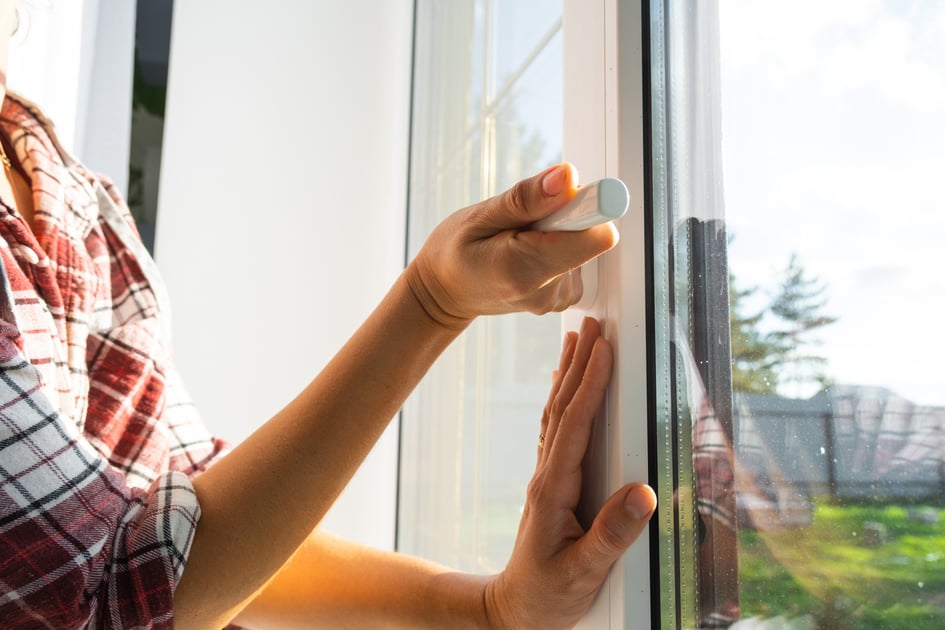
Can foundation settlement cause doors and windows to stick? In many cases, yes, and what looks like a straightforward wood problem is often a structural one hiding below ground. The door stuck last summer. You figured it was the heat, the humidity, the way wood swells in Southern California when the air gets heavy. You had it planed down. It was fine for a few months. Then spring came, and it stuck again. Worse this time. So you had it planed again.
That cycle is one of the most common patterns the team at Geobear US sees when homeowners finally call. Not because they ignored the problem, but because the explanation that felt most logical turned out to be the wrong one. The door was not the problem. The ground beneath the house was.
Foundation settlement works on the entire structural frame of your home, quietly and gradually, until a sticking door or a cracked wall corner makes the problem visible. By the end of this article, you will know how to tell the difference between a wood problem and a ground problem, what to check yourself, and when to stop adjusting hardware and start asking about what is happening below the slab.
How foundation settlement shifts your home's structural frame
What differential settlement actually means
Not all foundation movement is equal, and that distinction matters. When one section of your foundation sinks lower than another, engineers call it differential settlement. The problem is not the sinking itself; it is the unevenness. Think of a picture frame with one corner pushed down while the other three stay level. The rectangle stops being a rectangle. The same thing happens to your house's structural frame when the soil beneath one section compresses, erodes, or dries out faster than the rest.
In Southern California, expansive clay soils are a frequent culprit. They shrink during dry seasons and expand when moisture returns, creating a cycle of movement that puts constant, uneven stress on the foundation below your home.
Why door and window openings rack out of square
Door and window openings are engineered as precise rectangles. When the structural frame above a settling foundation twists, those rectangles distort into parallelograms. The door itself has not changed. The opening it was built to fit has. This is why planing a door gives temporary relief but not a permanent fix: the frame keeps moving, and the geometry of the opening keeps changing with it. The adjusted door binds again within months, sometimes weeks.
Structural engineers call this distortion "racking." It is not a subtle process once it is underway. The forces involved are significant, and the symptoms compound over time, engineering guidance identifies angular distortion thresholds beyond which cracking and structural damage become likely.
Settlement vs. humidity: reading the warning signs correctly
The cracks that point to structural movement
Normal seasonal movement in drywall produces hairline cracks, usually horizontal or vertical, that open slightly in dry weather and close in humid conditions. Settlement produces something different: diagonal cracks extending from the corners of door and window openings at roughly a 45-degree angle. In brick exteriors, the equivalent is a stair-step crack following the mortar lines. These patterns form because the frame corner is the weakest point when the wall racks, and the stress concentrates there first.
A crack wider than 1/16 of an inch near a door or window corner deserves attention, industry guidance generally recommends professional evaluation for cracks in this range, with urgency increasing as they approach 1/4 inch or widen over time. A crack that has grown noticeably over a few months is telling you the movement is ongoing, not historical.
Gaps, sloping floors, and year-round sticking: the clearest signs that foundation settlement is causing doors and windows to stick
Several physical clues tend to appear together when foundation settlement is the cause. Gaps between trim and the surrounding wall that were not there a year ago are one signal. Floors that slope consistently in one direction, not the soft bounce of a moisture-damaged crawl space floor, but a steady tilt, are another. Most diagnostic of all: doors and windows that stick in January just as much as they do in July.
That last one is the clearest signal. Humidity-related swelling is seasonal. It loosens up when the air dries out. Settlement does not improve with the weather. It progresses. If your door binds consistently through dry winter months, the explanation is structural, not atmospheric.
Can foundation settlement cause doors and windows to stick?
Quick checks any homeowner can run right now
The weather-correlation test
Over the next two weeks, open and close the sticking door or window each morning. Note the conditions: humid day, dry day, after rain, during a heat spell. If the door swings freely on dry days and binds on humid ones, wood swelling is likely the explanation and the fix is relatively simple. If the resistance is consistent regardless of the weather, the frame geometry has changed. That consistency is the signal that something structural is worth investigating.
Floor slope check and crack inspection walkthrough
Place a small round object, a marble or a pen, on a hard floor and release it without pushing. If it rolls consistently in one direction, the floor is sloping. Do this in multiple rooms. A subtle, consistent slope across several areas of the house is a stronger indicator than a single result. Pair this with a slow walk through each room, examining the upper corners of every door and window frame for diagonal cracking.
If the marble rolls and you find diagonal cracks in two or more locations, you have enough evidence to take the situation seriously. A structural cause is more likely than a moisture one, and the next step is a professional assessment rather than another trip to the hardware store.
When foundation settlement causes doors and windows to stick, and it's time to call a pro
The combinations that require a professional's eyes
Any single warning sign deserves attention. Two or more together suggest the ground beneath the house is actively moving. The combinations that signal a professional assessment is overdue include:
- Multiple doors and windows binding at the same time across different parts of the house
- Frames that are visibly tilted, with the gap wider at the top on one side
- Exterior doors that no longer latch securely
- Cracks that have widened noticeably over the past few months
These are not maintenance tasks. They are diagnostic signals.
How urgently should you act?
The instinct to wait and see is understandable, but foundation settlement is not self-correcting. The longer differential movement continues, the more the frame racks, the more cracks propagate, and the more the eventual repair costs. In practice, minor sticking frequently escalates to significant structural misalignment within 6 to 18 months in areas with unstable or expansive soil, a pattern consistent with geotechnical findings in Southern California's clay-rich regions.
Getting a professional assessment early is not an overreaction. It is the lower-cost decision. A consultation that rules out structural movement is worth far more than months of wondering. For information on common signs that point to foundation problems and when to escalate, see this overview of signs of foundation problems.
Why fixing the root cause matters more than rehinging the door
What re-hanging the door actually accomplishes
Re-hanging or planing a door addresses the symptom. If the frame continues to rack because the ground beneath is still settling, the adjusted door will bind again within months. Some homeowners cycle through this process several times before anyone looks at the foundation. Each adjustment is the house's way of telling you something, and each time it is ignored, the eventual repair becomes more involved.
Ground stabilization vs. traditional repair approaches
Different foundation repair methods work at different levels of the problem. Traditional pier systems, helical or push piers, stabilize the foundation by driving steel shafts down to load-bearing soil, halting movement and sometimes partially restoring elevation. Slab jacking (mudjacking) fills voids beneath sunken concrete with a cement slurry, though it adds weight and does not address the underlying soil condition.
A more precise approach, the one used by Geobear US, works at the soil level itself: engineered material is injected directly into the unstable ground beneath the foundation, stabilizing it from below. The process typically requires minimal excavation and limited disruption to landscaping, and many residential projects can be completed in a day or two depending on scope, without the need to vacate the home in most cases.
The goal across all methods is the same: stop the movement first. Cosmetic repairs to cracked walls, sticking doors, and warped frames are straightforward once the ground is stable. Done before stabilization, they are temporary.
Repair cost ranges and what to expect
For Southern California homeowners, costs vary significantly based on the extent of movement and the method required. Targeted foam injection work for isolated issues can start in the range of $2,000 to $5,000. Moderate repairs involving piers for settlement affecting multiple openings typically fall between $7,500 and $25,000. Widespread structural stabilization with full pier installation can run $50,000 or more depending on scope and soil conditions. These figures reflect general industry ranges and will vary by home size, soil type, and project complexity.
- Minor slab leveling or targeted injection: $1,200 to $6,500
- Moderate settlement with pier installation: $7,500 to $15,000
- Extensive structural stabilization: $20,000 and above
One consistent observation across the industry: the cost of a professional diagnosis is often lower than the cost of delayed treatment, since early intervention typically limits how far damage progresses.
What to do if your doors are telling you something
Can foundation settlement cause doors and windows to stick? Yes, and more often than most homeowners expect. In many cases, it is the structural explanation hiding behind what looks like a straightforward wood problem. You now know how differential settlement racks a frame out of square, how to distinguish that from seasonal humidity swelling, and what combinations of warning signs mean it is time to stop adjusting hardware and start looking at the ground.
You do not need to panic. But you do need to pay attention. A sticking door is the house asking you to look closer. The marble test, the crack inspection, and the weather-correlation check together take about five minutes, and they can tell you whether you have a seasonal annoyance or the early stages of something that compounds quietly until it does not.
Geobear US offers free consultations for Southern California homeowners who want a professional assessment before committing to any repair approach. The process starts with a no-obligation video call, followed by a detailed cost proposal based on the actual ground conditions beneath your home. If you have been planing the same door twice a year, it may be time to find out what the ground has been doing beneath it. For additional reading on recognizing and addressing sticking doors and windows, and when they indicate deeper foundation issues, see this specialist overview.