What are push piers?

Push piers are steel pipe sections driven straight down into the ground beneath a foundation, using the weight of the structure itself as resistance. Sections are added one at a time — each new length coupled to the last — until the pier reaches soil dense enough to bear the load, sometimes 25-30 feet down, occasionally deeper.

How push piers are installed

  1. A small excavation (typically about 3x3 feet) is dug at each pier location, exposing the foundation footing

  2. A steel bracket is attached to the footing A hydraulic ram drives the pier sections down through the bracket, one section at a time, until they reach load-bearing soil

  3. Once all piers are in place, hydraulic jacks lift the foundation back toward its original position, with floor elevation measured throughout to keep the lift level

  4. Brackets are secured, excavation holes are backfilled, and landscaping is restored

  5. Push piers are a mechanical, load-transfer solution — they don't treat the weak soil itself, they bypass it by anchoring into stable ground below.

Push piers are a mechanical, load-transfer solution — they don't treat the weak soil itself, they bypass it by anchoring into stable ground below.

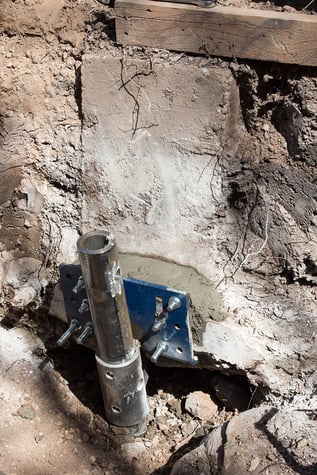
Installed push pile connected to foundation


What are helical piers?

Helical piers work on a similar principle — transferring your foundation's load to deeper, stable soil — but they're installed differently. Instead of being driven straight down, a helical pier is mechanically screwed into the ground, using a hydraulic drive head to rotate it like a large screw.

How helical piers are installed

  1. Similar excavation as push piers, exposing the footing at each pier location

  2. A hydraulic drive head rotates the helical pier into the ground, section by section

  3. Installation torque is monitored throughout — higher torque generally indicates denser, more load-bearing soil, which is how installers judge when the pier has reached adequate capacity

  4. Once torque targets are met, a bracket connects the pier to the foundation, and hydraulic jacks lift the structure, similar to the push pier process

  5. Holes are backfilled and the site is restored

Helical piers are often chosen for lighter structures, or in situations where soil conditions make push piers less predictable, since torque provides a real-time readout of the soil's holding capacity as the pier goes in.

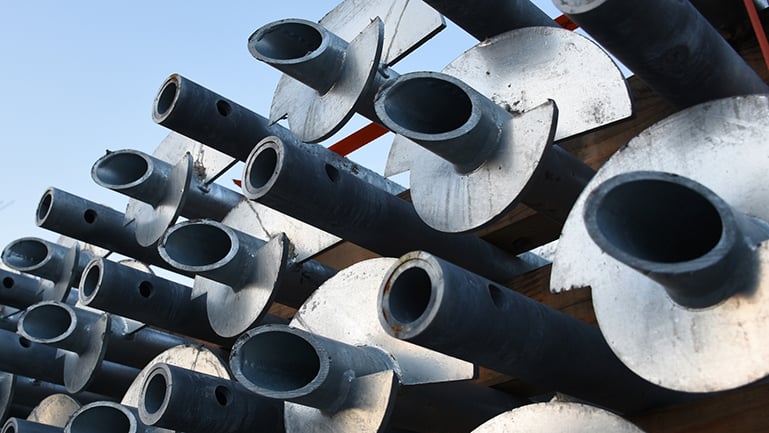
Stack of helical piles


Push piers vs. helical piers: the practical difference

Both methods transfer your home's weight to deeper soil rather than treating the weak soil itself. The main practical differences:

  Push Piers Helical Piers
Installation method Hydraulically driven Mechanically screwed (torque-driven)
Capacity confirmed by Hydraulic pressure during driving Installation torque
Best suited for Heavier structures Lighter structures, or soil where torque feedback is preferred
Excavation required Yes Yes
Typical depth 25-30 ft (sometimes more) Varies with soil conditions


For most residential situations, the practical difference to a homeowner is smaller than it might seem — both require excavation, both are mechanical load-transfer systems, and both are proven, engineered methods with a long track record.

How resin injection underpinning compares

Geobear's approach starts from a different premise. Instead of transferring your foundation's weight past the weak soil, resin injection treats the weak soil directly — strengthening it so it can support the structure on its own.

  Push/helical piers Geobear resin injection
Approach Transfers load to deeper stable soil Strengthens the weak soil itself
Excavation Yes — access pits at each pier location No — small drilled entry points only
Typical timeline Several days, depending on pier count 1-2 days for most residential jobs
What happens to the weak soil Bypassed, left as-is Compacted and stabilized
Landscaping impact Excavation and restoration required Minimal — no digging


No approach is right for every situation. Piers are a well-established, proven method, particularly suited to cases needing deep, certified structural support.

Resin injection is a strong option for most all residential slab and foundation settlement caused by soil issues — voids, erosion, expansive clay, or poorly compacted fill — without the extra time and impact of excavation.

Learn more about our foundation inspection services, our foundation repair process, or see our Southern California service area.

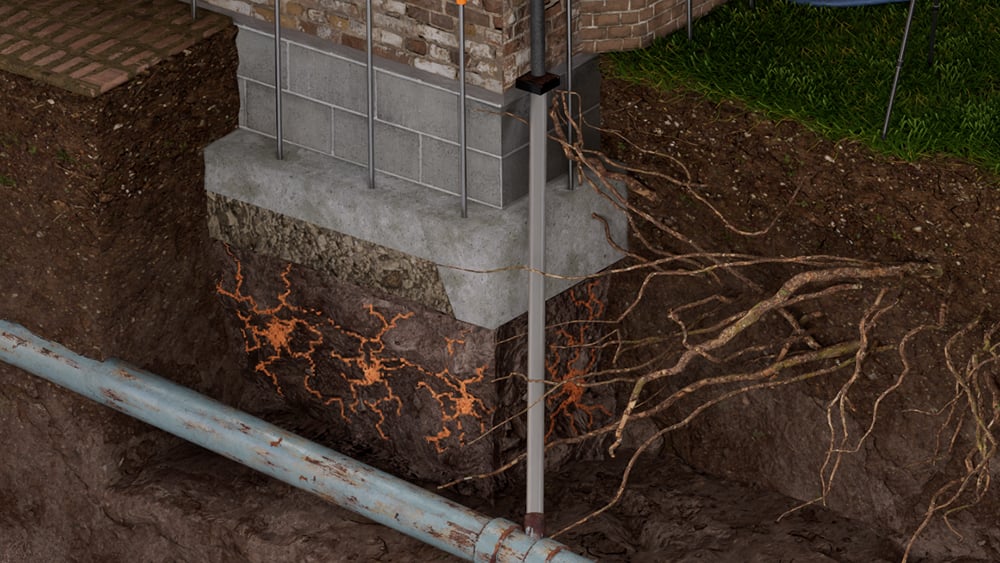
3D model showing Geobear clay shrinkage treatment installed


push piles vs. helical piles vs. resin injection underpinning FAQ

Frequently asked questions

Neither is universally better — they're suited to different situations.

Push piers rely on the structure's own weight for installation resistance, which works well for heavier homes.

Helical piers use torque-driven installation, which some contractors prefer for lighter structures or specific soil conditions.

Resin injection underpinning is a viable option and offers no-excavation installation. 

A qualified assessment of your specific foundation and soil is the only reliable way to know which fits your situation, if piers are the right approach at all.

Yes. Resin injection achieves comparable or superior load-bearing improvement, verified through pre- and post-treatment testing.

The difference is in approach, not strength — piers transfer load past the weak soil, while resin injection strengthens the soil directly.

Pier systems have a longer history in the US residential market, and many contractors are equipped and certified specifically for pier installation.

Resin injection requires different equipment and training, which is part of why it's not always offered — it is not an indication that it's less proven.

No. Resin injection is installed through small drilled entry points, without the excavation pits piers require.

Most areas of residential yards and driveways remain untouched.

It depends on your specific soil conditions, the extent of settlement, and your home's structural needs.

A professional assessment — not a generic recommendation — is the right starting point regardless of which method you're considering.

Get a clear assessment of your options

Whether piers or resin injection is the better fit for your home depends on your specific situation.

Get a free, no-obligation assessment from our team.

Bear pointing Bear pointing