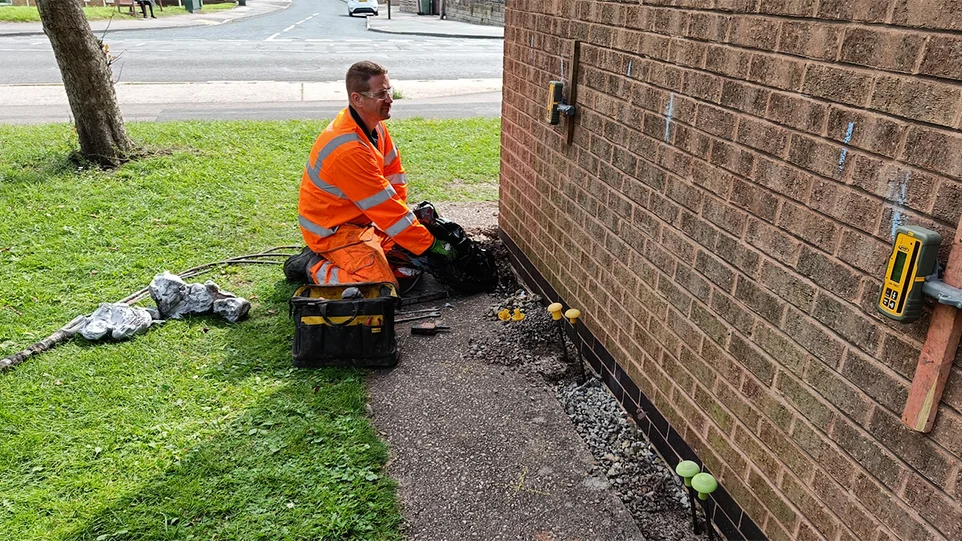
Discovering subsidence or foundation settlement can feel overwhelming for homeowners. Many worry about major construction, extended disruption, or costly unknowns. Foundation repair doesn’t have to mean chaos. It is often far more controlled and predictable than expected - especially when issues are identified early.
Understanding what subsidence is, alongside what happens before, during and after foundation repair, can help you plan confidently and avoid surprises.
Before foundation repair: Evaluation & planning
Getting a professional assessment & diagnosis
Before any repairs begin, a foundation or ground improvement specialist will evaluate your home to determine the cause of the movement (soil settlement, subsidence, moisture issues, or structural factors), the severity and progression of movement, the type of foundation and soil conditions beneath it, and whether movement is active or stabilized.
In Southern California, investigations often focus on soil behavior, leaking or ageing underground utilities, drainage patterns, and drought-related soil shrinkage. This step is critical. Repairing symptoms without addressing the underlying cause can lead to recurring problems.
Selecting the right repair approach
Once the cause is understood, your repair plan may include drainage or moisture corrections, slab lifting for sunken concrete, structural underpinning, soil stabilization, or ground improvement beneath the foundation. The recommended solution should match both the problem and the property, balancing effectiveness, cost, timeline, and level of disruption.
Preparing your home
Depending on the scope of work, preparation may include clearing access areas outside the home, temporarily relocating vehicles or patio items, marking utility lines, adjusting irrigation systems, or having third-party inspections, such as drain inspections. Most residential foundation repairs do not require you to leave your home, especially when non-invasive methods such as geopolymer injection are used.
During foundation repair: What homeowners experience
How long will repairs take?
Timelines vary based on the repair method you select and the specific problem. Speak to your foundation repair partner to understand clear and specific timelines prior to committing. Timelines can vary from one day for localized small area lifts or geopolymer injection methods to several weeks for underpinning or pier solutions.
Noise, access & disruption
At Geobear, our customers love the lack of disruption during the repair process. As our solutions require minimal equipment, make little noise, and require very little disruption to your home and landscaping, homeowners feel much less disruption during the process. If you’re using alternative methods, speak to your contractor in advance to understand what areas of the home or yard will be disrupted, what access will be needed, and what you will need to do (e.g. temporarily leaving the home) during the construction process.
Monitoring & precision
During repairs, your contractor will monitor the entire process to minimize risk, monitor the property, and ensure accuracy in the process. Your specialist will carefully monitor injection depth and pressure, soil response and stabilization, and any movement of the structure. This controlled approach reduces risk and ensures the solution addresses the targeted problem areas without affecting unaffected parts of the home.
After foundation repair: What changes and what doesn’t
Immediate improvements you may notice
After repairs, homeowners may observe improved floor stability, doors and windows that operate more smoothly, and reduced progression of cracks. In some cases, cracks will get smaller, or the lifting of the home will be achieved. It’s important to understand that some homes don’t get a visible lift, and cosmetic issues such as cracks may remain visible even after work is complete. This does not mean the repair was unsuccessful. The structural or soil issue has likely been addressed, but cosmetic repairs are often done separately.
Cosmetic repairs & adjustments
Once the foundation or soil is stabilized, homeowners may choose to patch any drywall cracks or exterior stucco cracks, repaint affected areas, and adjust doors or trim as needed. It’s recommended to wait a short period to ensure all movement is complete prior to starting these repairs. If you’ve used a solution such as piers or underpinning, you may also need to patch floors, replace or repair any landscaping, and handle any issues that arise from the construction process.
Long-term expectations
A properly designed foundation repair should stop continued settlement or subsidence, stabilize the soil or structure supporting the home, and protect property value and structural integrity. Your contractor may recommend ongoing best practices, such as maintaining proper drainage, monitoring soil moisture, or addressing future plumbing issues early.
What homeowners can do if they suspect a foundation issue
If you’re asking, “What should I expect when repairing my home’s foundation after subsidence or settlement?”, you’re already taking the right step.
Geobear specializes in non-invasive ground improvement solutions that stabilize the soil beneath homes affected by settlement or subsidence - helping Southern California homeowners resolve foundation issues with minimal disruption.
If you’re concerned about foundation movement, reach out to Geobear to understand what’s happening beneath your home and what to expect from the repair process.