You have options

Ground engineering has evolved significantly. Today, most residential settlement issues can be fixed in just one or two days without a single excavator touching your property. By treating the root cause of the problem—the weak soil beneath your house—you can improve the ground stability under your home with minimal disruption.

Here is everything you need to know about modern foundation repair, how it compares to traditional methods, and how to manage the costs.

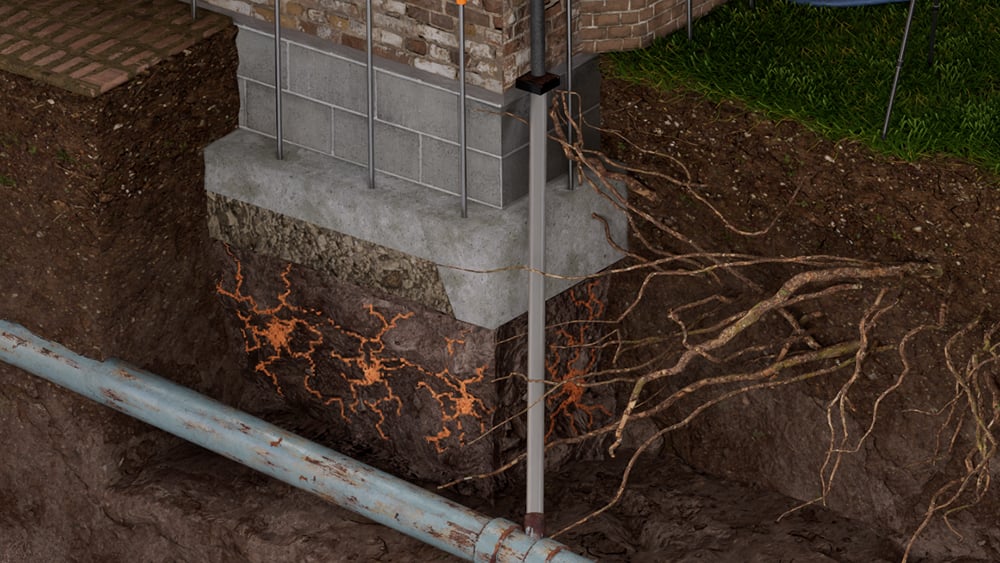
3D model showing Geobear clay shrinkage treatment installed

Understanding your foundation repair options

Not all foundation damage requires the same fix. The right solution depends on your local soil type, the severity of the settlement, and your home’s specific construction type (slab-on-grade vs. raised foundation).

Traditional concrete underpinning (piering)

For decades, concrete underpinning was the only way to fix a sinking house. It involves excavating the dirt around your foundation and pouring new concrete piers deep into the ground to support the weight of the house.

How it works Crews dig large holes around your home's perimeter, drive steel or concrete piers into deeper, more stable soil, and attempt to lift the house.
Best for Complete foundation failure or when adding a heavy second story to an older home.
The downside It is highly disruptive, takes weeks to complete, destroys landscaping, and often requires you to vacate the home. Furthermore, adding heavy concrete to already weak soil can sometimes cause further sinking over time.

Mudjacking (slab jacking)

Mudjacking involves pumping a heavy slurry of water, dirt, and cement under a sunken concrete slab to lift it back up.

How it works Large holes (about 2 inches wide) are drilled into the concrete, and the mud mixture is pumped in to fill the void.
Best for Cheap, temporary fixes for exterior concrete like driveways, sidewalks, or patio slabs.
The downside The mudjacking material is incredibly heavy (weighing up to 100 lbs per cubic foot). If the underlying soil is already weak, putting heavy cement on top of it often leads to the slab sinking again within a few years. It is not recommended for load-bearing home foundations.

Geopolymer injection (the Geobear solution)

This is the modern, engineered alternative to traditional underpinning and mudjacking.

How it works We drill tiny, dime-sized holes (5/8 inch) through the slab or around the foundation. We then inject an advanced, two-part geopolymer resin directly into the weak soil beneath your home. The liquid resin expands rapidly, following the path of least resistance to fill underground voids. As it expands, it compacts the surrounding soil, helping stabilize the ground, and can even lift the foundation back into a level position. The material cures and hardens to 90% strength in just 15 minutes.
Best for Sinking slab foundations, shifting soils, filling voids, and rapid soil stabilization.
The upside The project is typically completed in hours or days, requires zero excavation, leaves no mess, and you can stay in your home while the work is done.

Specialized soil solutions for California homes

Homes in California face unique environmental challenges that standard concrete contractors simply aren't equipped to handle. Our geopolymer technology is specifically engineered for these complex coastal and seismic conditions:

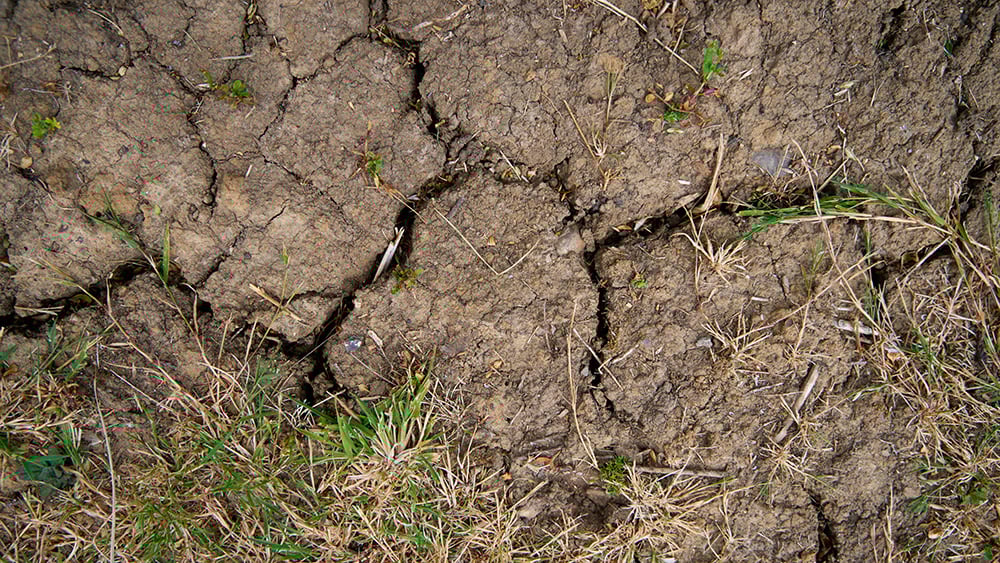
View of dry, cracking clay soil with a little green grass on the edges. Deep cracks are visible in the soil.

Shrink-swell clay treatment

Southern California is notorious for its expansive clay soils. These soils act like a sponge—expanding massively during winter rains and shrinking violently during summer droughts. This constant movement wreaks havoc on concrete slabs. Soil stabilization limits the soil's ability to absorb water, halting the shrink-swell cycle.
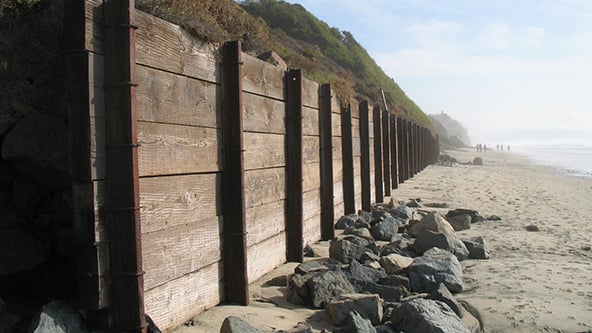
View of sea wall along beach

Seawall reinforcement

Coastal properties often suffer from tidal erosion, which slowly washes away the soil behind seawalls, creating massive hidden voids. Geopolymer injection fills these voids and seals the leaks without needing to rebuild the entire seawall.
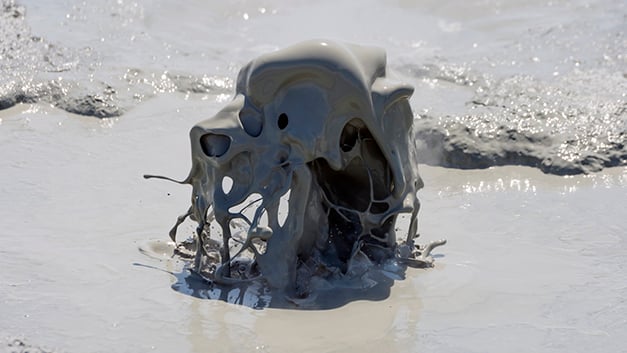
View of soil bubbling due to geothermal activity

Liquefaction mitigation

Protecting homes in earthquake zones is critical. During an earthquake, loose, sandy, and water-logged soils can lose their strength and behave like a liquid—a process called liquefaction. Our injection methods bind these loose soils together, densifying the ground, helping to keep it stable during seismic activity.
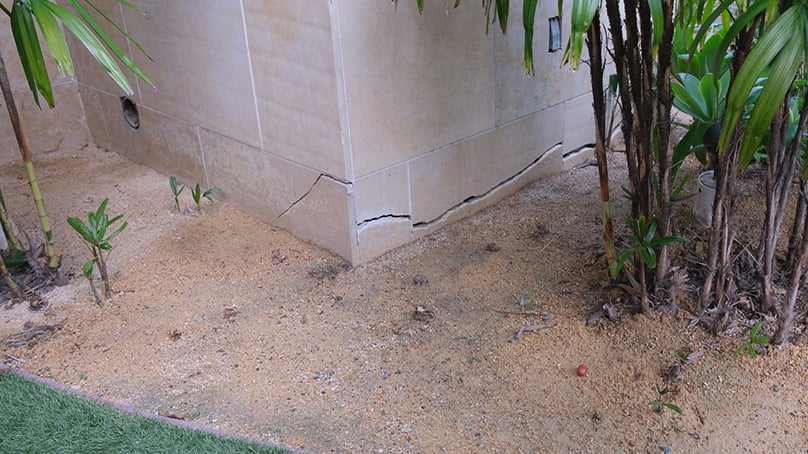
View of crack in the external corner wall of a home caused by settlement

How much does foundation repair cost?

The cost of foundation repair varies widely based on the size of the home, the extent of the damage, and the method you choose.

However, because the Geobear solution does not require heavy machinery or excavation, and you can stay at home during the treatment, it is often significantly more cost-effective than traditional underpinning.
Factors that influence your repair bill

Size of the affected area: Fixing a single sinking corner is vastly cheaper than stabilizing the entire perimeter of a home.

Depth of the weak soil: If the unstable soil goes very deep, more material is required to reach a load-bearing strata.

Collateral repairs: With traditional underpinning, you must factor in the "hidden costs" of repairing dug-up landscaping, replacing broken driveways, or paying for temporary hotel accommodations. Geobear eliminates these hidden costs.

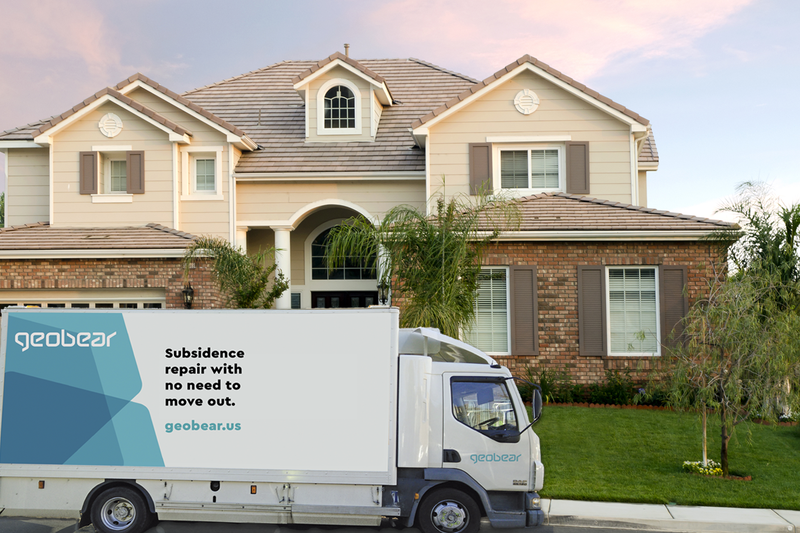
A Geobear service truck helping a homeowner in California

Does homeowner's insurance cover foundation repair?

In most cases, standard homeowner's insurance does not cover foundation repair if the damage is caused by natural soil settlement, earth movement, or poor construction.

However, if your foundation damage was caused by a covered peril—such as a sudden, accidental plumbing leak under the slab that washed away the soil—your policy might cover the repairs.

Always check with your insurance provider to understand your specific coverage.

Have questions?

If you are worried about your foundation, get in touch with us today to get an expert opinion.
Bear pointing Bear pointing

Frequently asked questions about foundation repair solution

In Southern California, the leading cause of foundation failure is the soil beneath the home. Expansive clay soils—which swell like a sponge when wet and shrink violently when dry—create constant movement that cracks and breaks concrete slabs.

Other major causes include poorly compacted "cut and fill" dirt on hillside lots, hidden plumbing leaks that wash away the soil under your house, and natural erosion around coastal or canyon properties.

Over time, these issues create empty underground voids that your heavy foundation simply sinks into.

If you choose traditional concrete underpinning, you often have to vacate your property for weeks due to the heavy construction, open trenches, and lack of plumbing access.

With Geobear’s geopolymer injection, you do not need to move out. Our process is quiet, clean, and non-invasive. Most residential projects are finished in just one or two days, allowing you to comfortably stay in your home and stick to your normal routine while we work.

Not with our method. Traditional foundation repair requires heavy excavators to dig deep, destructive trenches around your home's perimeter. Geobear uses a zero-excavation process. We only need to drill tiny, dime-sized holes (5/8 inch) to inject our expanding resin into the ground. This means your expensive landscaping, custom patios, and interior renovations generally remain intact.

In many situations, yes, because it treats the actual root cause of the problem. Traditional underpinning drives heavy piles into the ground to prop up the concrete slab, but it does nothing to fix the weak, shrinking, or washing-away soil beneath it.

Geopolymer injection actively fills those underground voids and compacts the failing dirt. By treating the soil directly, it creates a solid, stabilized base.

Costs vary depending on the footprint of the home and the depth of the weak soil. However, because our method requires no heavy machinery or demolition, it eliminates the "hidden costs" of traditional repair (like repouring driveways or paying for hotel stays).

For California residents, there are occasionally state programs—such as the Earthquake Brace + Bolt (EBB) grant—or low-income senior repair grants available.