Challenge
Long-term settlement beneath a platform extension at St Margarets Station had created uneven platform levels and train interface issues. Investigation identified very soft alluvial clay and organic deposits beneath the foundations, while limited possession windows ruled out major reconstruction works.
Solution
Geobear strengthened the weak ground beneath 15 platform support piers using targeted geopolymer injections installed during a single 54-hour possession. The treatment improved bearing capacity, reduced future settlement risk and provided a stable foundation for platform resurfacing without excavation or prolonged railway closures.
platform piers
injection locations
hour blockade
St Margaret's Station, near Ware in Hertfordshire, had experienced ongoing settlement affecting a platform extension on Platform 1. The original platform structure remained stable; however the extension had progressively subsided due to weak underlying alluvial soils containing very soft clay and organic material.
Investigations identified a layer of very soft peaty clay and organic alluvium beneath the platform foundations. The settlement was being exacerbated by repeated maintenance interventions and track tamping activities, which altered loading conditions between the track and platform interface. The resulting differential settlement created uneven platform levels and increasing maintenance requirements.
Condition surveys concluded that previous repairs had addressed the symptoms rather than the underlying cause of the movement. Traditional solutions such as piled underpinning or platform replacement were considered but would have required significant possessions, disruption and cost.
St Margaret's Station, near Ware in Hertfordshire, had experienced ongoing settlement affecting a platform extension on Platform 1. The original platform structure remained stable; however, the extension had progressively subsided due to weak underlying alluvial soils containing very soft clay and organic material.
Investigations identified a layer of very soft peaty clay and organic alluvium beneath the platform foundations. The settlement was being exacerbated by repeated maintenance interventions and track tamping activities, which altered loading conditions between the track and platform interface. The resulting differential settlement created uneven platform levels and increasing maintenance requirements.
Condition surveys concluded that previous repairs had addressed the symptoms rather than the underlying cause of the movement. Traditional solutions such as piled underpinning or platform replacement were considered but would have required significant possessions, disruption and cost.
Bespoke ground improvement design
Following a detailed review of the site investigation data, Geobear designed a targeted ground improvement scheme to reinforce and densify the weak alluvial soils beneath the platform supports. The treatment was specifically developed to improve the load-bearing capacity of the very soft clay layer identified as the principal cause of settlement.
Targeted treatment beneath platform supports
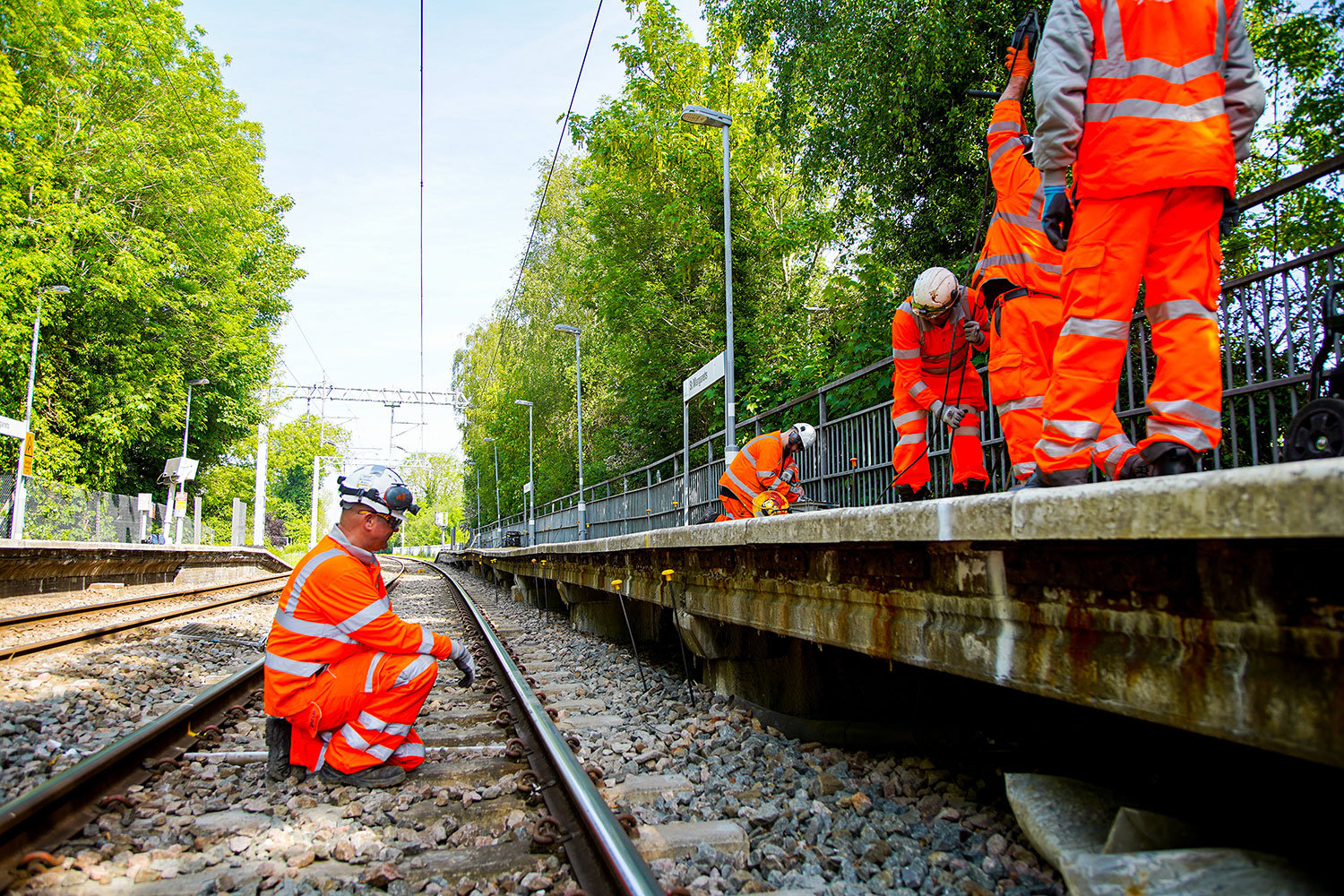
The solution involved treating all 15 platform support piers using a carefully designed injection pattern. Six injection locations were installed around each support, with geopolymer introduced at three treatment depths below ground level. A specialist low-expansion geopolymer was selected to minimise the risk of movement to adjacent railway infrastructure while achieving significant ground improvement.
Rapid installation during a single possession
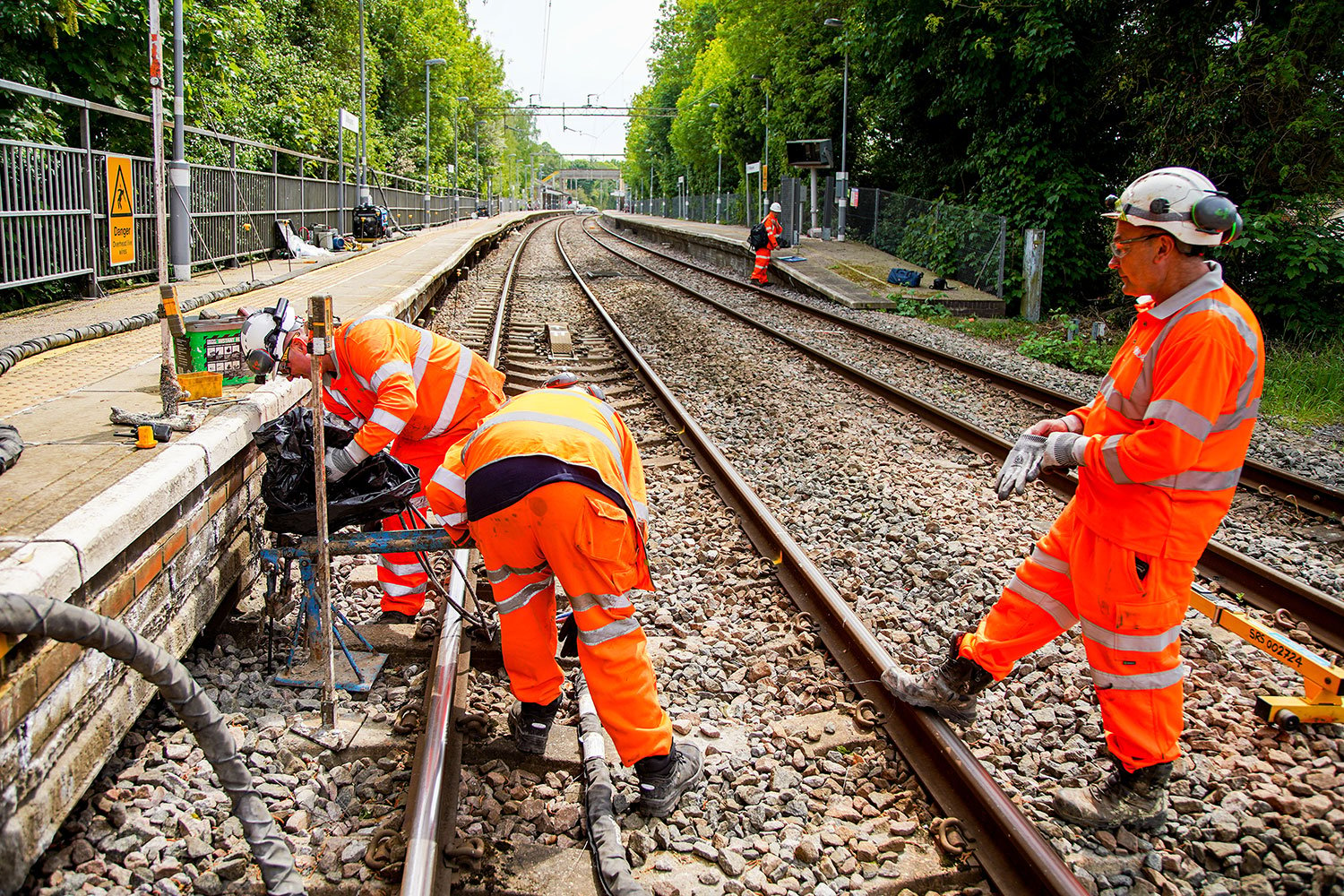
Geobear completed approximately 90 injection locations beneath the platform extension during a single 54-hour possession. Around four tonnes of geopolymer were injected beneath the platform supports, allowing the ground to be strengthened without excavation, heavy plant or prolonged closure of the railway. The solution enabled future resurfacing and platform levelling works to proceed on a more stable foundation.
Verified increase in ground strength
Five pre-treatment and five post-treatment dynamic probe tests were undertaken across the site to verify the effectiveness of the ground improvement works. Results demonstrated significant increases in penetration resistance within the treated zone, confirming enhanced soil strength and bearing capacity beneath the platform foundations. For example, testing near Platform Pier 2 recorded increases from 6 blows to 30 blows at 1.3m depth and from 31 blows to 50 blows at 2.1m depth following treatment.
Asset life extension without reconstruction
The geopolymer treatment addressed the underlying mechanism causing settlement by reinforcing and confining the weak alluvial soils beneath the platform supports. This avoided the need for major reconstruction works while providing a stable foundation for future platform resurfacing and maintenance activities.
Minimal disruption to railway operations
All ground improvement works were completed within a single weekend possession. The railway avoided the prolonged closures, excavation works and operational disruption associated with traditional underpinning or replacement solutions, significantly reducing programme risk and impact on passengers.
Alternative solutions considered
The condition assessment recommended that piled underpinning or complete platform replacement should be considered to permanently address the settlement issues. However, these options would have required extensive possessions, significant construction activity and substantially higher costs. Geobear's targeted ground improvement solution provided a rapid and less disruptive alternative capable of addressing the underlying weak ground conditions.
Technical highlights
15 platform support piers treated
90 geopolymer injection locations
Treatment depths to 2.3m below ground level
Approximately 4 tonnes of geopolymer installed
Single 54-hour railway possession
Ground improvement verified through dynamic probe testing
No excavation or platform reconstruction required
Get in touch with our expert team today and discover how Geobear can extend the life of your critical infrastructure assets.