Highways
Challenge
Severe voiding beneath the M11 northbound slip road threatened collapse at the Girton Interchange — traditional excavation repairs would have caused major disruption, delays, and safety risks.
Solution
Geobear stabilised the embankment with fast-curing geopolymer injection, restoring ground strength within tight tolerances, cutting disruption by five weeks, and reducing carbon emissions by 45%.
Carbon saving - 45% lower CO₂ emissions vs. cementitious grouting
High strength: ≥4 MPa compressive strength achieved with ±5 mm surface tolerance
Rapid delivery 3-week programme — 5 weeks faster than excavation
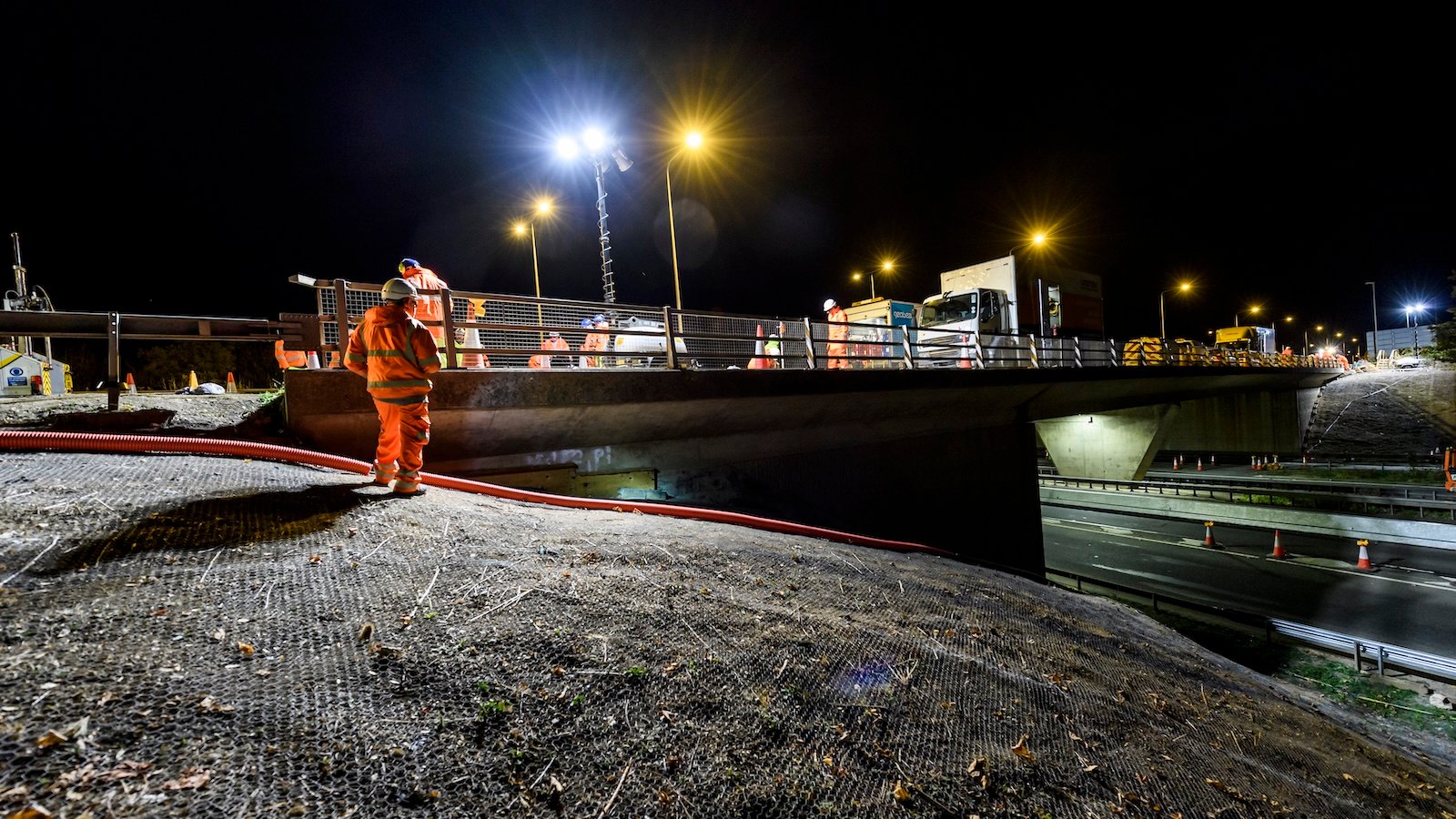
The northbound slip road at Junction 14 of the M11 — part of the Girton Interchange with the A14 and A428 — carries around 40,000 vehicles per day. As a critical link to Stansted Airport and strategic ferry ports, the route is a vital part of the UK’s Strategic Road Network.
Routine inspections by Highways England highlighted embankment issues at the M11 overbridge. Further ground investigation confirmed significant voiding beneath the carriageway close to the abutments. Left untreated, the defects risked severe settlement or even collapse, threatening safety and serviceability of the route at the same time as the adjacent A14 Cambridge–Huntingdon improvement scheme.
An urgent, non-intrusive solution was required to restore stability, avoid long closures, and maintain resilience on one of the busiest corridors in the East of England.
Client insight
Karl Brooks - Highways England
The design required the placement a material achieving a minimum compressive strength of 4MPa, and capable of restoring full contact between the sub-base and underlying soils.
Another key aspect to the works was controlling and limiting surface heave within a tolerance of +/- 5mm, whilst also ensuring that the nearby concrete wingwalls & overall bridge construction were not adversely impacted.
Because soils are naturally variable, the extent of voiding present is often unknown, making the relative contributions of the improving mechanisms both variable and are difficult to predict. The approach to the design was an observational one in accordance with BS EN 1997 Part 1 clause 2.7. Execution of the works was in accordance with the provisions of BS EN 12715:2000 (where applicable).
To support the design approach, calculations were performed for each site-specific application, to approximately determine the key construction parameters, which were as follows:
• Injection hole diameter, length and spacing
• Material composition including its cream, gel, and tack-free times
• Material expansion pressures, volumes, and injection flow rates
Scope of Works
The works comprised emergency ground improvement / void filling on 170m2 of highway to a depth of 2.5m below road surface.
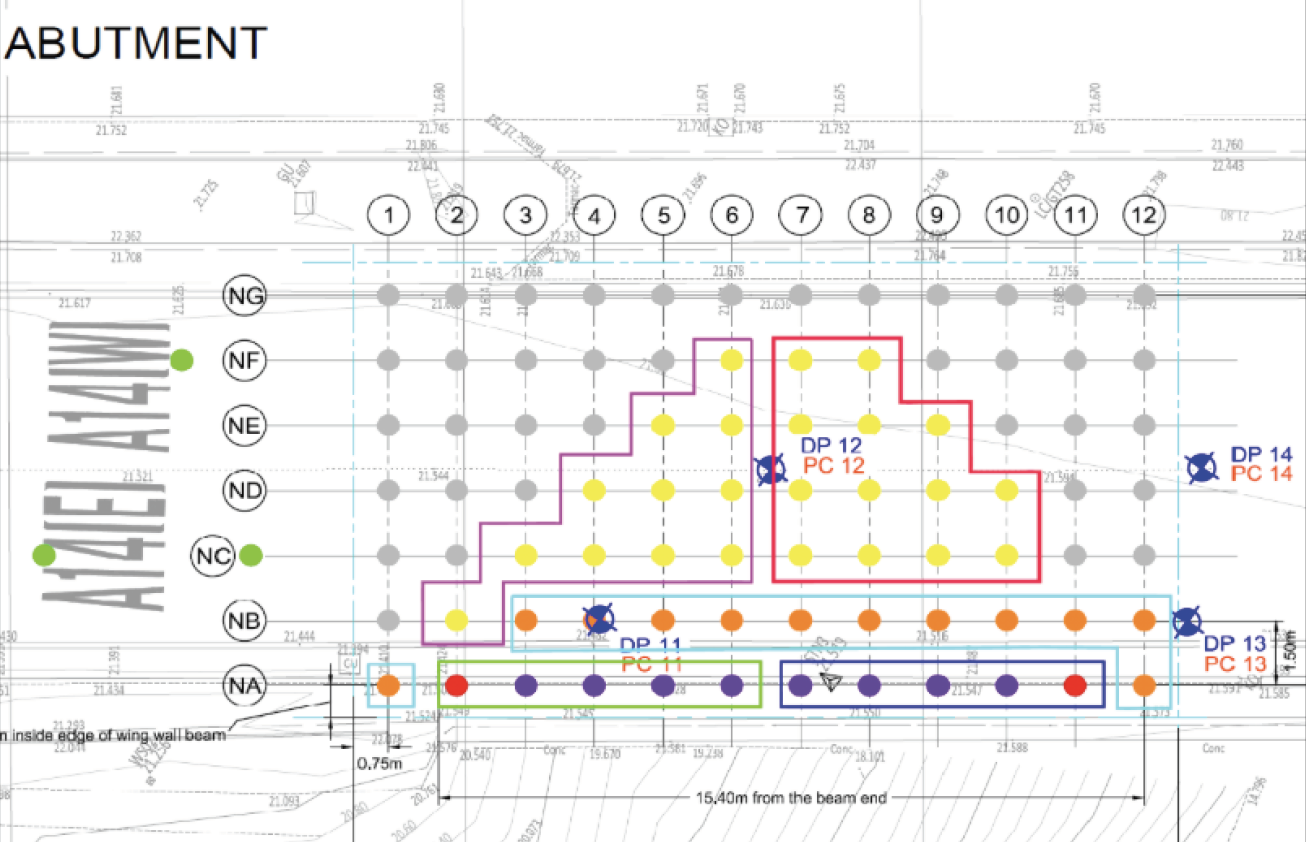
The treatment zones were classified according to the required remedial treatment ( Figs 2, 3, 4 ) on the basis of the available soil/voids investigation data, supplemented by information gained during the drilling of the boreholes on a 1.5m grid.
Methodology
As the junction was heavily trafficked, with stringent traffic management constraints through the junction, it was not possible to carry out extensive site investigation, so that the underlying soil conditions and the extent of voiding were not precisely understood prior to commencement. It was therefore essential that the site operations maintained sufficient flexibility to adapt rapidly to any unexpected subsurface conditions encountered.
Prior to any injection works being undertaken, the quality of the geopolymer utilised on site was verified by means of a Material Quality Test (MQT).
Each injection unit took one sample of geopolymer, per shift, to verify the material quality and properties . Firstly, the equipment on the mobile workshop was heated to operating temperature, then the geopolymer was injected into a disposable bag. The injected geopolymer was then inspected to ensure that the material complied with internal Geobear standards. These samples were used to verify the reactivity, compressive strength, and bulk density of the geopolymer. Cream and gel times were also checked to confirm design assumptions.
Alternative Methodology
Conventional grouted underpinning would have required:
the mobilisation oand set-upf heavier plant and equipment
the establishment of a mixing plant capable of pumping in a fluid cementitious grouts, or mortar for classical compaction grouting
a more extensive compound,
additional time for mobilisation, setup, and demobilisation
additional time cost for reinstatement of the carriageway
extended lane closures resulting in traffic delays and the associated risk of moving-vehicle accidents
Overall, it is estimated that the adopted solution provided the client with time and cost savings of the order of £100,000.
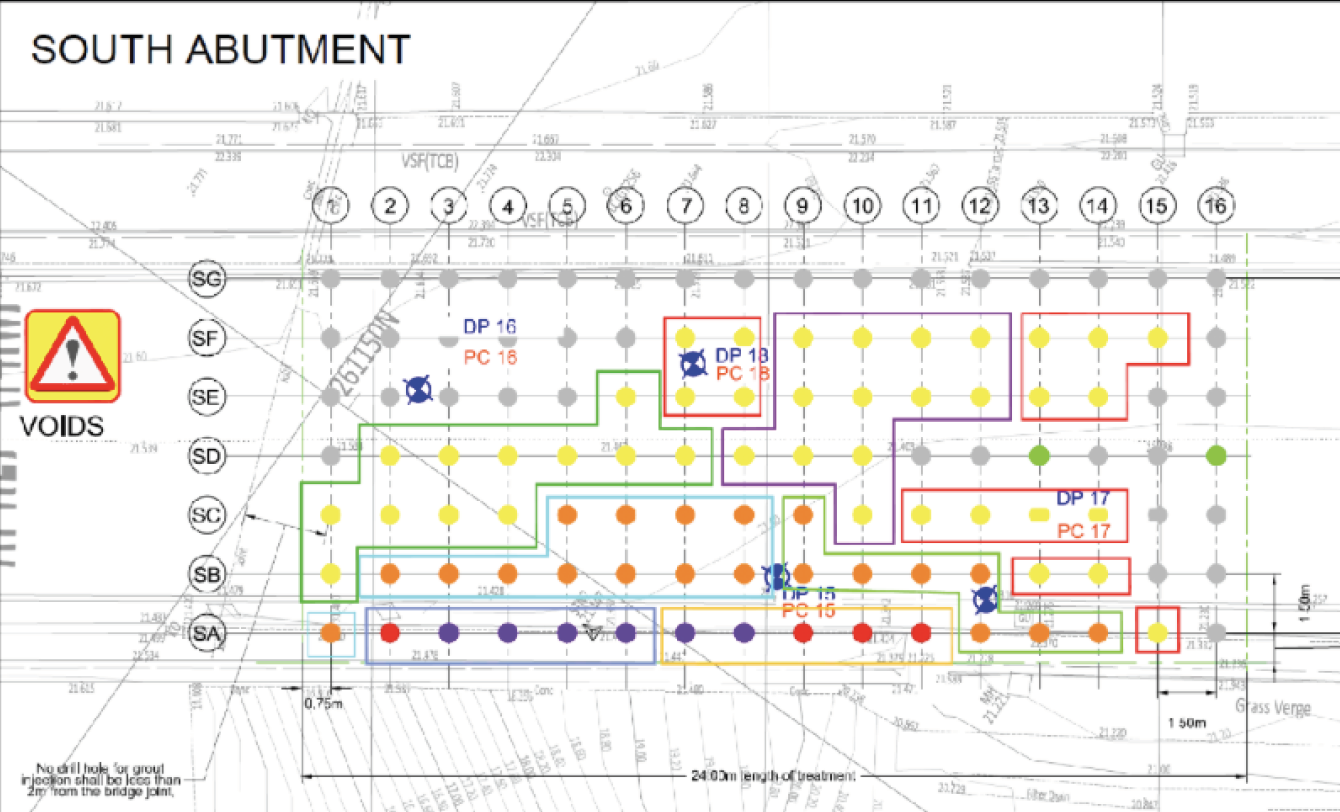
The two diagrams indicate the sequencing of the treatment zone, based upon a broad classification of the ground conditions. Treatment of each carriageway generally advanced laterally from the centre of the void, towards the edge.
Geobear team on site
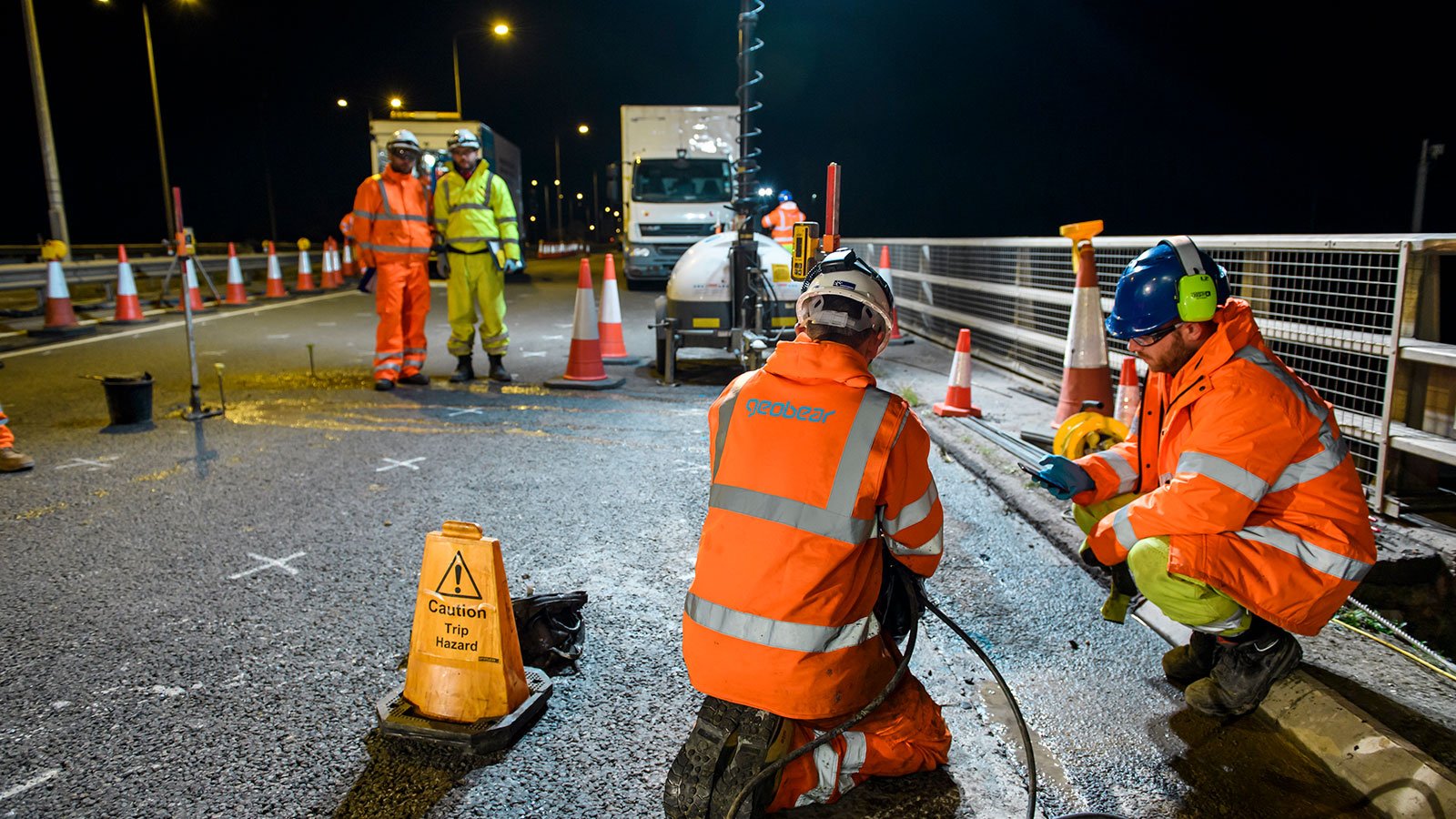
The project was successfully delivered two days ahead of schedule (including additional treatment to areas outside of the initial scope).
Early completion was achieved by Geobear, Highways England, WSP, and Interserve teams working collaboratively, focusing on minimising the impact on the customer and maximising safety. This result followed a thorough review of design options to select the right solution. Careful planning including opportunities to carry out works in advance; reviewing methodologies and design to maximise productivity and monitoring and managing construction activities.
Despite the design changes and challenging schedule we completed the works within budget. The works represent the first time a geopolymer solution has been used to this extent on such a major highways scheme in the UK, and highlight the benefit of the real time adaptability and flexibility of this design solution under such challenging timescales. Two project engineers were on-site throughout the course of the works and adapted the design methodology to reflect new unforeseen variables. For example, as variations in location & extent of expected voiding occurred on site, the decision was made to amend injection spacings & material quantities in order to ensure full and effective coverage was achieved.
In terms of carbon footprint, a 2018 comparative study (by KLH) of geopolymer v traditional grout also indicates 45% reduction using geopolymer methods.
Use of the Geobear technology and experience resulted in temporary overnight closures for a three week period. The alternative solution of a full excavation would have meant the carriageway would have been subject to full closure closed for at least eight weeks.
Such was the success of the project it was reported by BBC television and publicised by the Chartered Institute of Highways Engineers.
“Geobear’s solution to the essential embankment repair at M11 Girton interchange has been a highlight of this year’s programme. The geopolymer injection provided an innovative response to voiding, allowing us to effectively manage this complex stretch of motorway. Monitoring of pavement heave was impressive, and the programme of delivery outperformed comparative methods. Collaboration with WSP and Interserve meant we met — and in some cases exceeded — the requirements of the network and our stakeholders.”
Get in touch with our expert team today and discover how Geobear can extend the life of your critical infrastructure assets.