Challenge
Subsidence caused by broken drainage had weakened the soils beneath a station extension, requiring foundation remediation without disrupting railway operations or excavating around the building.
Solution
Geobear delivered targeted geopolymer ground improvement beneath the extension foundations from inside the building, increasing bearing capacity while avoiding excavation and minimising operational disruption.
Installed at 1m centres
Maximum treatment depth
Material used
Hackbridge Station in Wallington, South London, was undergoing refurbishment as part of a wider programme of improvement works for the station building. During the project, movement was identified within the extension section of the building, with visible signs of subsidence requiring engineering intervention before the refurbishment could continue.
Ground investigations and drainage surveys concluded that broken drainage had allowed water to infiltrate beneath the foundations, creating very soft, wet clay beneath the extension. As the supporting soils weakened, the foundations experienced differential movement that required remediation before further construction works could proceed.
Working on an operational railway asset introduced additional constraints. The solution needed to improve the engineering properties of the ground without extensive excavation, minimise disruption to station users and neighbouring infrastructure, and integrate with the wider refurbishment programme. Geobear was appointed to design and deliver a non-invasive ground improvement solution tailored to the site's constrained environment.
Site investigation identified that the existing foundations were bearing onto very soft, water-affected clay between approximately 1.3m and 3.3m below ground level. The deterioration in ground conditions had been attributed to leakage from a damaged drainage system, which required repair before any ground improvement works could commence.
Traditional underpinning would have required significant excavation adjacent to an operational railway station, increasing programme duration, disruption and construction risk. Access was also heavily constrained. Because of the proximity of the station platforms and pedestrian routes, all Geobear works were required to be undertaken entirely from inside the building, eliminating the need for external excavation or plant working adjacent to the railway.
Further challenges included working around existing utilities, maintaining safe public access, coordinating with the principal contractor's refurbishment programme and ensuring that any treatment avoided adverse movement of the existing structure. The design also had to account for groundwater encountered during trial pits, preventing confirmation of the exact foundation depth before construction.
Following review of the site investigation, drainage survey and structural information, Geobear designed a targeted geopolymer ground improvement solution beneath the extension foundations. The objective was to increase the bearing capacity of the weakened clay without excavation or vibration.
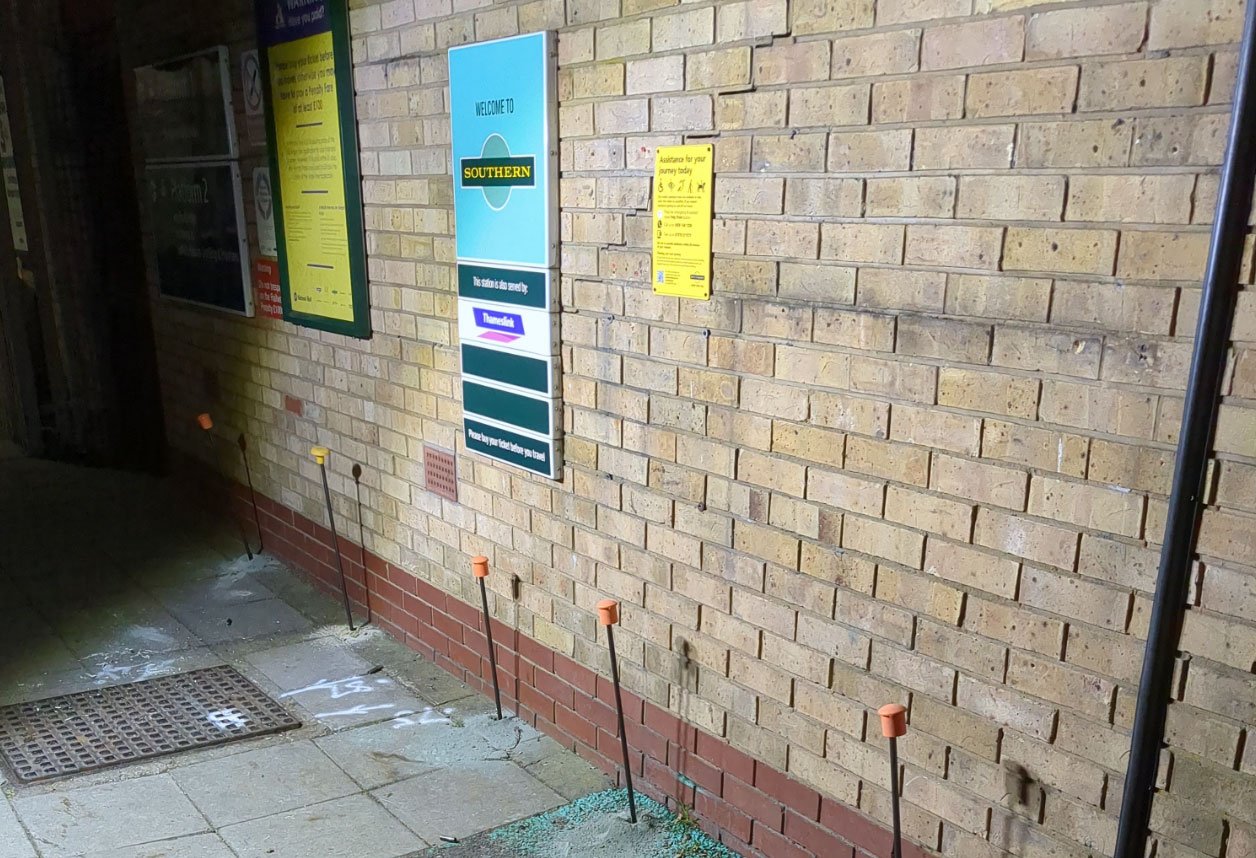
The treatment was designed using a specialist Geobear material with over 30 injection locations positioned at 1 metre centres beneath the affected wall. Each location received injections at three treatment horizons.
Small diameter holes were drilled through the existing floor inside the building before steel injection tubes were installed. The geopolymer was pumped from Geobear's self-contained injection unit through the tubes into the surrounding soils. As the material expanded, it filled voids, densified the weakened clay and increased its load-bearing capacity. Injection tubes were progressively withdrawn to create treatment at each design depth, ensuring continuous improvement through the soil profile.
The installation was undertaken entirely from within the station building, avoiding disruption around the external platform and public areas. Drain repairs were completed before treatment commenced, while post-treatment Dynamic Cone Penetrometer (DCP) testing was specified to verify the effectiveness of the ground improvement.
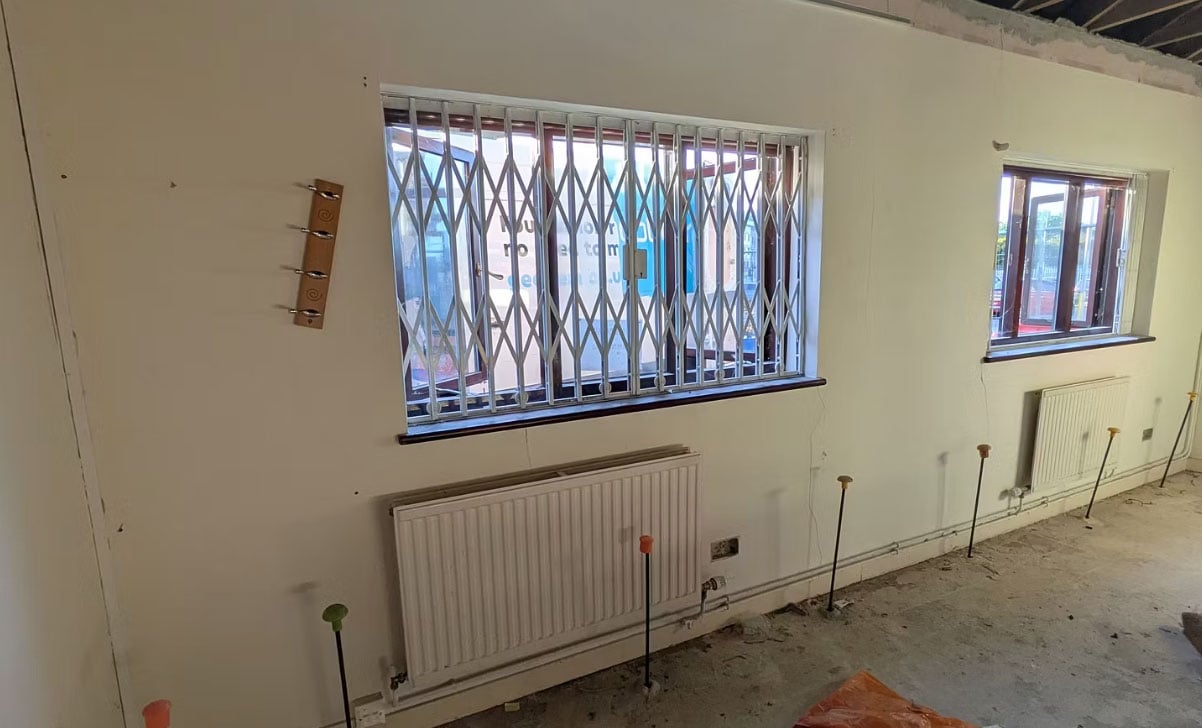
The engineered ground improvement solution addressed the weakened soils beneath the station extension without requiring traditional underpinning or extensive excavation. By carrying out all injections from inside the building, Geobear significantly reduced disruption to the refurbishment programme while avoiding work immediately adjacent to operational railway infrastructure.
The controlled geopolymer installation increased the bearing capacity of the soft clay beneath the foundations using a precisely designed injection pattern and staged treatment depths. Post-treatment DCP testing was specified to validate the improvement achieved beneath the affected structure.
The project demonstrates how geopolymer ground improvement can provide an effective solution for historic railway buildings where access is constrained, drainage-related subsidence has weakened the founding soils and maintaining operational continuity is a key project requirement. Rather than relying on invasive reconstruction, the Geobear solution delivered targeted, engineered ground improvement while integrating efficiently with the wider station refurbishment works.
Get in touch with our expert team today and discover how Geobear can extend the life of your critical infrastructure assets.