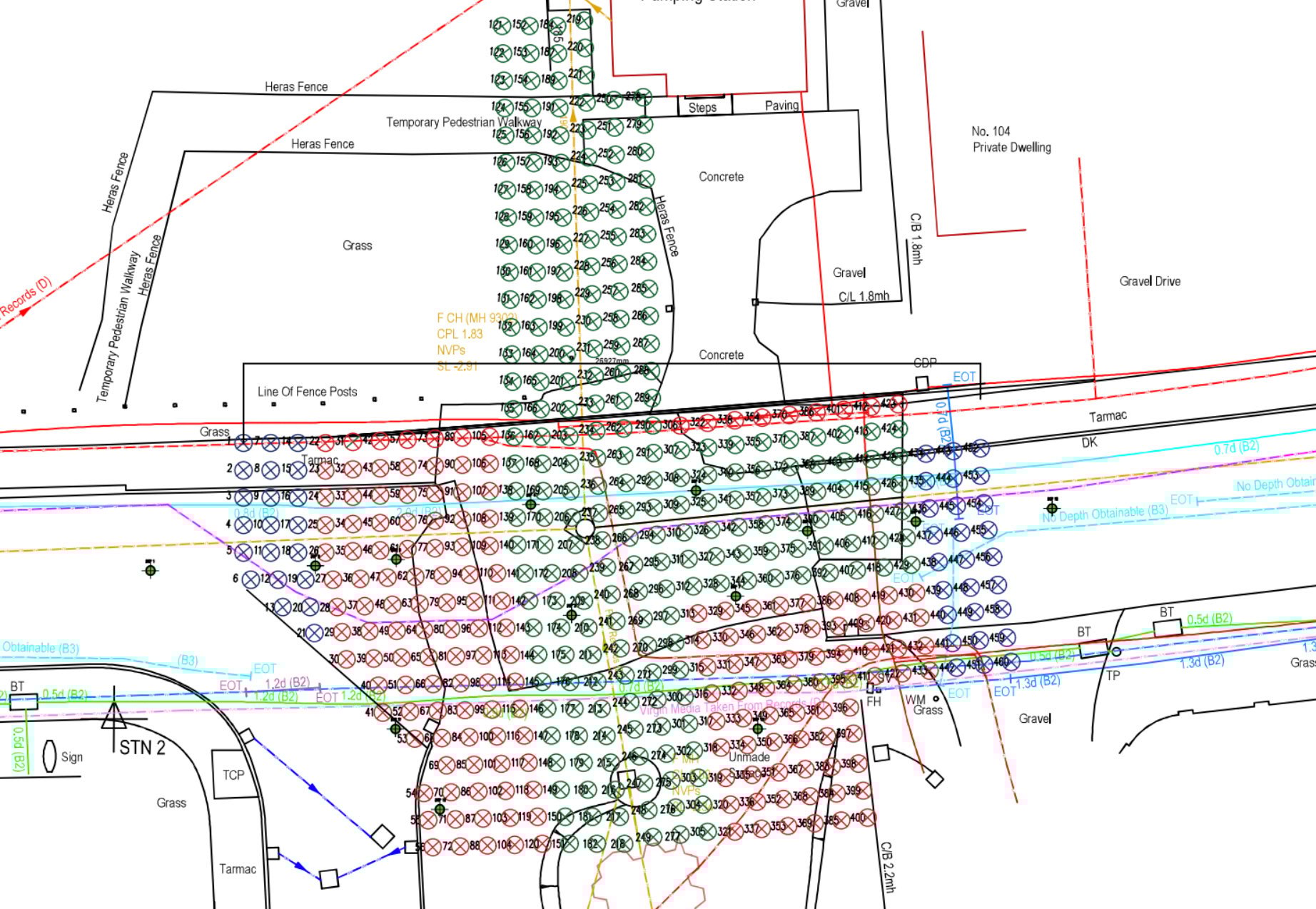
Following a severe roadway collapse and sewer failure caused by third-party vibratory piling, Anglian Water engaged Geobear for emergency ground stabilisation at a site in East Anglia - see figure 1. The underlying loose made ground sands had become dangerously unstable, halting further excavation.
Figure 1
Within a highly efficient two-week programme, Geobear utilised targeted geopolymer injections down to 6.3 metres to stabilise the soils around the 5.3-metre-deep sewer line. This non-disruptive solution successfully restored the ground's strength to its pre-failure condition. Ultimately, Geobear's swift intervention eliminated the risk of further collapse, allowing developers to safely proceed with vibration-free cofferdam installation and sewer replacement.
Design & Technical Outputs:
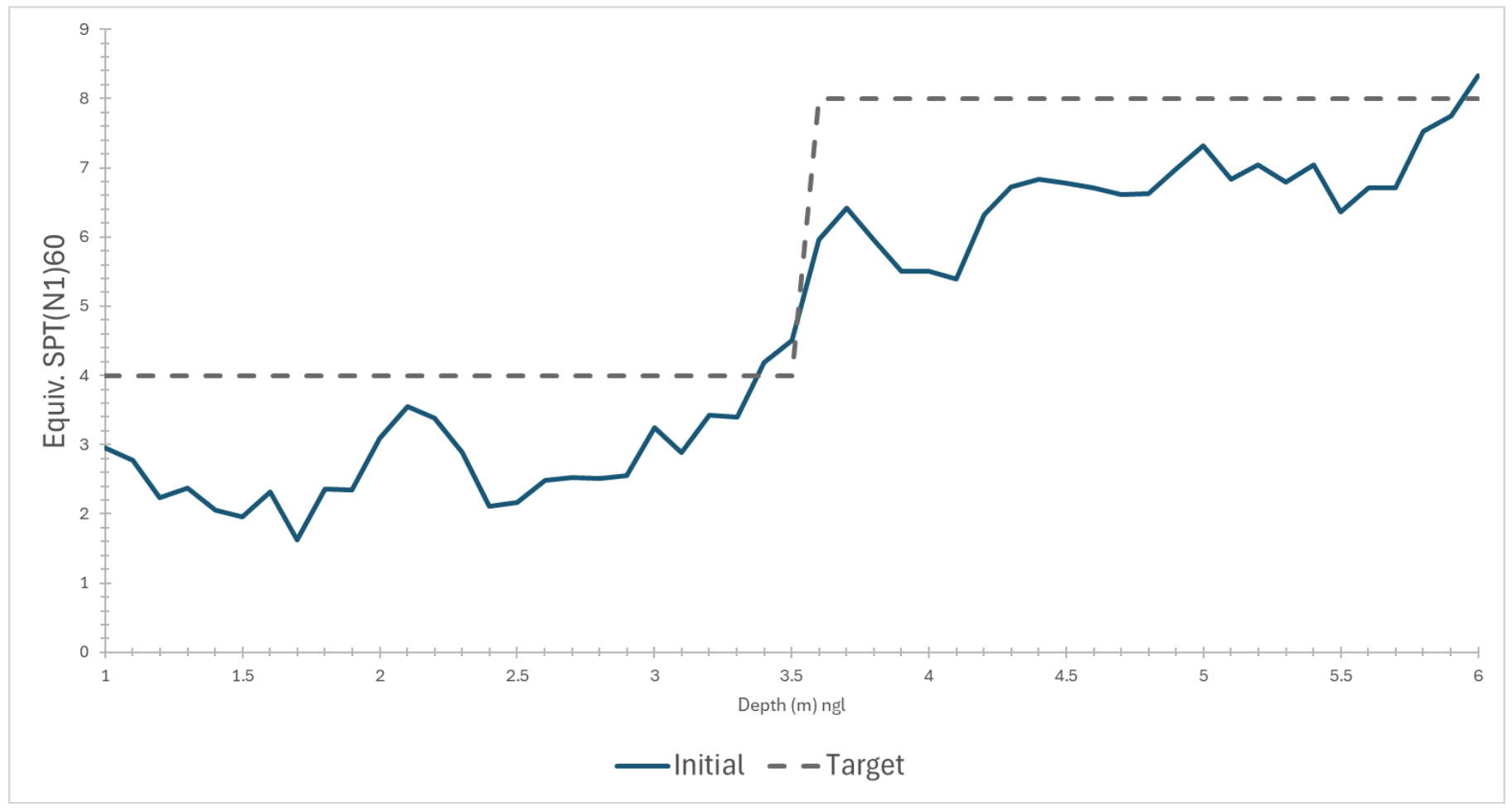
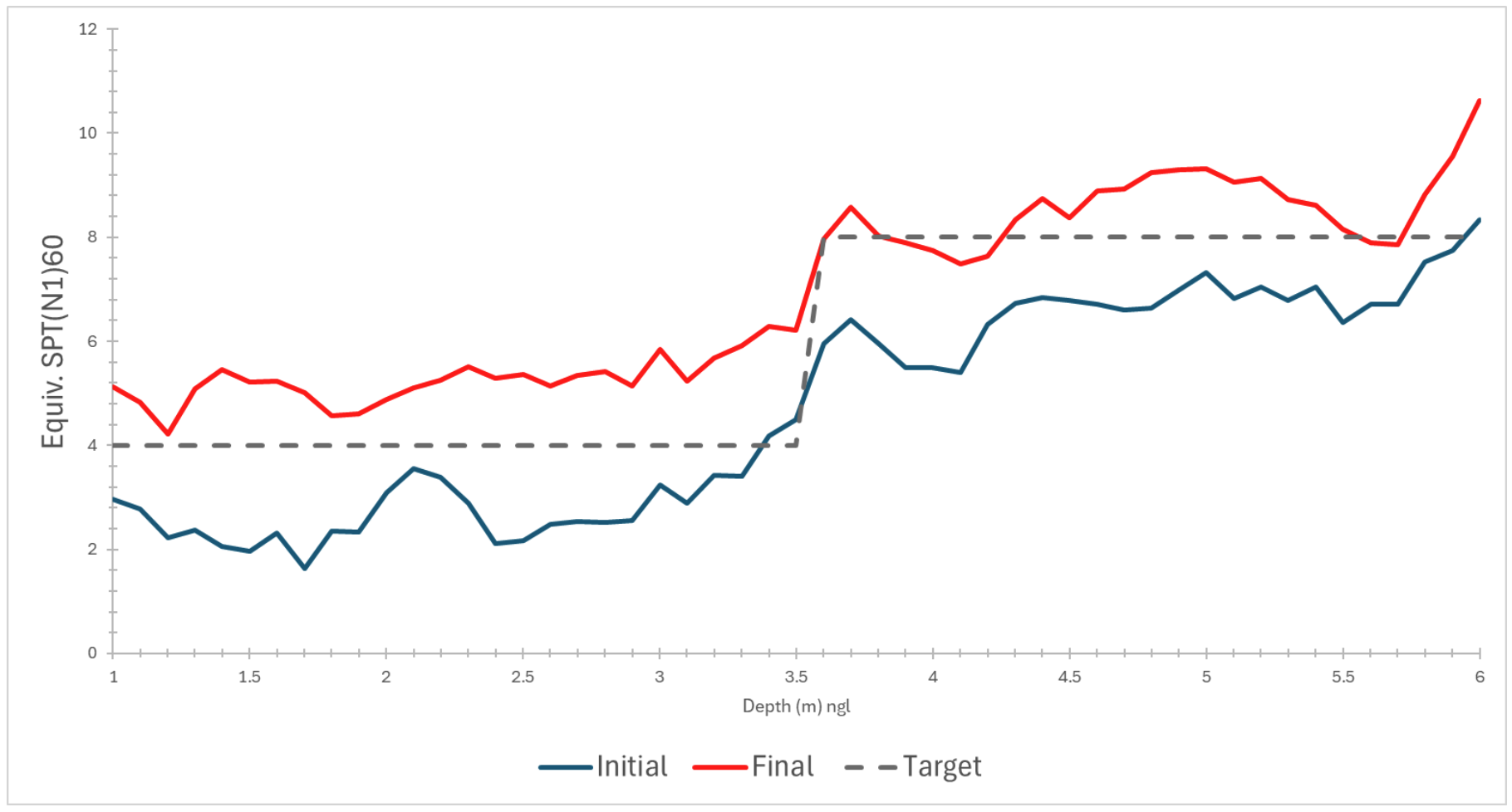
Geobear used proprietary software to design the ground improvement solution which is adapted from the theory developed by Dominijanni and Manassero (2014). This method requires determination of the soil type and initial density as measured in equivalent SPT (N1)60 values. Figure 2 shows the initial values for the site and specified target which varied between 4 and 8.
Figure 2: Initial Equiv. SPT (N1)60 Values and Target vs Depth
The software calculates the required mass, depth of treatment and injections spacings of the geopolymer to achieve the target.
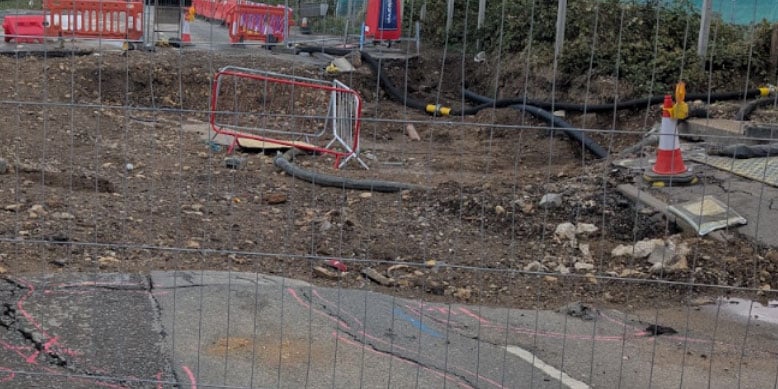
Crucially, we included transition zones at either end of the treatment area to prevent creating overly stiff zones that could lead to future differential settlement on the road surface. The injection plan is shown as Figure 3.
Figure 3: Injection Plan
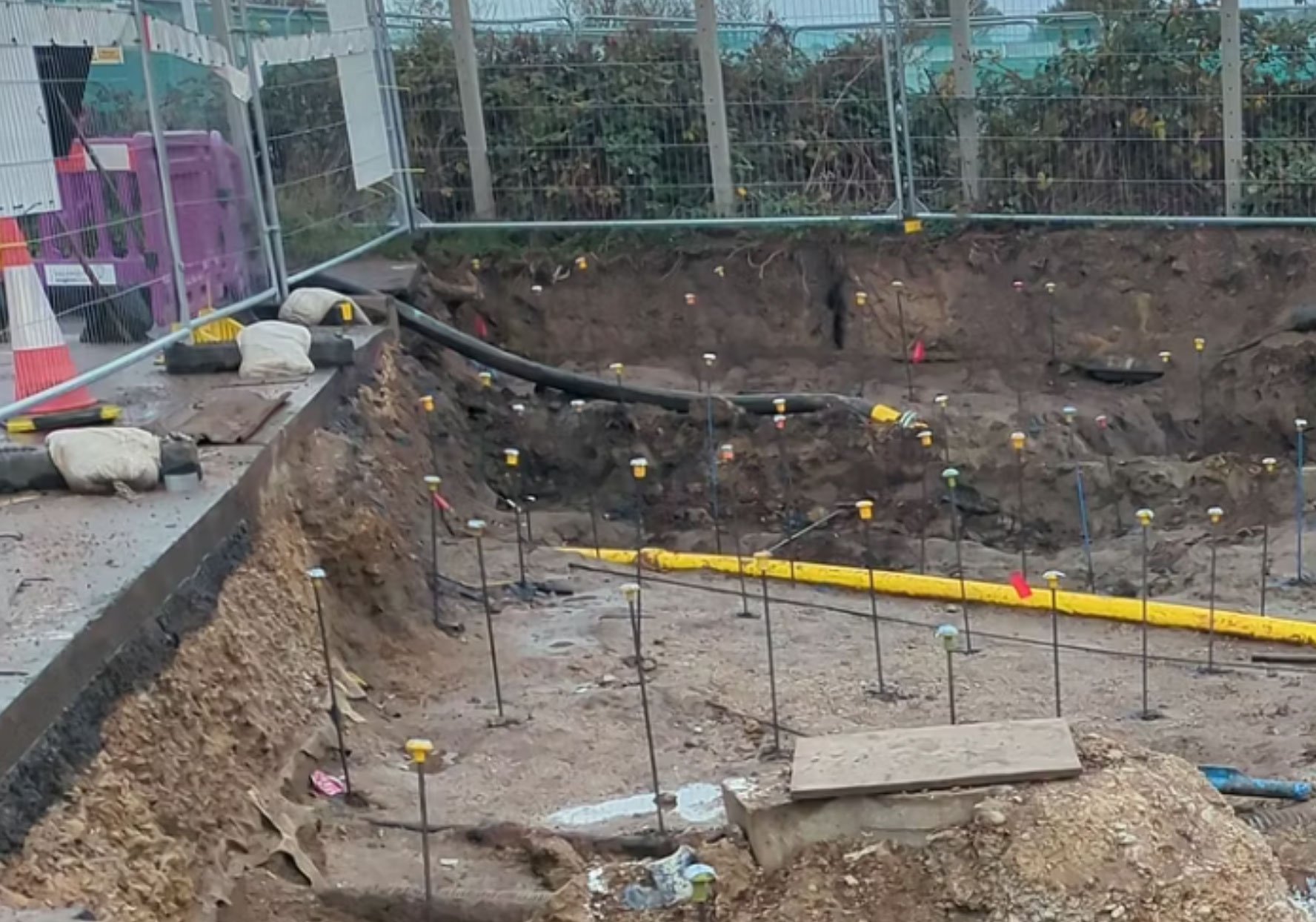
A typical section of the works is shown in Figure 4.
Client Wider Benefits: Geobear's emergency intervention was completed highly efficiently over a two-week duration. Our non-disruptive ground improvement allowed the developers to safely proceed to the next phase—installing a new coffer dam via vibration-free hydraulic pressing—without further risk to the infrastructure.
Figure 4: Injection tubes
The project successfully reinforced and consolidated the compromised granular made ground and underlying silty sands meeting the design targets as specified, see Figure 5 which shows the initial and final results.
Get in touch with our expert team today and discover how Geobear can extend the life of your critical infrastructure assets.