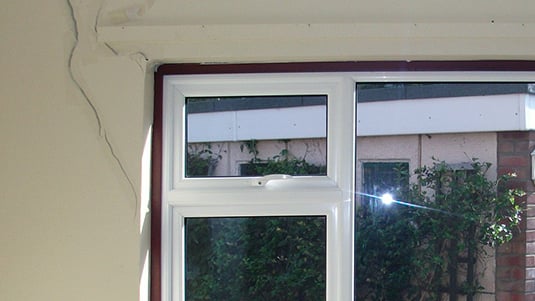
What does subsidence look like in your walls or floors?
Noticing a new crack in your home can be stressful, but understanding what you are looking at is the first step toward fixing the problem. At Geobear, we believe in giving you the straight facts so you can protect your home’s value and get your life back to normal as quickly as possible.
Here is how to spot the difference between minor settlement and foundation movement.
Signs of subsidence in your walls
Your walls often tell the story of what is happening beneath the ground. The pattern of a crack is usually the biggest giveaway.
-
Diagonal crack patterns: You will typically see these appear around "weak" spots like doors, windows, or other openings.
-
The 'signature' shape: Subsidence cracks are almost always wider at the top than they are at the bottom.
-
Movement direction: These cracks follow the path of the foundation movement, pointing toward the source of the problem.
-
Mirroring: You will often see the same crack in the same place on both the inside and outside of your wall.
-
Finishing clues: Keep an eye out for wallpaper rucking or bunching at the corners of your rooms, or new gaps appearing at the skirting boards.
Signs of subsidence in floors and structures
Sometimes the signs are not just visible—you can feel them when you move through your home.
-
Tilting features: Look at your window cills or door thresholds; if they are tilting down toward one side, it suggests the ground beneath is shifting.
-
Sticking doors and windows: This is a very common indicator. If a door suddenly becomes difficult to open or close, the frame has likely shifted out of alignment due to ground movement.
-
Uneven floors: While a professional level survey is the best way to confirm this, you might notice your floors feeling "off" or sloped in certain areas.
Why timing matters
The appearance of the crack can tell us how urgent the situation is. "Clean" cracks (where you can see the internal material of the brick or plaster clearly without dust or debris buildup) usually indicate recent or active movement.
We always recommend noting exactly when you first saw these signs. Is the movement getting worse? Knowing this helps our engineers create a custom treatment plan unique to your home's needs.