How Can I Tell if My House Needs Underpinning?
Discovering cracks or other signs of movement in your home can be incredibly stressful. We understand that this is your biggest asset, and feeling unsure about its stability is a huge worry. Your job now is to get certainty and protect your home's value.
To know if your house needs expert ground improvement, you first need to look for signs of subsidence (learn more about what subsidence is), which is what we call ground movement. Homeowners often search for house underpinning signs when they see these indicators.
While only a qualified subsidence specialist can give you a definitive answer - and we can certainly help you arrange an assessment - there are common indicators to look out for.
Here are the key warning signs that suggest your home may have a serious ground issue and might typically lead to a recommendation for underpinning services or a modern Geobear solution:
Major warning signs your home may need underpinning repair
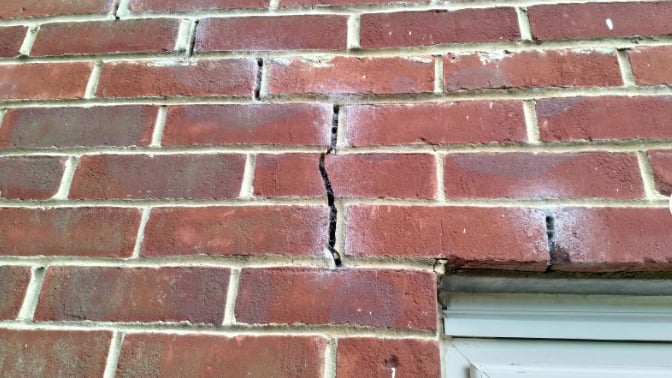
1. Cracks in both internal & external walls
Not all cracks are serious, and hairline cracks are often harmless. However, when you see certain types of cracks, they can point to a more serious structural issue.
Look out for cracks that are:
- Wider than 3mm
- Running in a zig-zag or stepped pattern through brickwork
- Diagonal, especially those running out from the corners of windows and doors
- Actively widening or lengthening over time
2. Doors & windows that are jammed shut or won’t close
If your window and door frames appear distorted or skewed, it could suggest a shift in the building’s foundations. This movement can make opening or closing them difficult.
These signs indicate ground movement:
- Frames that are visibly pulling away from the walls
- Gaps forming around the window or door
- Uneven trims or architraves pulling away from the walls
3. Sloped, uneven, or sinking floors or ceilings
Sinking or sloping floors and ceilings are classic indicators of a foundation problem and are commonly looked for as house underpinning signs.
You might notice:
- A ball placed on the floor rolls to one side
- Furniture is visibly tilting around the property
- Floors that feel spongy or soft in a specific area
4. Gaps between the house & external structures
If you have an extension or an attached structure (like a conservatory) that is pulling away from the original part of the property, it may mean ground movement is affecting its footing. This is a common situation where underpinning services might be suggested.
Look for:
- Gaps between the original brick wall and the extension
- The roofline separating where the structures meet
- Separation between the new structure and garden paths
5. Movement of retaining walls
If you spot retaining walls that are starting to bow, crack, or lean, it's often a sign of soil issues nearby. This movement can then influence the foundations of nearby structures, including your home.
6. Plumbing issues caused by ground movement
When the ground shifts, underground pipework can crack or become damaged. This allows water to leak out, saturating the soil and potentially increasing movement, especially in reactive clay soil.
Watch for plumbing issues like:
- Recurring blockages that are difficult to resolve
- Standing water or damp patches in the garden
- Excess water that is not draining away properly
Less obvious signs to look out for
While the above signs are major indicators, ground movement can also show up in more subtle ways that are easy to miss:
- New or persistent mould and damp issues
- Cracks in tiles that occur in the same area
- Skirting boards or coving pulling away from the walls
- Rippling wallpaper without any sign of moisture
How to get more accurate answers
Once you suspect an issue, getting a clearer picture is the next step to easing your worry.
- Monitor the cracks: Place tape or simple crack monitors across the cracks you’ve found. If they continue to grow in length or width over a few weeks, it suggests the movement is active
- Check the building's history: Older properties often have shallow foundations. In addition, the integrity of those foundations may be compromised simply due to their age. This context can help an expert evaluate the risk and determine if underpinning might be necessary
- Assess the soil type: Certain soil types, like expansive clay, increase the risk of subsidence due to seasonal changes
- Get a specialist inspection: If you are in any doubt, the best step is to have a professional inspection. The Geobear team is ready to help you gain the knowledge and confidence you need, providing a full report and clear next steps
When is expert ground improvement typically recommended?
Experts will recommend a permanent ground improvement solution, like the Geobear method, only when it's the right course of action for your home. This usually happens if:
- The subsidence is active and ongoing, not historic
- The current foundations cannot handle the load
- Soil conditions have changed due to external factors like water leaks or aggressive tree roots
- Minor repairs alone would be ineffective without first strengthening the footings
We are experts in ground engineering, and we're dedicated to solving your problem with minimal disruption. We achieve this using our non-invasive, innovative Geobear solution - a modern alternative to traditional underpinning. You can be confident that our approach is grounded in decades of experience. Get in touch with a member of our friendly, knowledgeable team today - we're always pleased to help.