Guide to making a subsidence claim
If you suspect subsidence, one of the first questions is:
Should I make an insurance claim?
In the UK, most buildings insurance policies cover subsidence. But making a claim is a significant step — and it’s important to understand the process, the timelines, and the long-term implications before proceeding.
This guide explains:
- When to contact your insurer
- What the claims process involves
- Pros and cons of going through insurance
- When private repair may be appropriate
If you’re unsure what subsidence is, start here: What is subsidence?
When should you contact your insurer?
You should contact your insurer if:
- Cracks are widening
- A structural survey confirms active movement
- Monitoring confirms subsidence
- Your property value may be affected
If cracks are minor or historic settlement, making a claim may not be necessary.
A professional assessment before notifying insurers can help avoid unnecessary claims.
What happens when you make a subsidence claim?
The typical process includes:
- You notify your insurer
- An assessor is appointed
- Monitoring may be installed
- A structural engineer reviews findings
- Repair method is approved
- Contractors are appointed
Monitoring often lasts 6–12 months to confirm active movement.
Insurance-led cases are usually thorough — but can take time.
What does subsidence insurance cover?
Most UK policies cover:
- Structural investigation
- Monitoring
- Drain surveys
- Repair works
- Alternative accommodation (if required)
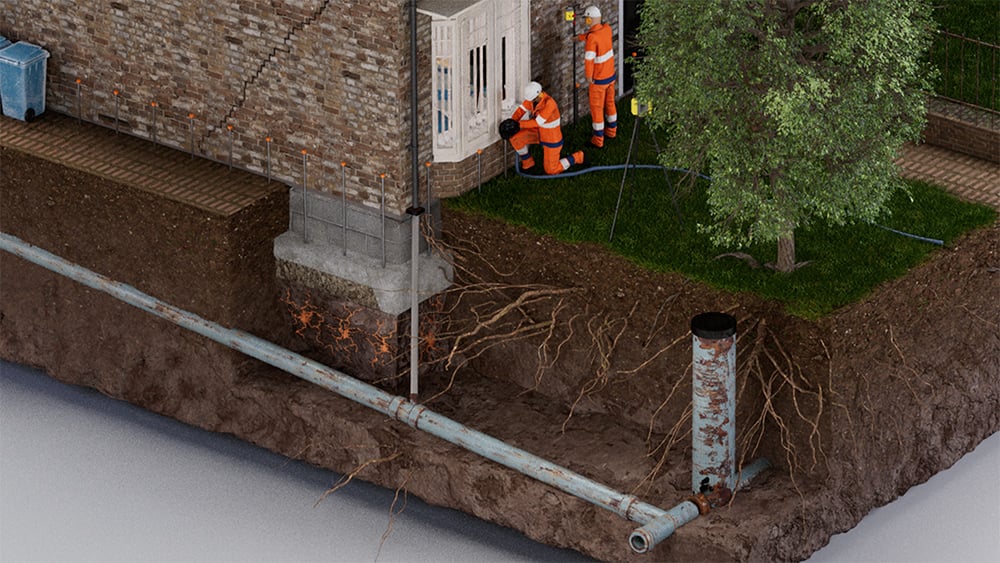
The pros of going through insurance
- The insurer manages contractors
- You only pay the excess
- Alternative accommodation may be provided
- Professional engineering oversight
For severe structural movement, insurance provides financial protection.
The cons of going through insurance
- The process can take longer
- Monitoring may delay repair
- You may not choose the contractor
- Future premiums may increase
- Underpinning history may need to be declared when selling
Every situation is different. It’s important to weigh both sides.
Will a subsidence claim affect my home’s value?
A history of underpinning may need to be disclosed when selling.
However:
- Many homes sell successfully after subsidence repair
- A professionally repaired and certified property can remain fully mortgageable
- The key factor is transparency and documentation
Modern non-excavation ground improvement methods may reduce perceived stigma because they do not involve large structural alteration.
Can you fix subsidence without going through insurance?
Yes.
In some cases, homeowners choose to:
- Repair drainage privately
- Commission independent structural advice
- Proceed with direct ground stabilisation
This may allow:
- Faster timelines
- Greater contractor choice
- Reduced claim record impact
However, this depends on severity and cost.
How long does a subsidence insurance claim take?
Typical timeframes:
- Initial assessment: 2–4 weeks
- Monitoring period: 6–12 months (if required)
- Repair works: weeks to months depending on method
Complex claims may take over a year from start to finish, but it often depends on the repair method. For instance, traditional underpinning often requires:
- Excavation
- Floor removal
- Temporary relocation
Modern ground stabilisation methods may allow you to remain in your home during works.

What documentation will I receive?
After repair, you should receive:
- Structural engineer’s report
- Completion certificate
- Warranty documentation
- Drain repair records (if applicable)
These documents are important for resale and mortgage purposes.
Should you get advice before claiming?
In many cases, yes.
Getting an independent opinion before notifying insurers can help you:
- Understand whether movement is active
- Avoid unnecessary claim history
- Explore all repair options
Subsidence is serious — but not every crack requires a claim.
Frequently asked questions
Will my premiums increase after a subsidence claim?
They may increase, depending on your insurer and history.
Can I switch insurers after making a claim?
You must declare previous subsidence claims when switching insurers.
Is subsidence always covered?
Most UK buildings policies include subsidence cover, but always check your policy wording.
Speak to a subsidence specialist
We understand how stressful subsidence can feel — especially when insurance is involved.
Our approach is:
- Clear explanation
- No jargon
- Transparent advice
- Engineering grounded in evidence
Before making a claim, it’s worth understanding your options.
Because the right decision now can prevent unnecessary disruption later.