Challenge
Water pipe upgrades required excavation beside a concrete pump house, where trench soils could slough and undermine the structure above.
Solution
Geobear ground improvement solution densified the soil and filled voids around the planned excavation, supporting the pump house and preventing sloughing.
Pipe crossings at the foundation
Treated width across the foundation line
The Diamond Bar (P-1) Pump Station in Diamond Bar, California, is operated by Walnut Valley Water District. In 2022 the district carried out an electrical refurbishment of the pump station, including upgrades to its water pipes, with Pascal & Ludwig Constructors as general contractor and Linkture as engineer.
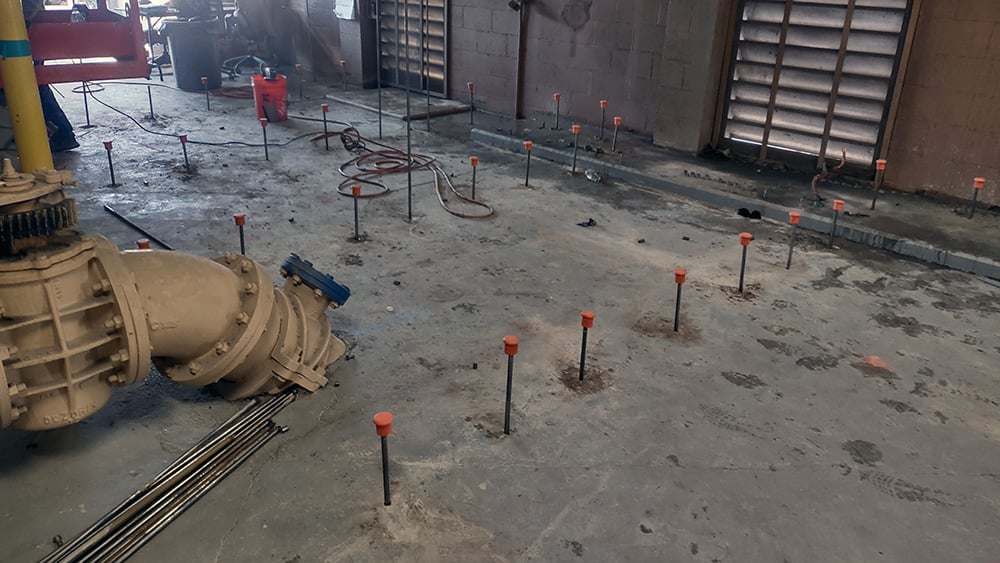
The refurbishment included new water pipework running from the pump station building. Three new pipe runs crossed the line of the building foundation, and a further run followed the foundation itself. Each run required a trench to be excavated close to, and in places beneath, the existing building.
The project specification required soil stabilization for these pipe trenches before excavation. Pascal & Ludwig Constructors appointed Geobear in November 2022 to design and deliver the stabilization works. The engineer reviewed and approved Geobear's treatment plan on December 1, 2022, with no exceptions taken.
The challenge at the Diamond Bar pump station was to excavate for new water pipes right beside the concrete pump house, without the trench soils sloughing (collapsing) and undermining the structure above.
Excavation beside a foundation. The pipe trenches ran up to, and across, the line of the pump station's foundation. Loose soil or voids beside a trench can slough into the excavation, removing support from the foundation. The treatment needed to densify the soil and fill voids both alongside the planned trenches and directly beneath the foundation where the pipes crossed it.
Limits of the treatment. Ground improvement on its own does not make an open trench self-supporting. Geobear's design stated that the excavations would still need adequate lateral support, such as shoring, and that surface water must drain away from the structure and not pool against the foundation.
Constraints. The work took place at an operational water utility site under a public works contract, with buried services that had to be located before injection began.
Conventional ways to protect a foundation during nearby excavation include temporary underpinning of the affected section, or cementitious grouting of the soil beneath it. Both typically need larger equipment, more time on site, and in the case of underpinning, excavation beneath the building before the pipe trenches themselves can be dug.
Geobear's ground improvement solution treated the soil in place before any trench was opened. Injections were made through small holes from the surface and through the foundation face, using lightweight equipment, so the ground was strengthened without excavating beneath the building.
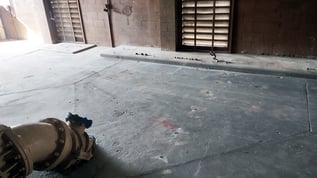
Geobear designed a ground improvement solution using targeted geopolymer injection to stabilize the ground around the proposed excavation at the Diamond Bar pump station, densifying the soil and filling voids to support the concrete pump house structure above.
The design treated the ground on both sides of each trench line at several depth levels, forming zones of strengthened soil either side of where each pipe would be laid. Where the pipes crossed the building line, injections were also made beneath the foundation to support it before the trench was excavated past it. The engineer approved the treatment plan, and the injection plan allowed for adjustment to site conditions.
Geobear completed the work in December 2022 and issued an as-built treatment plan recording the final injection layout. The treatment prevented sloughing of the trench soils during the excavation that followed.
Get in touch with our expert team today and discover how Geobear can extend the life of your critical infrastructure assets.