Ports & Harbours
Challenge
Void formation behind Swanage’s Grade II listed sea wall threatened its stability. Excavation and trial pits were impossible due to heritage restrictions and fragile historic tramway structures.
Solution
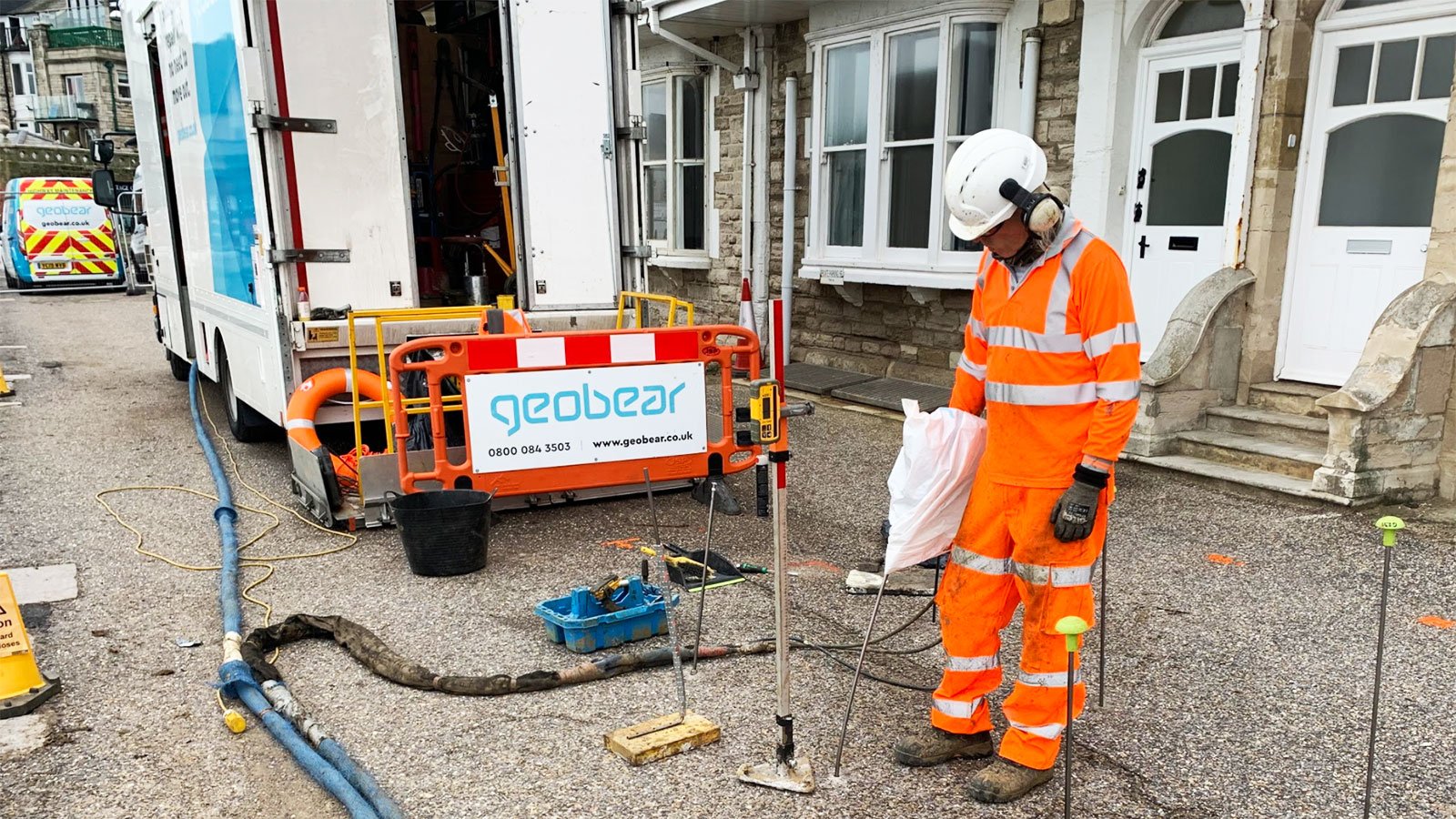
Geobear injected 2,160 kg of geopolymer resin through mortar joints, filling voids and restoring support without vibration, excavation, or disturbance to listed features.
Lower CO₂ emissions — 9 t CO₂e saved vs. cement grout
Injection points using over 2 tonnes of geopolymer
Completed in just three daytime shifts
A WSP condition assessment, including geophysical surveys (groundscan radar), identified potential voids behind the historic stone sea wall at Swanage. Trial pits were proposed but ruled out due to the wall’s listed status and the presence of heritage tram tracks and timber sleepers that could not be disturbed.
The condition survey recommended re-pointing of the gaps between the Purbeck Limestone blocks which formed the seawall. These gaps had allowed fine grained sands to be washed out by wave action which had formed voids behind the seawall in certain locations. A non disruptive and non destructive method was required to fill the voided areas behind the seawall.
Stabilising a listed wall within a live seafront setting posed unique constraints. Excavation and trial pits were ruled out to protect historic tramways and sleepers, as well as the sandstone wall itself.
The engineering requirement was to fill voids identified by survey while:
Geobear designed a heritage-sensitive void filling solution:
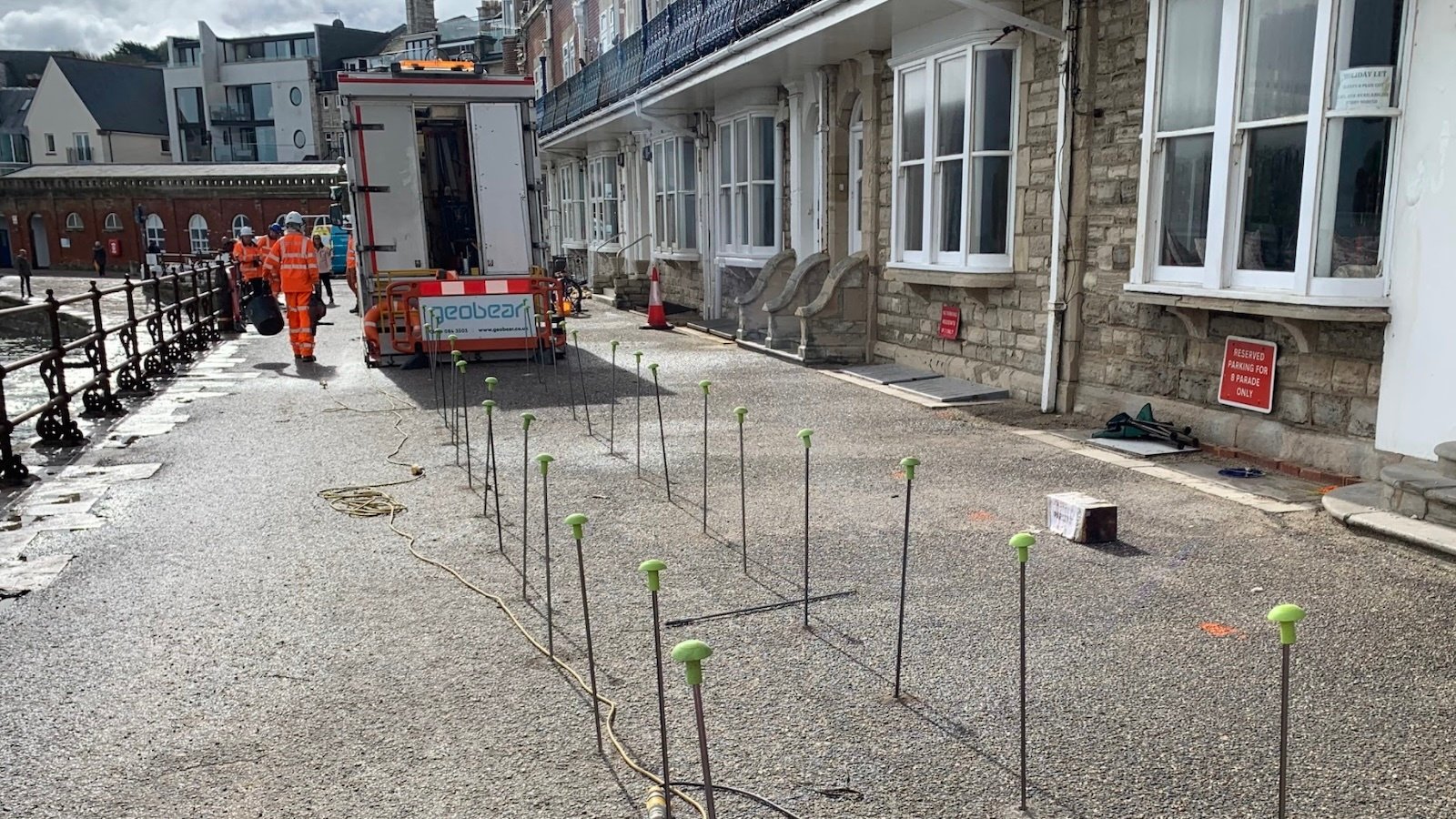
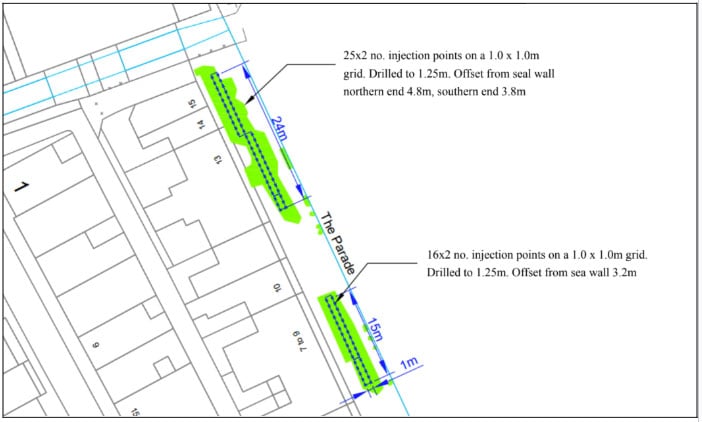
The treatment plan developed for two of the four areas treated is shown below. The total work involved the injection of 2,160kg of geopolymer across 94 injection locations. Injections were spaced at 1m vertical centres and at depths of 0.7m and 1.25m.
Carbon savings: it is estimated that the Geopolymer solution saved approximately 9 tonnes or 45% of CO2e emissions in direct comparison to a similar scheme executed using a microfine cement grouting solution.
The cement based solution is a lot less environmentally friendly compared to Geopolymer due the high risk of alkaline solutions such as calcium hydroxide (Ca(OH)₂) leaching from the uncured cement into the sea and harming wildlife and water quality,
Get in touch with our expert team today and discover how Geobear can extend the life of your critical infrastructure assets.