Ports & Harbours

Bridport Harbour wall stabilisation

Challenge

Tidal washout caused voiding and settlement behind Bridport’s historic harbour wall, threatening structural stability. Excavation or piling would have risked collapse, vibration damage, and major disruption to the public.

Solution

Geobear compacted loose soils and filled voids with geopolymer injection up to 5 m deep, restoring stability safely with no vibration, excavation, or marine contamination.

120%

average increase in soil densification

5 metres

Void filling and soil compaction to 5 m below ground

45%

Lower CO₂ emissions vs. cement grouting

Background

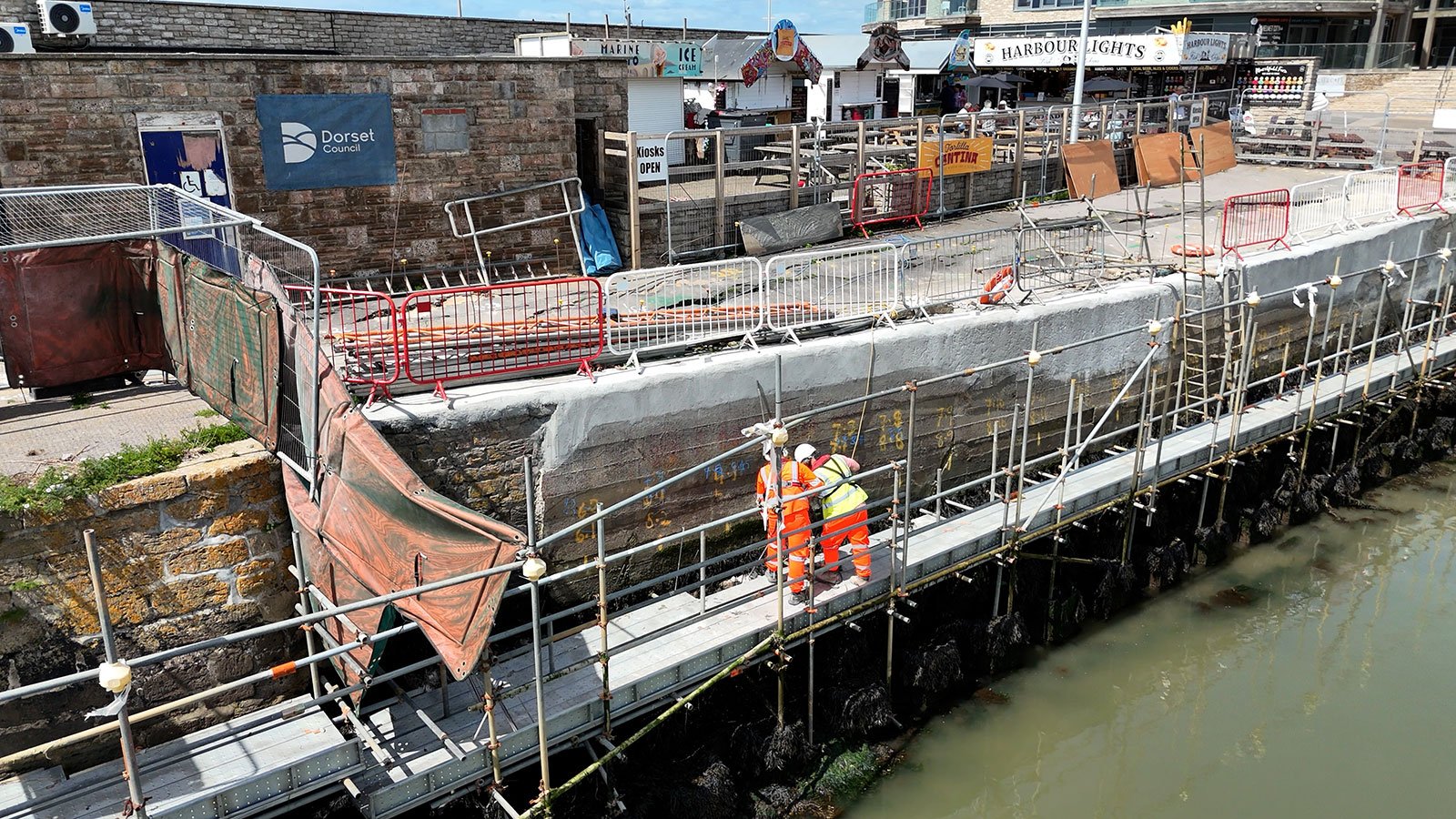
Bridport’s West Bay harbour wall is a vital coastal defence, safeguarding the town and supporting marine activity. Cracks had appeared in the surface tarmac running parallel to the sea wall, due to excessive settlement of the underlying soils. The width of the cracks was steadily increasing, which suggested the sea wall itself was moving. This was caused by the foundations to the sea wall becoming undermined by wave action, leading to the loss of fines below the wall.

Dorset Council undertook temporary works to stabilise the toe of wall, Geobear were then approached to provide a solution to stabilise the soils behind the wall to prevent further losses. Traditional repair approaches would have required excavation and rebuilding which are highly disruptive and risky in a sensitive marine environment and tourist location. Dorset Council sought a quicker, low-disruption approach that preserved heritage fabric while reinstating stability.

Challenge

The main challenge was to stabilise an historic harbour wall in an active marine and public environment. Excavation or heavy piling was not feasible as these carried unacceptable risks of vibration, noise, and disruption to kiosks, harbour offices, and tourism.

Site investigations carried out to determine the cause of the problem revealed the soil behind the wall to be composed of very loose brown sand and gravel, with discrete layers of soft brown sandy clay. Localised voiding was noted particularly near the surface.

Without intervention, progressive settlement could have led to structural collapse. The solution needed to:

  • Compact and stabilise loose soils and fill voids beneath the wall up to 5 m below ground level (bgl).
  • Avoid vibration that might destabilise the wall further.
  • Be delivered safely in a setting with shops, residents, and a working harbour.

client insight

This was the best solution for the town, the businesses, and our budget.

Kevin Davis, Dorset Council

Solutions

Geobear developed a geopolymer injection scheme designed to compact the soil, fill any voids and provide stabilisation ground support without excavation.

  • Access & drilling: Small-diameter drill holes were cored through mortar joints to avoid damaging historic stonework.
  • Void filling: Expansive geopolymer was injected to depths of 5 m, occupying voids created by tidal washout and compacting loose soils.
  • Rapid curing: Resin hardened within minutes, reducing any risk of leakage into the marine environment.
  • Monitoring: Tilt sensors confirmed that wall movement ceased following treatment.

The treatment plan developed is shown below. This involves the injection of over 10 tonnes of geopolymer resin across 215 injection locations. Injections were spaced at 1m vertical centres from 1m to 5m bgl, giving a total number of 1075.
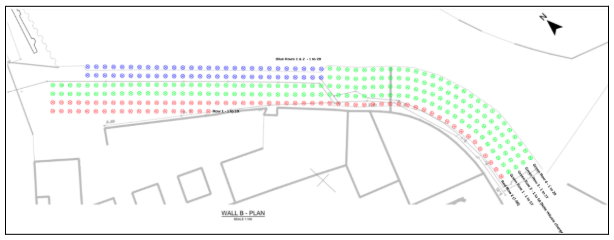
Bridport Harbour treatment

The results of the work were verified by before and after dynamic cone penetration testing using Pagani test equipment. This test uses a 30kg weight that is dropped over 0.20m onto an anvil which drives the test cone via the connecting steel rods into the soil. The curved surface area of the test cone was 10cm2. The number of drops or blows is counted for the cone to be driven an increment of 100mm into the soil and the results of the before and after treatment testing are shown below.

The results showed the average increase in densification to be 120%. Pagani DPM test results can be converted into equivalent SPT(N1)60 using correlations published by MacRobert et al., (2011) which indicate the average equivalent SPT(N1)60 increased from a value of 2 to 6.
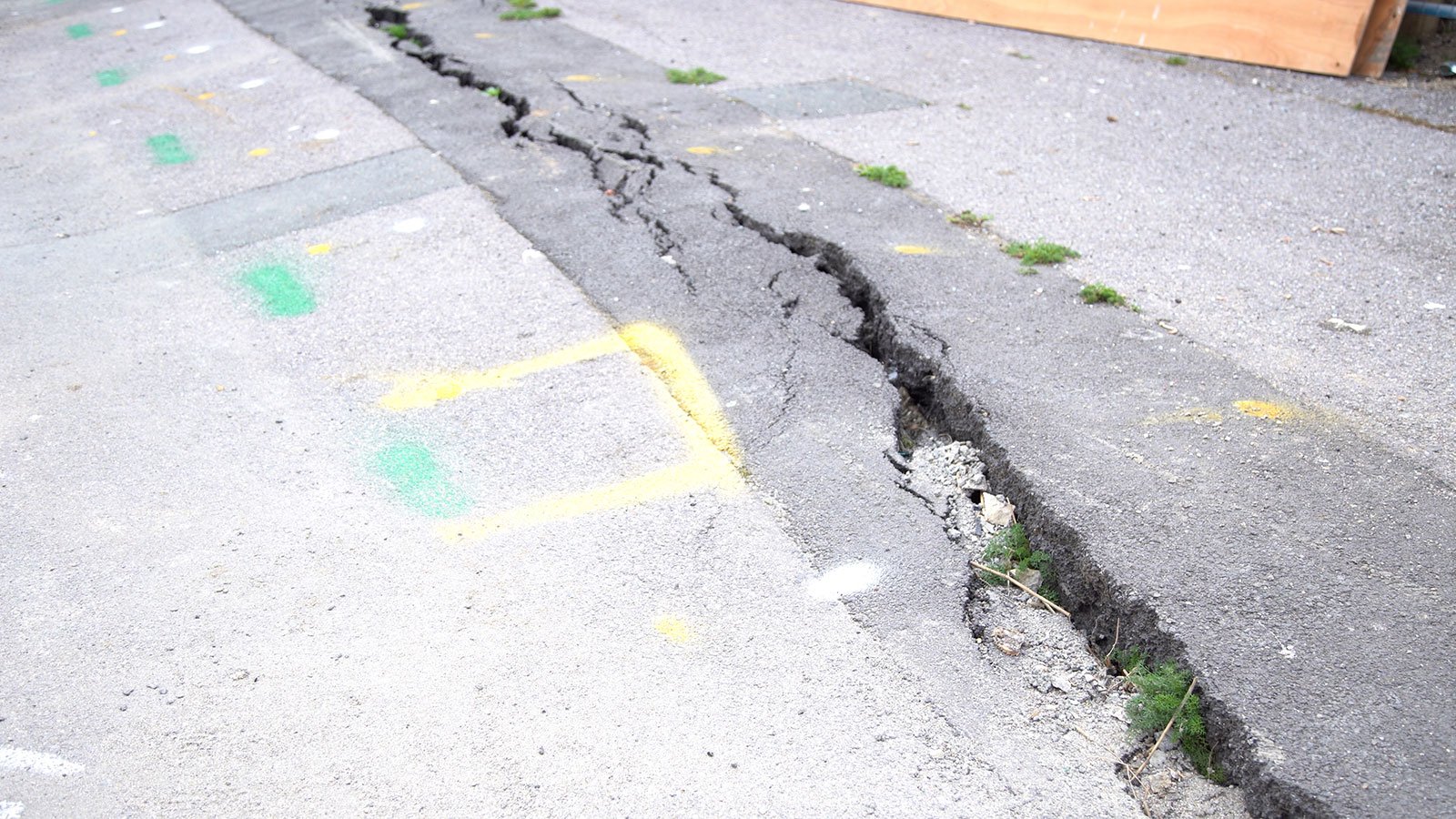
 

Bridport Harbour damage

Results

  • Wall stabilised by compacting the very loose soils and filling in the voids, thereby stabilising the ground behind the wall.
  • Monitoring confirmed stability post-treatment.
  • No disruption to public spaces or tourism during delivery.
  • Carbon savings it is estimated that the Geopolymer solution saved approximately 50 tonnes or 45% of CO2e emissions in direct comparison to a similar scheme executed using a microfine cement grouting solution. The cement based solution is a lot less environmentally friendly compared to Geopolymer due the high risk of alkaline solutions such as calcium hydroxide (Ca(OH)₂) leaching from the uncured cement into the sea and harming wildlife and water quality,   


Kevin Davis

Construction Manager at Dorset Council

“The geopolymer has been injected five metres down into the ground, filling the voids behind the wall. The biggest benefit was no vibration at all — piling would have risked losing the wall. This was the best solution for the town, the businesses, and our budget.”

Ready to discuss your project?

Get in touch with our expert team today and discover how Geobear can extend the life of your critical infrastructure assets.


Bear pointing Bear pointing