Technical paper

Airfield pavement failure mechanisms

Causes, risks and engineering solutions

Understanding why airfield pavements fail

Runways, taxiways and aircraft aprons operate under some of the most demanding conditions in civil engineering. Heavy aircraft loads, jet blast, fuel exposure, weather cycles and strict safety tolerances all place extreme stresses on pavement structures. When deterioration begins, it can quickly affect operational safety, runway licensing and airport capacity. This technical guide explains the common failure mechanisms affecting airfield pavements, how they develop, and the engineering approaches used to address them.

Why airfield pavements fail

Airfield pavements rarely fail suddenly. Most problems develop gradually due to structural stresses within the pavement system or movement in the supporting ground beneath.

Key contributing factors include:

  • Repeated aircraft loading
  • Loss of support in the subgrade or sub-base
  • Temperature and moisture cycles
  • Jet blast and fuel exposure
  • Aging pavement materials

Understanding these mechanisms allows engineers to diagnose the root cause of pavement deterioration and select the most appropriate remediation strategy.

Types of airfield pavements

Airfield pavements are typically constructed using three primary systems:

Flexible pavements

Asphalt-based structures consisting of surface course, binder layers and granular sub-base.

Commonly used on runways and taxiways where flexibility helps distribute aircraft loads.
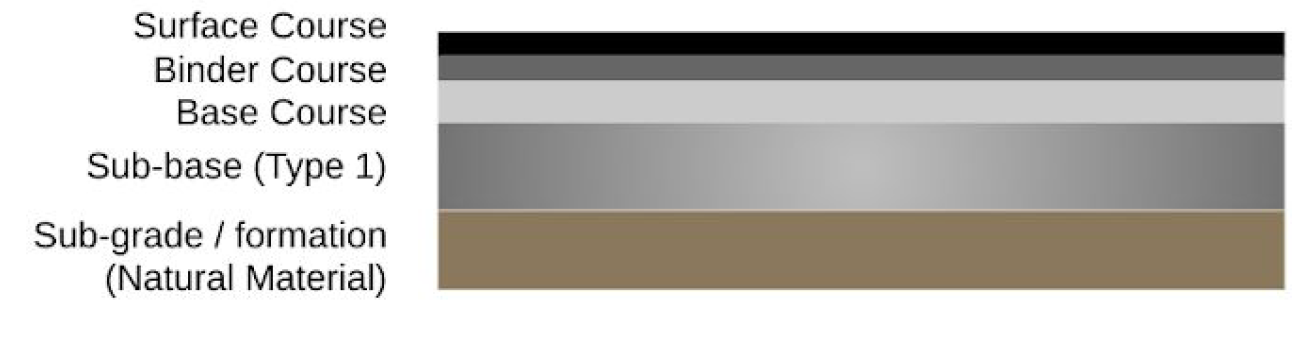
flexible

Rigid pavements

Concrete slab pavements designed to withstand high static loads and fuel exposure.

Typically used on aircraft aprons, turning areas and high-load locations.
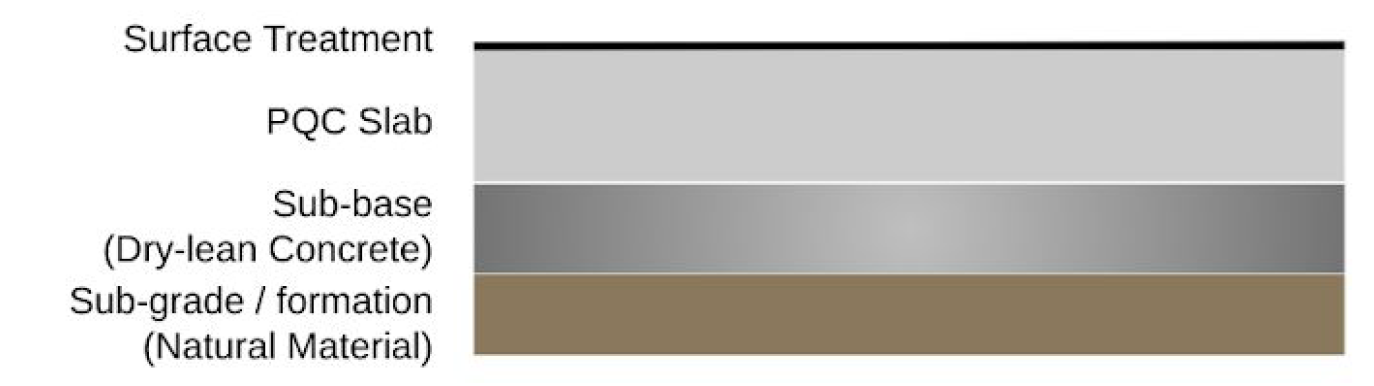
rigid

Composite pavements

Historic concrete pavements that have been overlaid with asphalt.

These systems are prone to reflective cracking and often require ongoing maintenance.
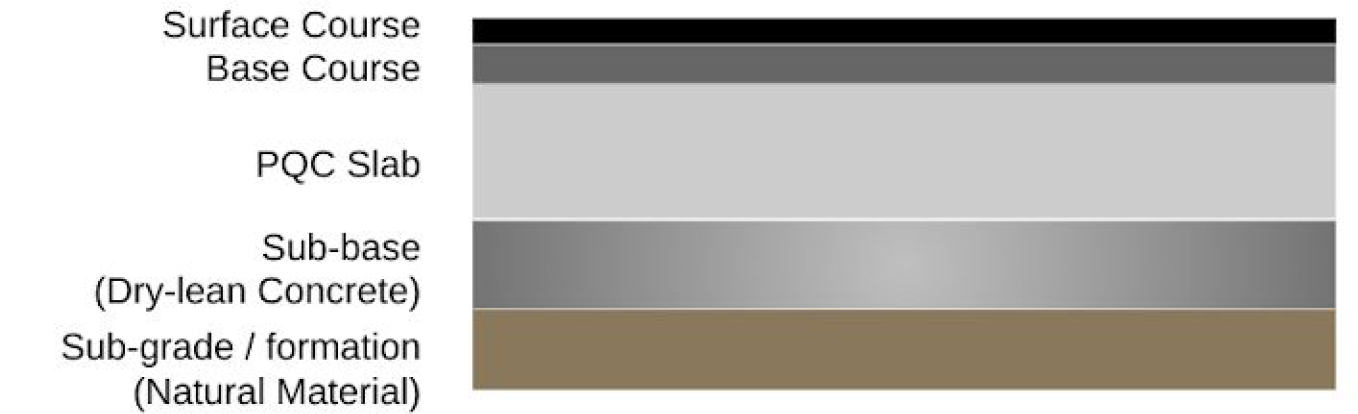
composite


Common airfield pavement failure mechanisms

The guide examines the most frequent types of deterioration affecting airfield infrastructure, including:

Flexible pavement failures

  • Crocodile cracking (fatigue cracking)
  • Rutting along aircraft wheel paths
  • Raveling and aggregate loss
  • Jet blast erosion
  • Depressions and settlement

Rigid pavement failures

  • Slab cracking and corner breaks
  • Joint seal damage
  • Pumping and loss of support
  • Spalling and scaling
  • Faulting between slabs

Each failure mechanism has different root causes and maintenance implications.

Why ground conditions matter

While many defects appear in the pavement surface, the root cause is often movement or deterioration in the underlying ground layers.

Subgrade settlement, erosion of fines, and water infiltration can lead to:

  • slab faulting
  • reflective cracking
  • depressions
  • structural instability

Addressing these ground-related mechanisms is often key to extending pavement life.

Traditional repair approaches

Conventional repair strategies for airfield pavements typically include:

  • asphalt resurfacing
  • crack sealing and overbanding
  • slab replacement
  • patch repairs
  • bay reconstruction

While effective, these methods can require significant airfield closures and operational disruption.

Download the full technical guide

The full document includes:

✔ Detailed descriptions of flexible and rigid pavement failures
✔ Engineering explanations of failure mechanisms
✔ Traditional repair methods and their limitations
✔ Considerations when carrying out works on live airfields
✔ Aviation terminology and pavement classification systems

Download the full Airfield Failure Mechanisms guide.

About Geobear

Geobear provides ground engineering solutions for airports, infrastructure owners and defence estates across Europe.

Our geopolymer technology can stabilise and strengthen the ground beneath pavements, helping to address issues such as:

  • slab settlement
  • voids beneath pavements
  • loss of subgrade support

All with minimal disruption to operational airfields.